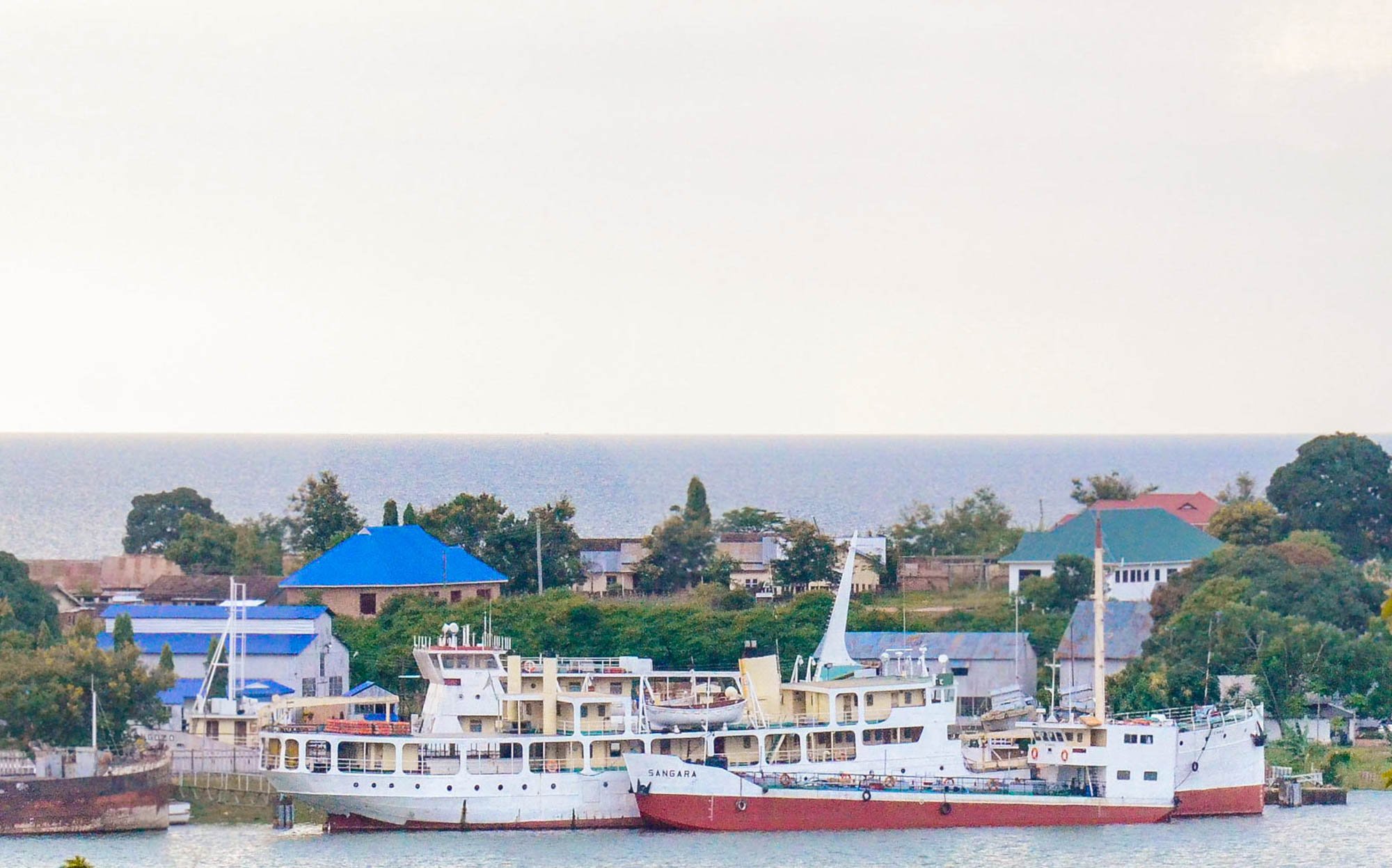
Kigoma is the main Tanzanian town on Lake Tanganyika, tucked into a wooded hillside above one of the deepest and most ancient lakes on earth. It is a long way from anywhere — most travellers arrive on the old German-built railway from Dar es Salaam, a journey of two or three nights that ends with the train rolling down to the shore through stands of oil palm and mango. The town itself is small and unhurried, a working port with a single main street, a busy fishing harbour, and the kind of warm equatorial light that makes the lake look almost theatrical at sunset.
For travellers, Kigoma is essentially a base camp. The main reasons to come are the chimpanzees of Gombe — a short boat ride up the lake to the small national park where Jane Goodall began her famous research in 1960 — and the much larger Mahale Mountains National Park, further south, where chimpanzee tracking takes place in genuinely remote forest. The other reason is the lake itself: clean, warm, and full of brilliantly coloured cichlid fish, with snorkelling that can rival anywhere in East Africa.
Just south of Kigoma lies Ujiji, the older Arab-Swahili trading town where Henry Morton Stanley delivered his famous greeting to David Livingstone in 1871. The Livingstone Memorial there is a modest monument, but the spot is one of the most evocative in the country. From the harbour, the historic MV Liemba — a converted World War I German gunboat — has spent most of a century plying the lake to the Zambian border, calling at remote villages where passengers and cargo are still loaded by canoe.
Practical points: there is a small airport with flights from Dar es Salaam and Arusha, several decent guesthouses near the centre, and good Indian-influenced food at the lakeside hotels. The town is safe and friendly, but slow — bring a book, and expect plans to slip a day or two whenever the boat schedule changes.