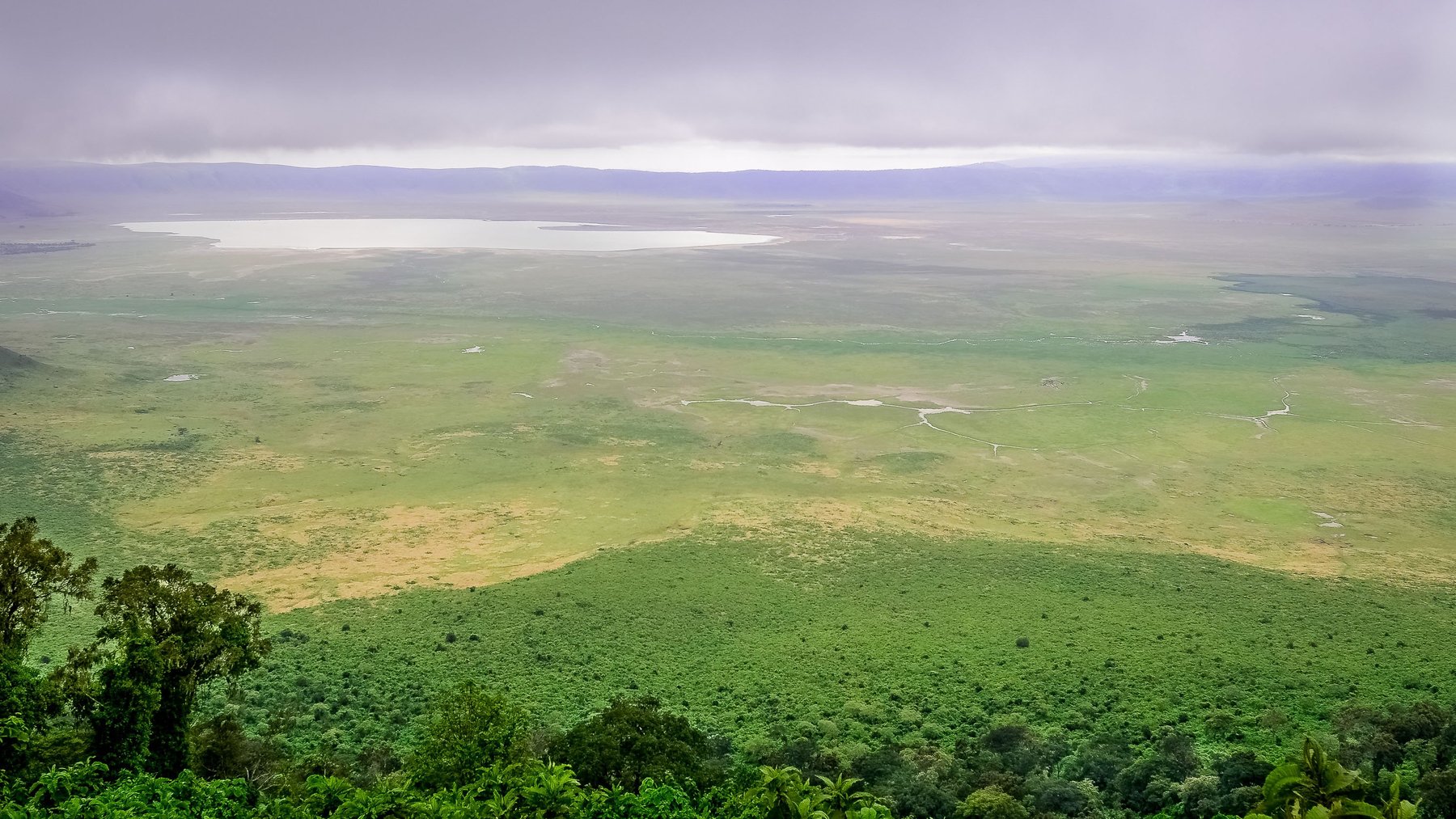
The Ngorongoro Crater is the world's largest intact volcanic caldera, a collapsed volcano roughly 20 km across whose floor contains a permanent ecosystem of remarkable density. Over 25,000 large animals live within the crater walls, and because the geography keeps most wildlife from wandering too far, this is one of the few places on earth where you can reliably see lions, elephants, rhinos, zebras, wildebeest, cheetahs, flamingos, and buffalo all in a single day's drive.
The crater floor sits about 600 metres below the rim and contains a mosaic of grassland, acacia woodland, a soda lake (Lake Magadi), and the Lerai Forest. Black rhinos, one of Africa's most endangered animals, are present here in small numbers and are more reliably seen in Ngorongoro than almost anywhere else. The Maasai people still graze their cattle within the conservation area, sharing the land with the wild animals in a long-standing arrangement.
Best visiting time is June to October, when the dry season keeps the crater floor accessible and wildlife concentrates around water. April and May bring rains that can make the floor tracks very difficult, and the rim chilly and foggy — come prepared for cold evenings at altitude regardless of season. The most direct approach is from Arusha, around 180 km to the east, which is also the base for Serengeti safaris.
Africa > Tanzania > Ngorongoro Crater