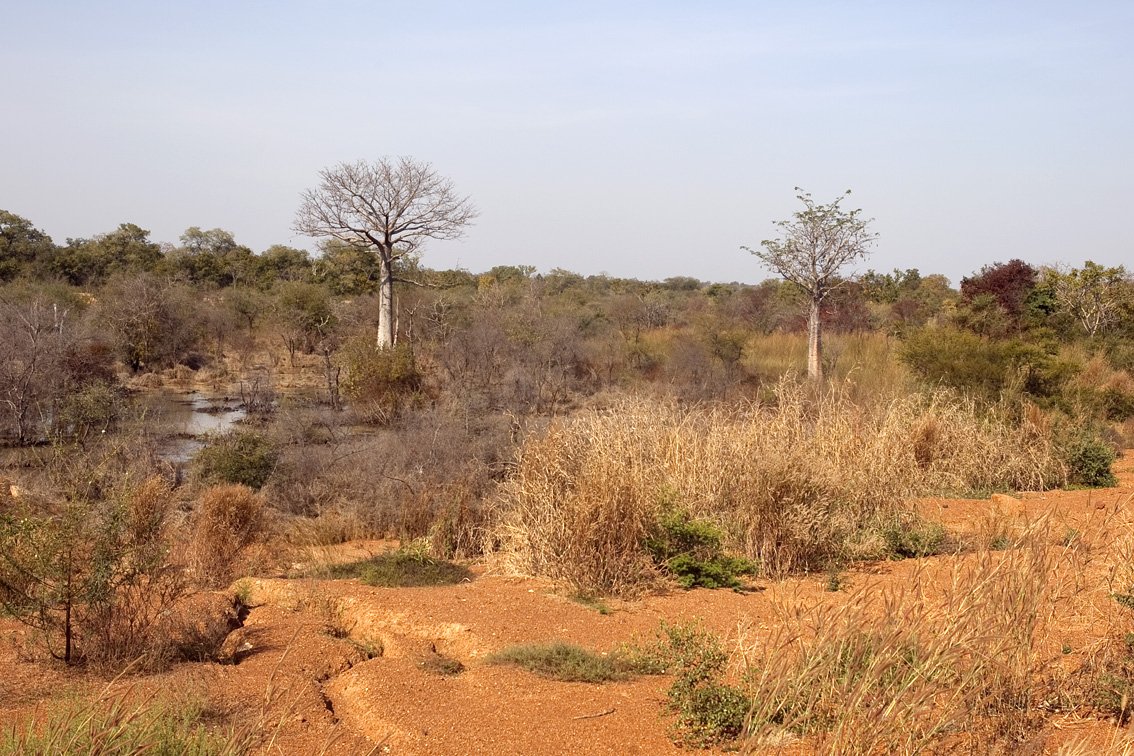
Kéran National Park is the second-largest national park in Togo, covering roughly 1,600 square kilometres of dry savanna, gallery forest and seasonal floodplain in the north of the country. The Kéran river — for which the park is named — winds through the centre, sustaining a chain of pools that draw what wildlife remains during the long dry season. Together with Fazao-Malfakassa further south, Kéran is the heart of Togo's wildlife conservation, such as it is.
The park's modern history has been brutal. Originally a colonial-era reserve, it was extended in 1971 by displacing several villages — a forced relocation that left a strong resentment among local Tem and Lamba people, and that boiled over in 1990 when residents pushed back into the park, killed wildlife in revenge, and effectively dismantled much of its infrastructure. The park has slowly been rebuilt since, with conservation NGOs replanting boundary villages, demarcating the boundary more equitably, and rehabilitating the visitor centre near the southern entrance.
For travellers, Kéran is a quieter, drier, more open landscape than Fazao. Elephants and hippos still inhabit the river system; antelope, warthog and primates are spread thinly across the savanna; and the dry-season concentrations at the main pools can reward a careful early-morning drive. Birdlife is excellent, with raptors particularly well represented. Facilities are basic — a small camp near the entrance and a handful of ranger posts — and a vehicle and a guide are essentially required. The park is most often visited as a day or overnight trip from Kara or from Mango, the small town just north.