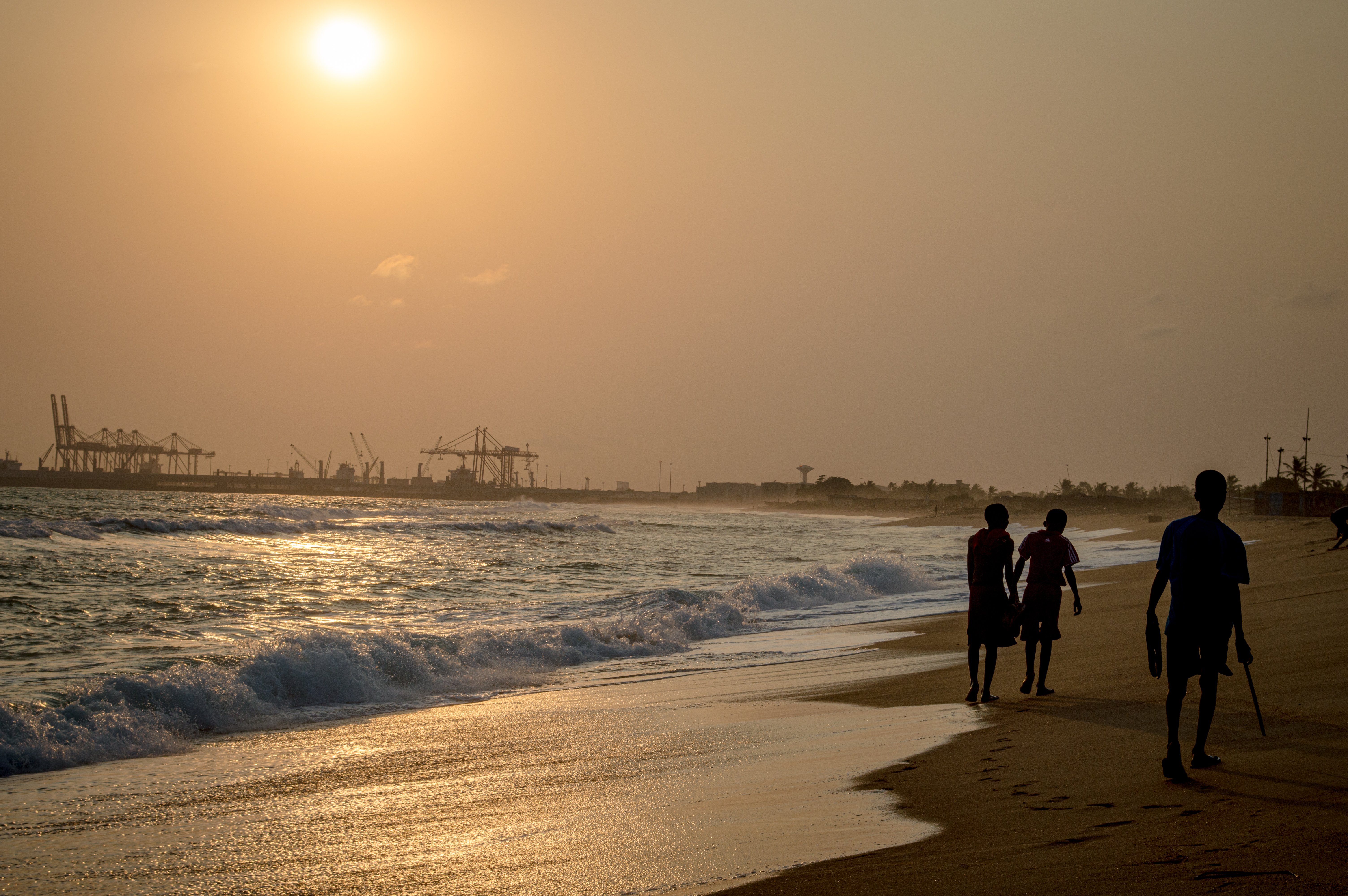
Lomé is one of West Africa's most approachable capitals. It is small enough to walk across, set right on the coast with sandy beaches stretching from the city centre, and carries the relaxed energy of a town that has never quite tried to be anything other than itself. The Grand Marché dominates the commercial heart of the city, a sprawling market run almost entirely by women — the famous Nana Benz — where you can find everything from Dutch wax prints to traditional medicines.
The city's voodoo heritage is everywhere. The Akodéssewa Fetish Market, one of the largest in the region, sells animal skulls, dried herbs, and talismans used in traditional ceremonies. It is strange and fascinating, and the vendors are used to curious visitors. The compact colonial core around Place de l'Indépendance gathers the Independence Monument, the Togo National Museum, the German-built Sacred Heart Cathedral and the Palais des Gouverneurs into a few walkable blocks. Beyond the centre, the lived-in Ewe quarter of Bè and its sacred lagoon give a clearer picture of how most of the city actually lives. Lomé's nightlife is lively and unpretentious, with open-air maquis and live music most nights of the week.
Lomé works well as a base for exploring southern Togo. Day trips to Togoville on Lake Togo, the old colonial town of Aneho, and the waterfalls around Kpalimé are all within easy reach. The infrastructure is basic and the roads are rough, but that is part of the deal in this part of the world. Come with patience and curiosity, and Lomé rewards both.