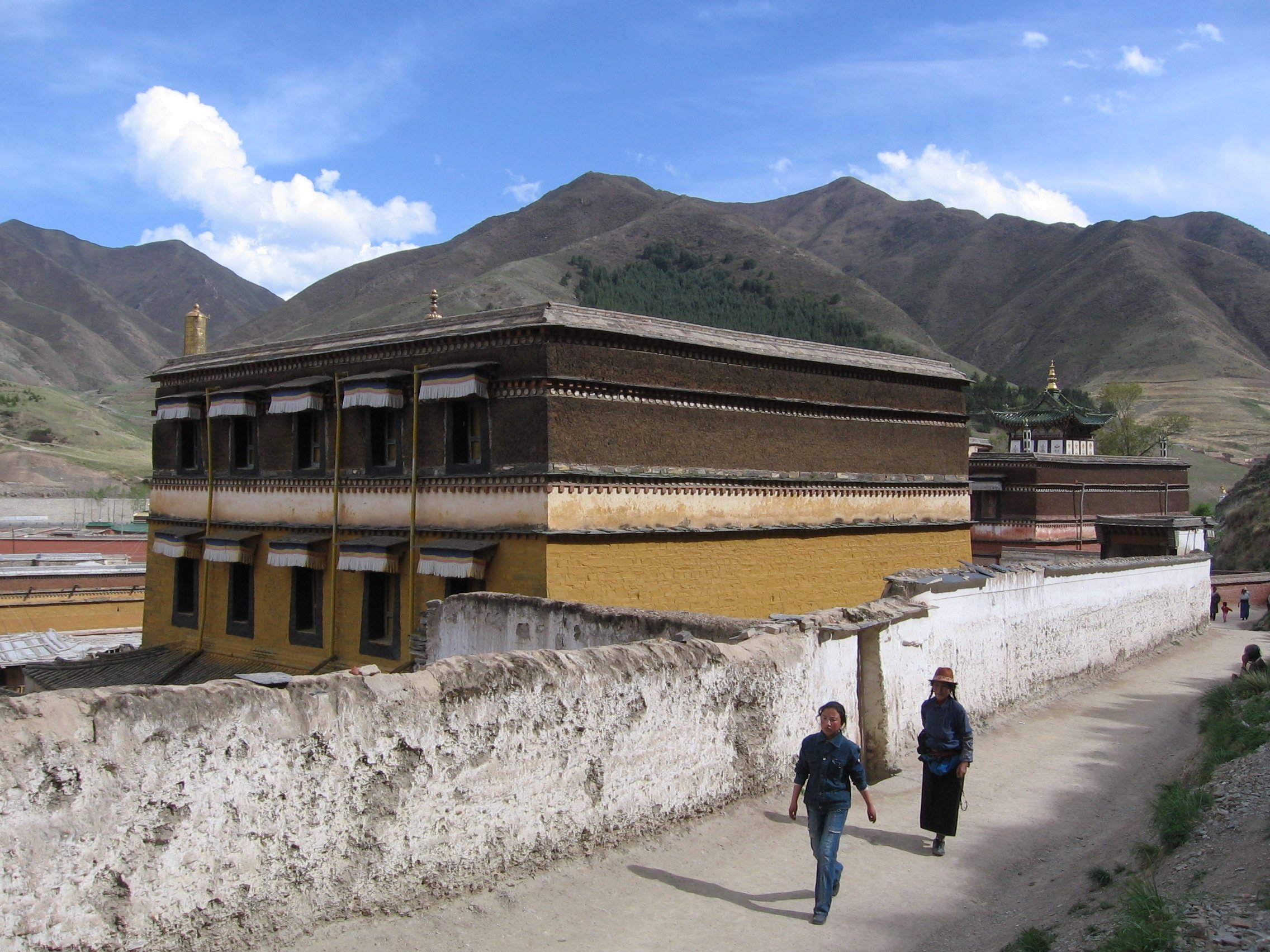
Xiahe is, effectively, a Tibetan town in the Chinese province of Gansu, set at about 2,900 metres in a valley of the Gannan Tibetan Autonomous Prefecture. The centre of everything is Labrang Monastery, founded in 1709, one of the six great monasteries of the Gelukpa school of Tibetan Buddhism — the school to which the Dalai Lama belongs. At its peak the monastery housed over four thousand monks; numbers are lower now but the complex remains enormous, its golden roofs spread along the valley floor, its whitewashed walls encircled by a two-kilometre circuit of prayer wheels that pilgrims turn continuously from dawn to dusk.
The monastery can be visited on guided tours that depart at 10:15 and 15:15 and cover the main assembly halls, the debating courtyard, and several of the chapels. The Gongtang Chorten, a reliquary tower at the monastery's eastern entrance, offers views back over the complex. Beyond the formal sites, simply walking the kora — the circumambulation path around the monastery's perimeter — is the best way to experience the place; you will share it with pilgrims in traditional Tibetan dress, monks going about their business, and the smell of juniper incense throughout.
The Sangke grasslands, twelve kilometres west of town, open into broad high pastures where nomadic families graze yaks and sheep in summer. Horse riding is available. The surrounding mountains and valleys hold smaller monasteries and Tibetan villages that reward exploration with a rented bicycle or on foot.
Xiahe is reached by bus from Lanzhou in about three and a half hours, or from Linxia in two hours. It occasionally closes to foreign visitors during politically sensitive periods — the weeks around important anniversaries — so it is worth checking before you go. The food in town runs to Tibetan staples: momo dumplings, tsampa, yak butter tea.