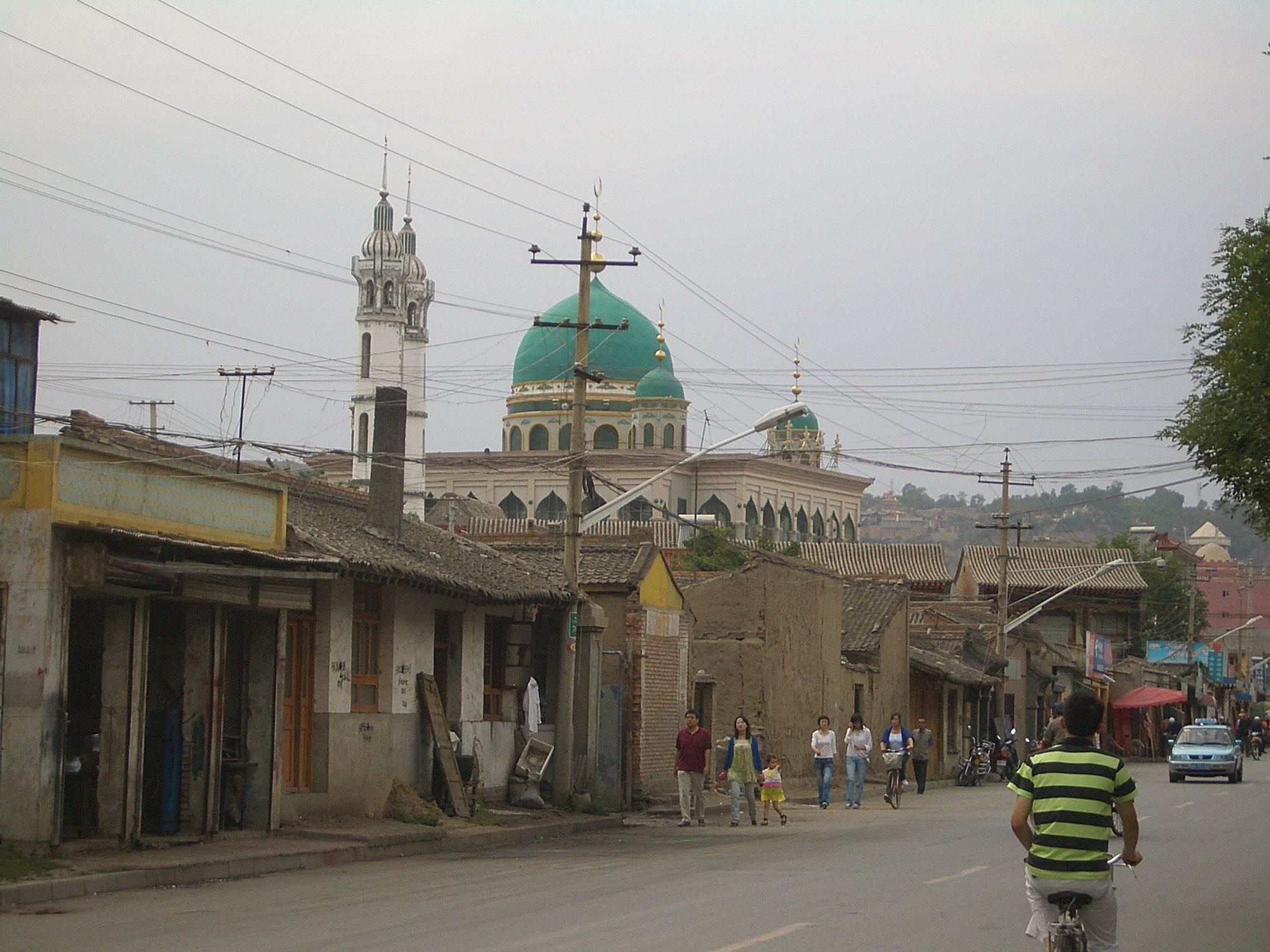
Linxia is known in China as "Little Mecca" — a market town in the mountains of southern Gansu where Chinese Islam has a centuries-deep presence. The Hui Muslim community dominates, and the city is dense with mosques, Sufi shrines called gong bei, and madrasahs. The call to prayer echoes across the valley. Walking the old bazaar streets around the central mosque, you could be somewhere significantly further west.
The architecture is the thing: Linxia has accumulated an unusual concentration of Islamic religious buildings in different styles, from domed Central Asian forms to more traditional Chinese mosque architecture, reflecting the various Sufi orders — Naqshbandiyya, Qadiriyya, Kubrawiyya — that have maintained strongholds here for centuries. The gong bei mausoleums, where the founders of these orders are venerated, are serious pilgrimage destinations and often architecturally striking. The Huasi Mosque complex is the most impressive of the Sufi foundations, while the Laohua Mosque represents the older Hanafi scholarly tradition.
The Linxia Hui Autonomous Prefecture Museum, near the central park, holds artefacts from the Majiayao neolithic culture, including painted pottery from 3300–2000 BC that predates the Silk Road by two millennia and shows the sophistication of this region long before it acquired its historic importance. The hilltop Taoist temple, the Wanshou Guan, offers views over the valley and feels comically out of place in this context, which is exactly why it is worth climbing to.
Linxia is a hub for travel further south into the Gannan Tibetan region — Xiahe is two hours by bus, and the contrast between the two towns is stark and instructive. Getting here from Lanzhou takes about two and a half hours by bus; there is no train station.