Danzhou is the third-largest urban centre on Hainan after Haikou and Sanya, a sprawling prefecture-level city on the northwest coast that receives almost no foreign visitors and sees this as entirely natural. Its dialect — Min Nan with a local inflection — is distinct enough from the Haikou standard that it functions almost as a regional marker, and the city has an ingrained sense of self that owes nothing to the resort economy.
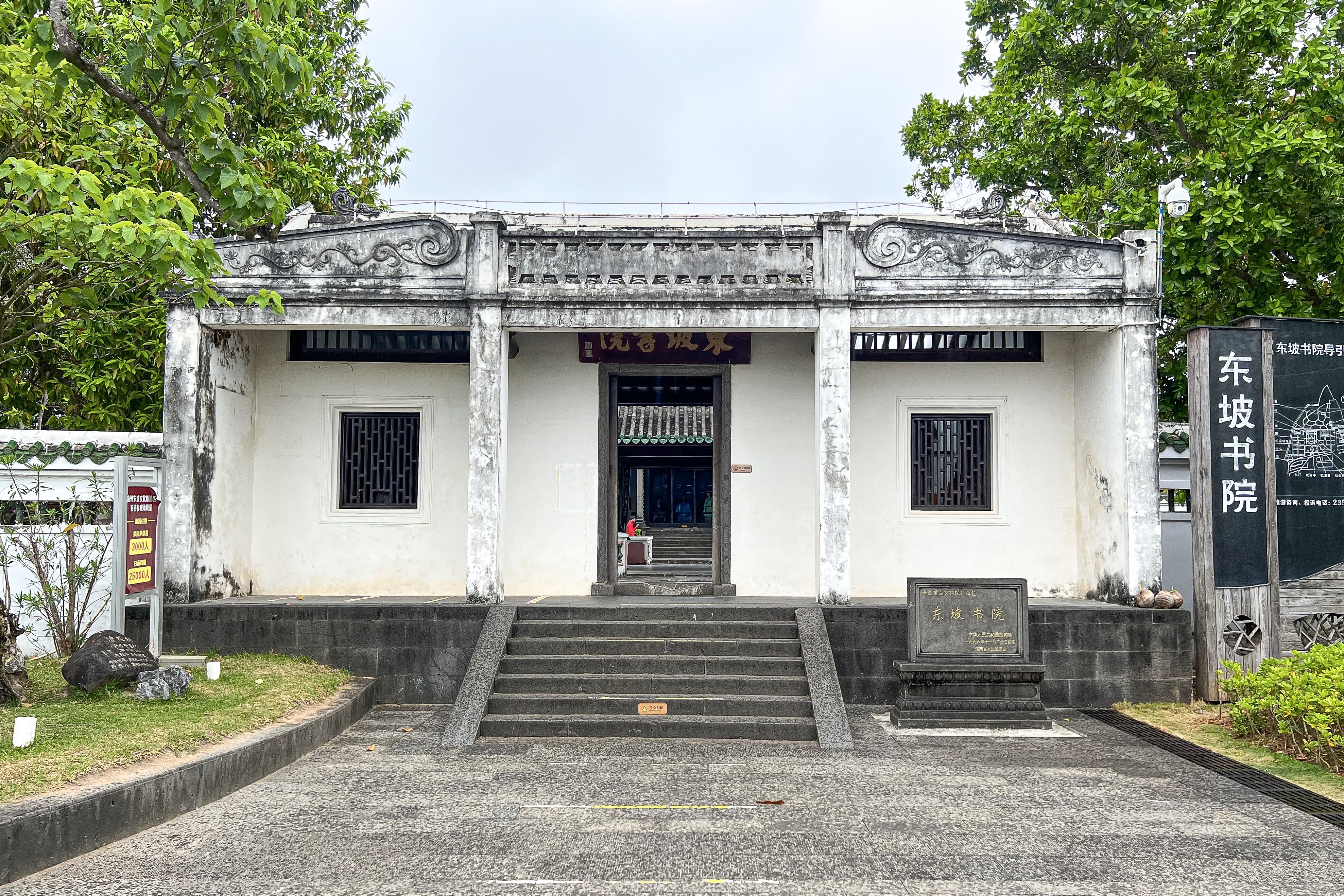
The main cultural attraction is Dongpo Academy, a memorial complex built around the house where Su Dongpo, one of China's greatest Song Dynasty poets and essayists, lived during his years of imperial exile at the end of the eleventh century. The oldest building on the site, the Zaijiutang pavilion, was established by Su Dongpo himself. The collection of historical manuscripts, calligraphy, and painting is serious rather than performative. The Yangpu Ancient Salt Field nearby documents a coastal industry over 1,200 years old — stone troughs carved into volcanic rock still used by local families to harvest salt by solar evaporation.
The Floral Rock Cave Geopark, a few kilometres outside town, is a cave system partly flooded by a lake that visitors explore by boat — stalactites above, dark water below, occasional shafts of light through the ceiling. It is a legitimately spectacular natural site that most travellers hurrying between Haikou and Sanya never know exists. Ocean Flower Island, the enormous artificial archipelago currently being built offshore, will in due course make Danzhou considerably more visible; for now the city remains a useful reminder that Hainan has interior depths the beach brochures don't mention.