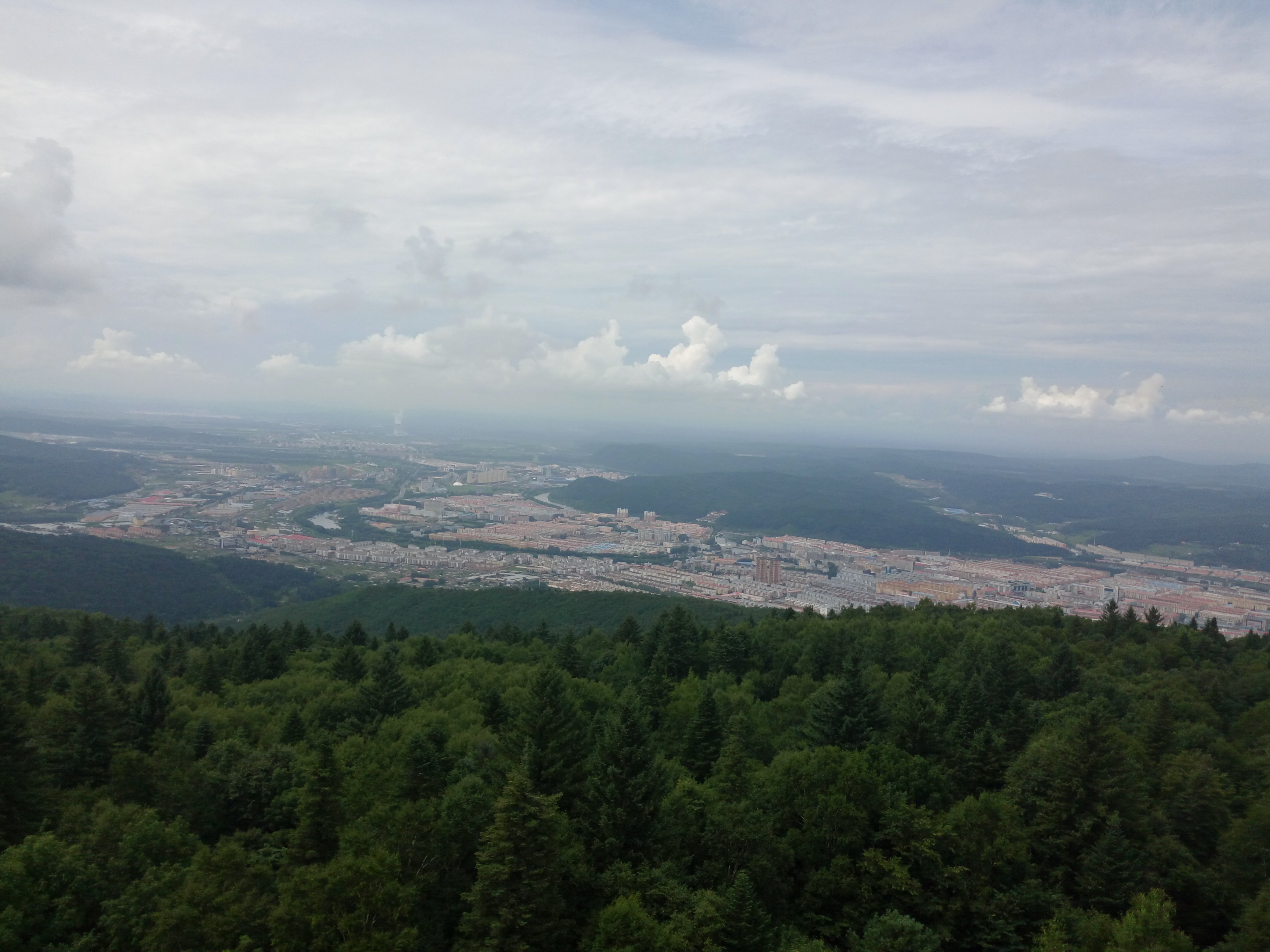
Heilongjiang timber city in the Lesser Khingan Range, surrounded by Korean pine forest.
Yichun is a timber city tucked into the Xiaoxing'anling — the Lesser Khingan Range — in central Heilongjiang, surrounded by what remains of the largest Korean pine forest in Asia. The city was established in 1957 to harvest those forests, and for decades it did so intensively; logging bans enacted in the 1990s shifted the economy toward nature tourism, though the sawmill culture has not entirely disappeared. The forest coverage rate within the administrative area still exceeds 80 percent, which makes Yichun one of the greenest places in China by that measure, and the air in summer has the particular freshness that comes from being genuinely far from any industrial concentration.
The Xing'an Forest Park on the city's edge is free, accessible, and gives a real sense of the Korean pine forest: tall, straight-trunked trees with a cathedral quality, mineral springs, and enough walking trails to fill a morning. The Wood Carving Park nearby displays a long relief gallery carved from local timber depicting regional history and ethnic minority life — it is more interesting than it sounds. The city itself is narrow and elongated, following the valley floor, and is small enough to navigate on foot without difficulty.
Winters here are severe. Temperatures regularly fall to −40°C and the city shuts down into a quiet that is more Siberian than Chinese. Summer arrives late — June is still cool — and departs early, but the months of July and August are genuinely warm and the forest is at its best. The local specialties are forest products: dried mushrooms, black wood ear fungus, fiddlehead ferns, wild blueberries, and ginseng, all of which appear in the forest markets and make good provisions for onward travel.
Yichun is six to seven hours from Harbin by train, which places it in the category of destinations that require a considered decision rather than a casual detour. It is most logically combined with Mohe to the north — both are forest cities in the Khingan mountains, and together they make a coherent northern Heilongjiang journey. Travelers expecting the manicured outdoor experience of a designated scenic area will be disappointed; those after a working northeastern forest town with genuine wilderness on its doorstep will find Yichun quietly rewarding.
Guide
Getting There
Yichun is six to seven hours from Harbin by train, which means it requires real intent to visit. It is not a casual detour.
By train: The direct service from Harbin runs regularly and the journey through the broadening boreal forest gives a good sense of the landscape you are heading into. Sleeper berths are available on the overnight service. Yichun also has train connections to Mohe to the north, making it a natural midpoint on a northern Heilongjiang journey.
By air: Yichun Lindu Airport has limited scheduled services — principally to Harbin and Beijing — but flights are infrequent and should be checked carefully before planning a schedule around them.
Combining with Mohe: The most logical multi-stop itinerary in this part of Heilongjiang combines Yichun and Mohe. Both are forest cities in the Khingan mountains, connected by train, and together they give a coherent portrait of the northern forests that neither delivers alone.
Guide
When to Go
Yichun is a summer destination for most purposes. The severe winter is part of the city's character but places real practical constraints on what is enjoyable.
Summer (July–August) is the best time. These are the two genuinely warm months in Yichun — temperatures reach 25–28°C during the day, the forest is at its most lush, and the clean air after the long winter is striking. The city is at its most functional, the markets are full of forest products, and the hiking trails in the surrounding parks are all accessible. This is the correct time to visit.
Late spring (June) is cool (sometimes uncomfortably so — temperatures can still drop below 10°C at night) but the forest is brilliantly green after the snowmelt and the spring wildflowers in the forest understorey are remarkable. A good secondary window.
Autumn (September–October) brings the first frosts in September and the leaves turn gold and orange by October. The forest in autumn colour is beautiful, the air is clear and cold, and the tourist pressure drops sharply. Bring warm clothing.
Winter requires serious commitment. Temperatures drop to -40°C and the city quiets considerably. The forest in heavy snow is beautiful in a genuinely Siberian way, but most visitor infrastructure is reduced. Only if you specifically want to experience subarctic winter.