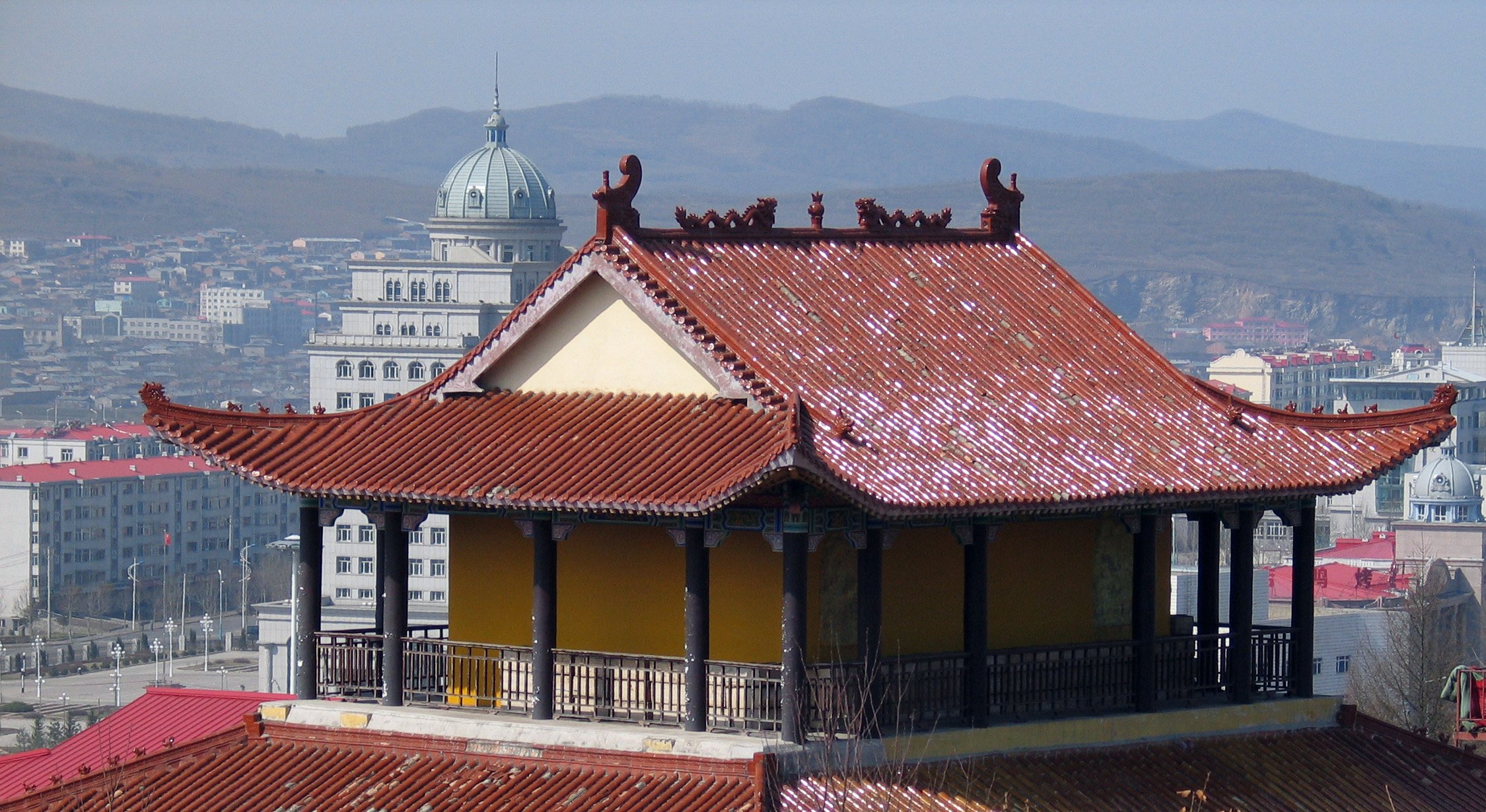
Suifenhe occupies a strategic gap in the hills near Heilongjiang's southeastern corner, just a few kilometres from Russia, and it has functioned as a border crossing since the Chinese Eastern Railway pushed through here in the early 1900s. The town bills itself as China's gateway to Vladivostok, which is roughly true: trains cross into Russia twice a week, and the border is close enough that Russian is a working language in the hotels, taxi ranks, and street restaurants. Shopkeepers price things in both yuan and rubles without being asked.
The town's character is that of a frontier entrepôt at the smaller, scrappier end of the scale. The Russians who come here are mostly shopping — clothing, household goods, electronics — and the main commercial streets cater to them with a directness that bypasses any tourist gloss. The old railway station building, a remnant of the Chinese Eastern Railway era, is one of the more architecturally interesting structures in town, though the surrounding area is mostly utilitarian. Walking up to the higher ground gives views over the surrounding hills and, on clear days, into Russia.
Suifenhe is most useful as a crossing point into Russia or as a base for exploring the Russian-influenced landscape of this corner of the province. Mudanjiang, about 130 kilometres to the northwest, is the nearest major city and the logical place to overnight if you are passing through rather than crossing. The buses between the two run regularly and the journey takes two to three hours. If you are heading to Vladivostok the twice-weekly train is the most atmospheric option, though the journey takes most of a day and border formalities can be slow.
The food around the train station area is notably cheap and good by Chinese border-town standards: northeastern dumplings, stewed pork, and simple noodle dishes available for a few yuan. The winters are harsh — temperatures regularly reach −15°C — but the summers are warm and the surrounding forested hills are pleasant enough to justify a half-day's wandering if you have time to kill before a train.