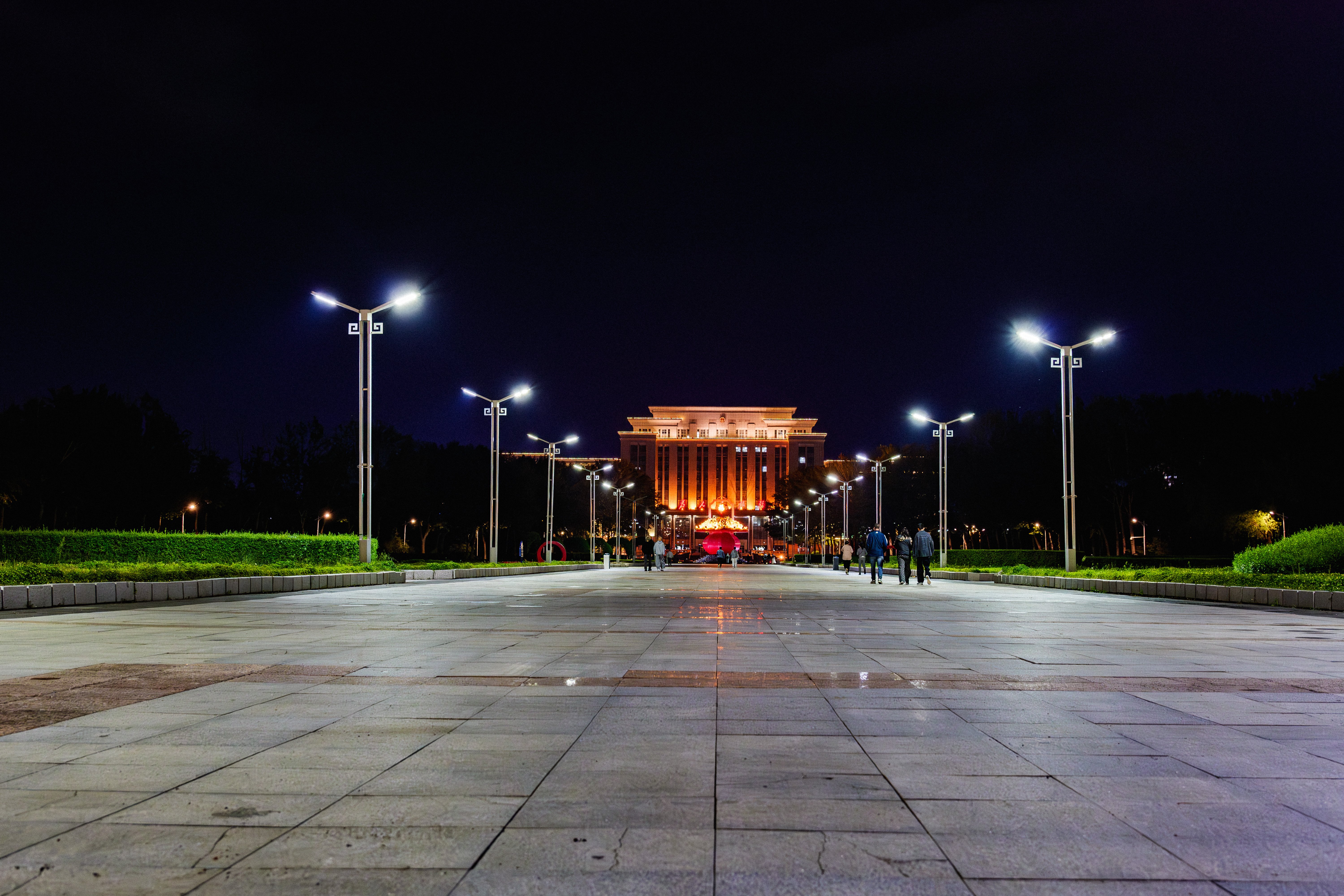
Daqing is China's oil city, built from scratch in 1959 after massive petroleum reserves were discovered beneath the Songhua-Liao Plain. The name means "great celebration," and the founding story is so bound up with Maoist mythology — "In industry, learn from Daqing" was one of the defining slogans of the Cultural Revolution — that the city retains an ideological aftertaste even now. The oil wells are still pumping, the refineries still dominate the skyline, and the sense that you are somewhere shaped entirely by a single industrial purpose has not entirely faded.
What makes Daqing worth a stop is the Daqing Petroleum Science and Technology Museum, a large and surprisingly engaging exhibition about the history of Chinese petroleum extraction. It is frank about the hardships of the early years and the sheer scale of the engineering involved, and the outdoor displays of drilling equipment and military vehicles have a certain blunt grandeur. The Daqing Museum nearby is a different kind of attraction entirely: it holds over 100,000 Quaternary fossils, including two near-complete mammoth skeletons excavated from the local plain. Mammoths and oilfields are not a combination you encounter often.
The city itself is strung out over a large area — Daqing is one of those Chinese cities where the administrative boundaries enclose much more territory than the actual urban fabric — and getting between sights requires taxis or the local bus network. The centre is functional rather than beautiful, with the wide boulevards and utilitarian architecture typical of planned industrial cities. Accommodation is oriented toward business travelers, which means it is reliable and reasonably priced. Trains to and from Harbin run frequently and take one to two hours, making Daqing workable as a day trip from the capital.
The food follows standard northeastern Chinese patterns — dumplings, braised pork belly, sour cabbage soup — and there are enough restaurants around the railway stations to eat well without difficulty. Daqing will not detain most visitors for more than a day, but for anyone interested in 20th-century industrial history, it is more revealing than its reputation suggests.