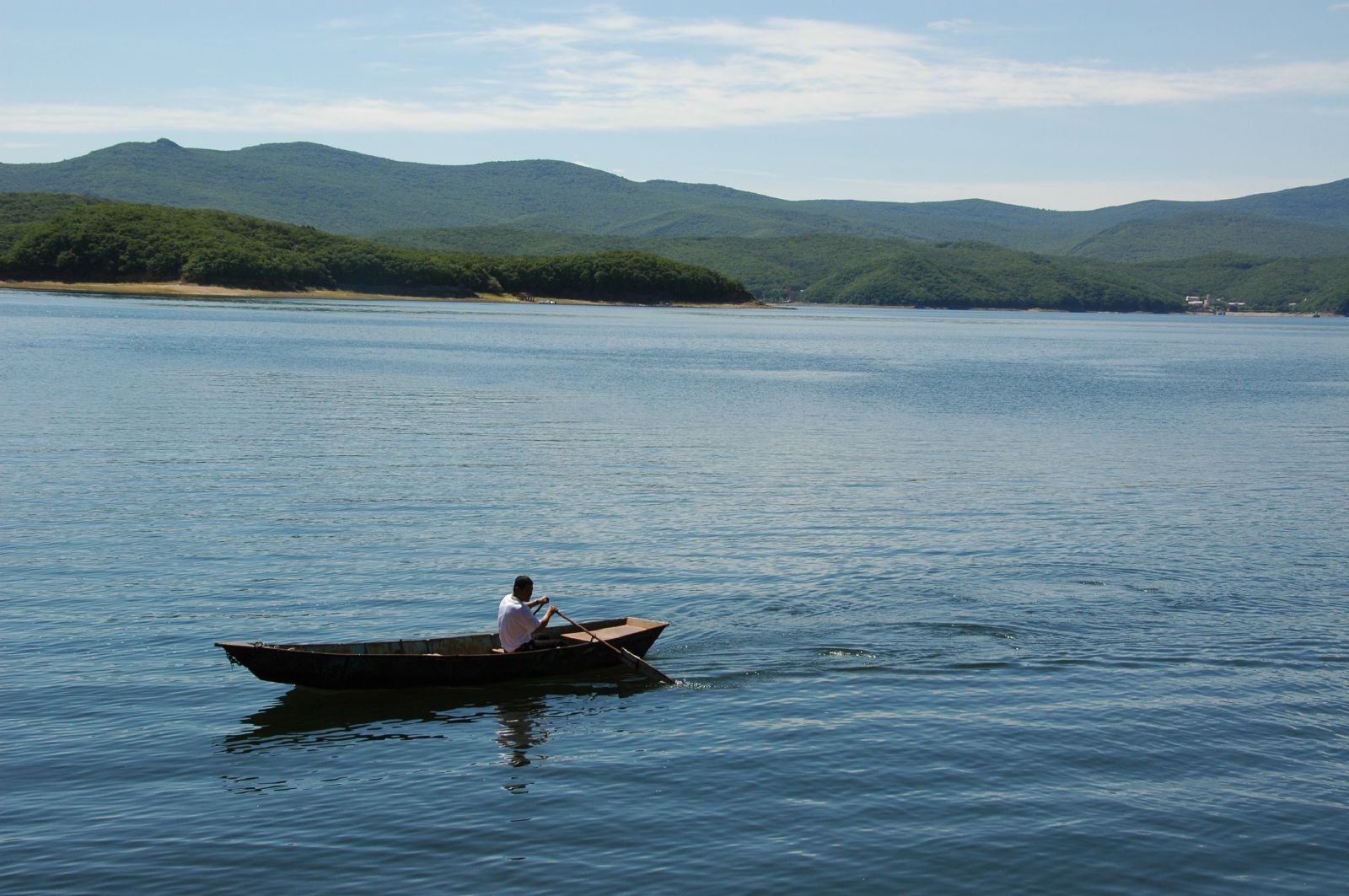
Jingpo Lake — Jingpohu in Chinese, meaning Mirror Lake — is a long, narrow volcanic lake in the mountains south of Mudanjiang, formed around 10,000 years ago when lava flows from the Diaoshuilou volcano blocked the Mudan River valley. The lake is about 45 kilometres long but rarely more than a few kilometres wide, and the forest-covered hills descend almost directly into the water on both sides. In calm conditions the reflections are extraordinary — the lake's name is well-earned — and the surrounding Jingpohu National Forest Park gives the whole area a protected, unhurried quality.
The main set-piece is the Diaoshuilou waterfall at the lake's northern end, where the Mudan River drops twelve metres across a basalt ledge that is the widest waterfall in China by some measures, though the flow varies considerably with rainfall. In spring and after heavy summer rain it is genuinely impressive; in autumn the surrounding maple and birch foliage turns the hills red and gold. The volcanic geology is visible throughout the park — lava caves, basalt columns, and strange formations in the forest — and the Huoshu crater area to the north is worth a half-day for anyone interested in the landscape's origins.
The lake itself is swimmable in summer and is heavily used by domestic visitors from Mudanjiang, about 100 kilometres to the north, and from Harbin. Boats offer tours of the quieter southern sections, which see far fewer visitors than the waterfall end. Accommodation ranges from lakeside hotels to guesthouses in the nearby village of Jingpohu Town. Summer weekends are crowded; weekday visits in late spring or early autumn offer much the same scenery with a fraction of the people.
Jingpohu is most naturally visited from Mudanjiang, which is the nearest base with good transport connections. Day trips are common but a night or two allows more of the park's perimeter trail network to be explored and gives a better chance of catching the lake at its still, mirror-surface best in the early morning.