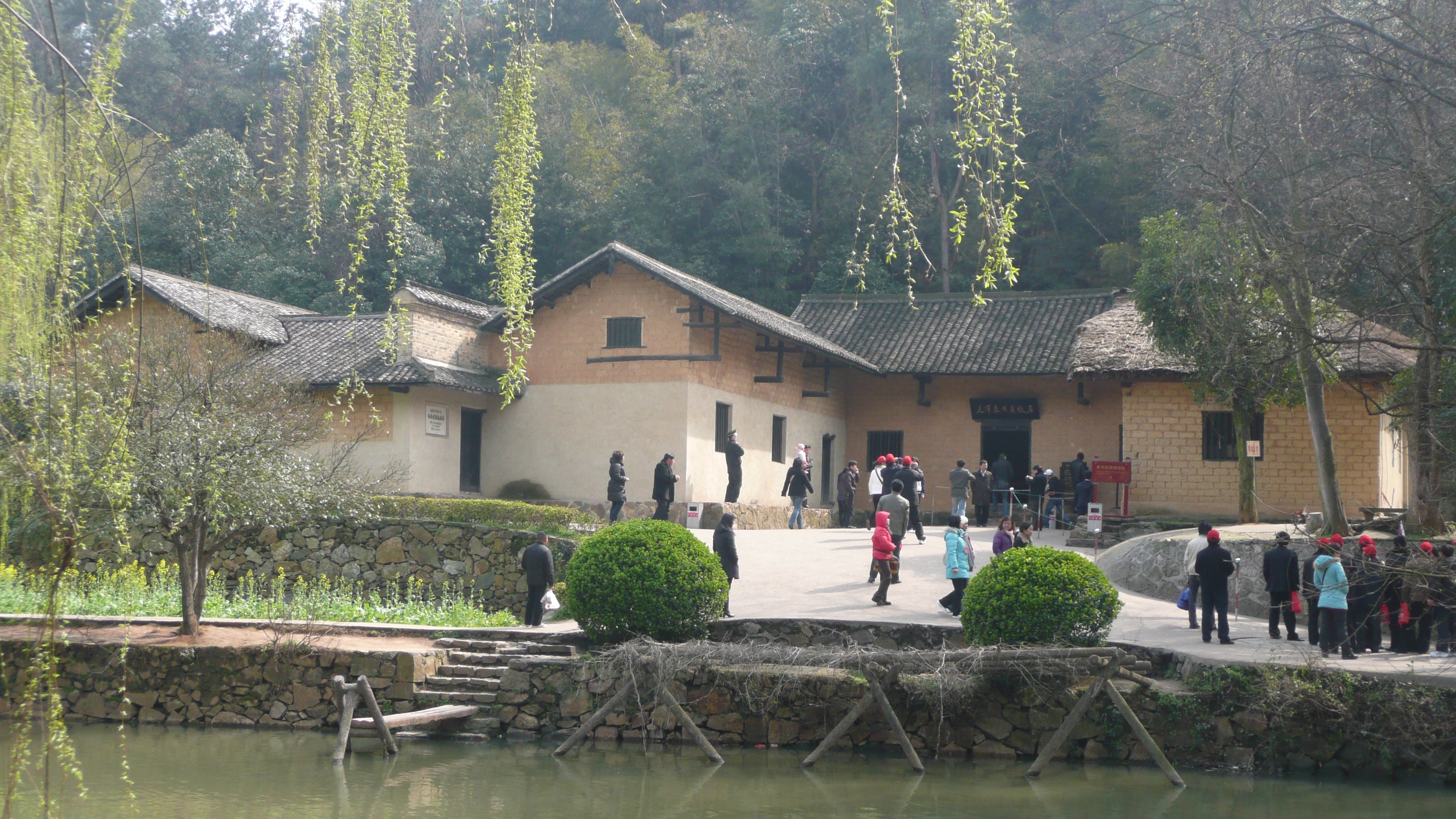
Shaoshan is a small market town in central Hunan that would be entirely unremarkable except for one fact: Mao Zedong was born here on 26 December 1893. Since his death in 1976 it has operated as a pilgrimage site drawing tens of millions of Chinese visitors, making it one of the most-visited destinations in Hunan despite having none of the conventional tourist apparatus — no UNESCO listing, no dramatic scenery, no restaurant scene worth mentioning. What it has is an almost archaeological density of Mao-related sites and the particular atmosphere of a place that an entire country has decided is sacred.
Mao Zedong's former residence is the centrepiece: a farmhouse with packed-earth walls and a courtyard, its rooms filled with period furniture and the objects of a late-Qing rural household. English-language information is available. A short walk away, the Chairman Mao Memorial Museum covers his early life and the beginnings of the Communist movement, with free admission and exhibits that present the standard narrative without qualification but with genuine historical material. Mao Zedong Square, in the newer part of town, is dominated by a bronze statue of the Chairman seven or eight metres high.
The strangest site is Water Dripping Cave, a facility built specifically for Mao's use during his one return visit to Shaoshan in June 1966, at the beginning of the Cultural Revolution. He stayed here for eleven days and is said to have made key decisions about the coming upheaval. The complex is now a museum preserving the conference rooms, bedrooms, and — according to the guides — the ping-pong table he used. It has the eerie quality of a time capsule built around a single week in history.
Shaoshan is 90 kilometres southwest of Changsha, reached in 25 minutes by high-speed train from Changsha South Station (hourly service from 7am) or about 90 minutes by bus. It works comfortably as a day trip. Souvenirs are aggressively communist in theme — brass busts, Little Red Books, red scarves — and the local restaurants serve the Hunanese food Mao is claimed to have preferred, particularly red-braised pork.