Zhangjiajie is a small city in northwestern Hunan that functions almost entirely as a gateway to the landscape that surrounds it. The Zhangjiajie National Forest Park and the broader Wulingyuan scenic area contain more than 3,000 sandstone columns rising hundreds of metres from forested gorges — a topography so alien-looking that James Cameron's production designers studied it while building the world of Avatar, and park authorities later renamed one peak "Avatar Hallelujah Mountain" in response. The city itself is functional rather than beautiful, with accommodation and restaurants clustered around the train and bus stations, but there is no need to spend more time in it than transit requires.
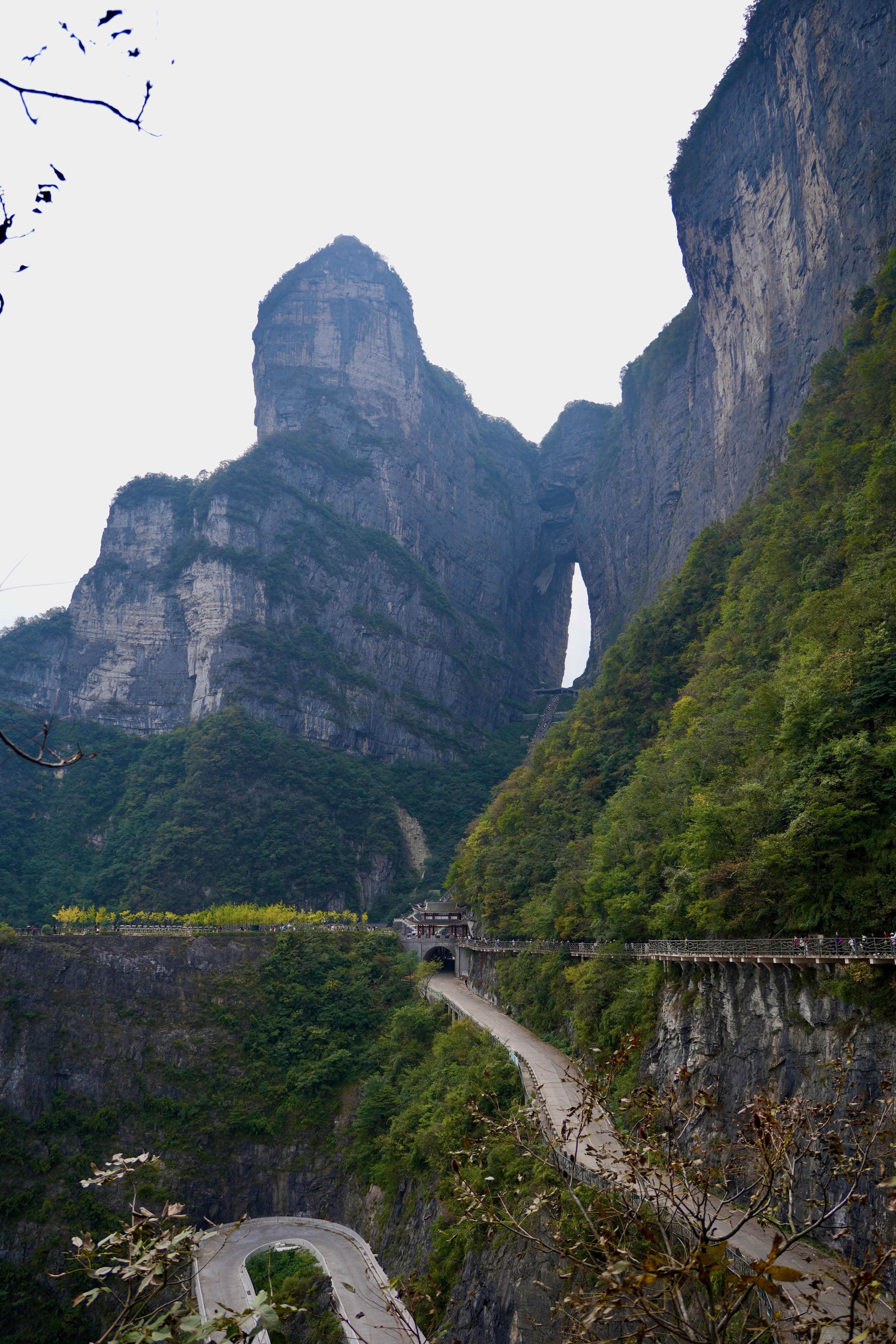
Tianmen Mountain, immediately accessible from the city centre, offers a distinct experience from Wulingyuan. Its defining feature is a natural arch — the Heaven Gate Cave — formed when the back of a cliff cave collapsed in 263 AD, leaving an opening about 130 metres high. The cable car from the city centre is reputedly the world's longest alpine passenger cableway, climbing nearly 1,300 metres. Three glass-floored walkway sections overhang cliffs far above the treeline, and bus routes within the park wind along a 99-bend mountain road that has become a tourist attraction in its own right.
For the national forest park, most visitors buy a multi-day ticket and spend two or three full days working through the major areas: Huangshizhai (the highest point at 1,050 metres), the Golden Whip Stream valley walk, Yuanjiajie where the Avatar mountain stands, and Tianzi Mountain. The Bailong Elevator — a glass-sided lift of 326 metres — is the world's tallest outdoor elevator and provides one of the stranger views in Chinese tourism: stepping out of a concrete shaft into a world of floating stone. The First Bridge of the World at Yuanjiajie is a natural rock arch from which the column hangs below. Internal buses and cable cars link the areas; walking everything would take a week.
The city is around 250 kilometres from Changsha by road and reached in roughly four hours by bus or train. The park is busiest in summer and during Golden Week holidays, when the narrow walkways become genuinely congested; spring and autumn offer better visibility and more manageable crowds. Accommodation inside and immediately outside the park entrance is plentiful. Food options within the park are limited and expensive — packing provisions for long hiking days is sensible.