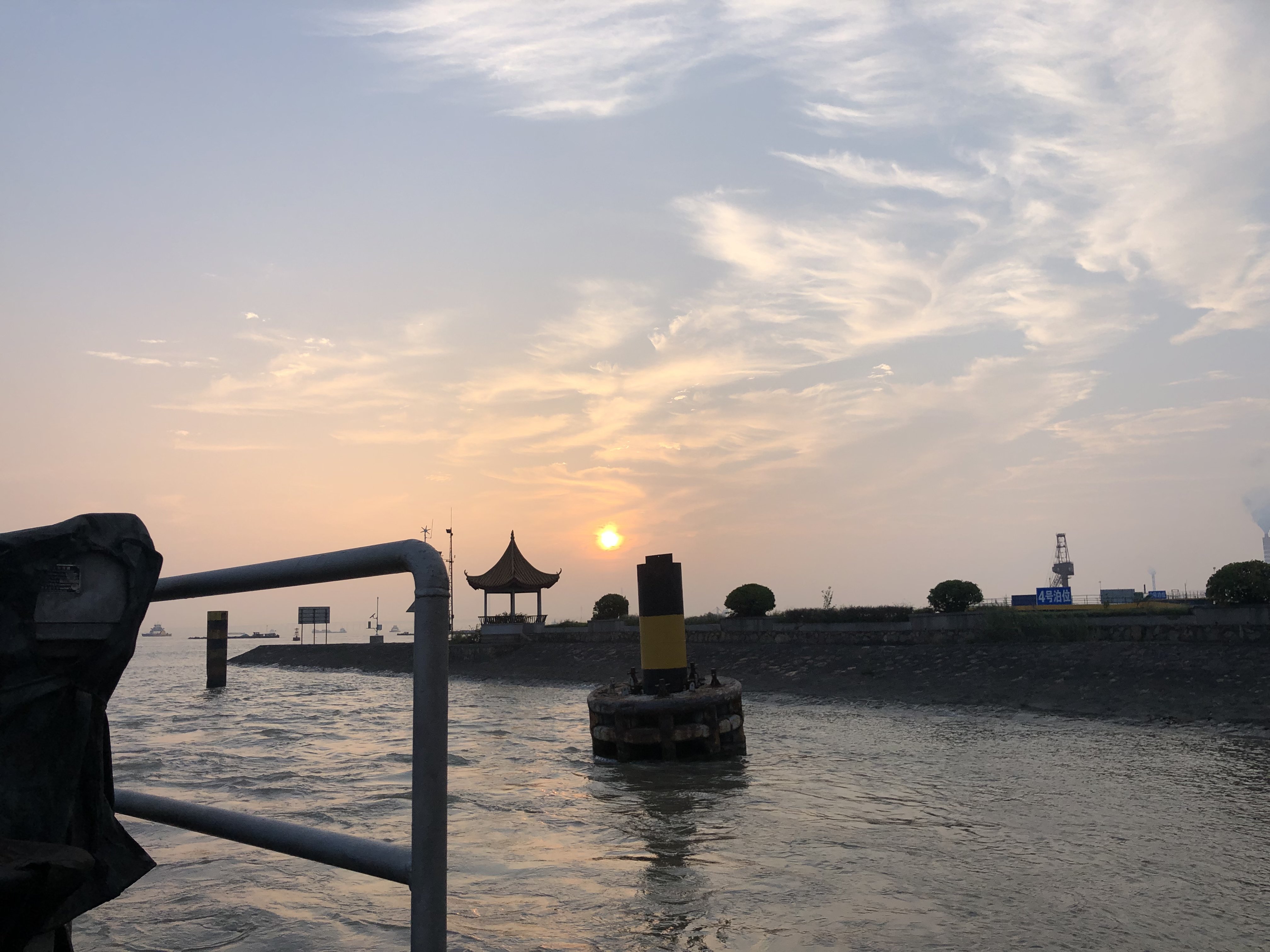
Nantong sits on the north bank of the Yangtze River, directly across from Shanghai's commuter hinterland, but it has resisted being absorbed into the megalopolis's identity. A major port and textile city since the late Qing era, it carries itself with the quiet self-assurance of a place that has always been economically important without needing to be glamorous. The long riverfront, the leafy civic streets, and the unexpectedly good museums make it a satisfying half-day city for travellers who plan their route thoughtfully.
The Nantong Museum, founded in 1905 by reformer Zhang Jian, is one of China's earliest purpose-built public museums and still worth visiting: its collections range from whale skeletons to fine ceramics to calligraphy, and the grounds include pleasant gardens. The Textile Museum offers a serious account of Nantong's industrial soul, tracing hand-weaving traditions through six well-curated halls. Langshan, or Wolf Hill, is the city's famous scenic hill topped by a Buddhist temple traditionally visited by sailors asking for safe passage; the views over the river on a clear day are expansive.
Evenings come alive along the Haohe River, a scenic waterway that loops through central Nantong. Boat trips after dark pass illuminated fountains and residents out walking. The food options range from cheap pancake rolls and malatang hotpot from street vendors to river-view restaurants serving Yangtze fish. The city has a small but active expat community, a legacy of the port economy.
Nantong is easily reached from Shanghai (around 1.5 hours by high-speed rail) or Nanjing (2.5 hours). A second train station opened recently to ease pressure on the original one, and metro Line 1 began service in 2022. Most travellers arrive as a day trip from Shanghai, but an overnight stay allows for the evening river atmosphere that day-trippers miss.