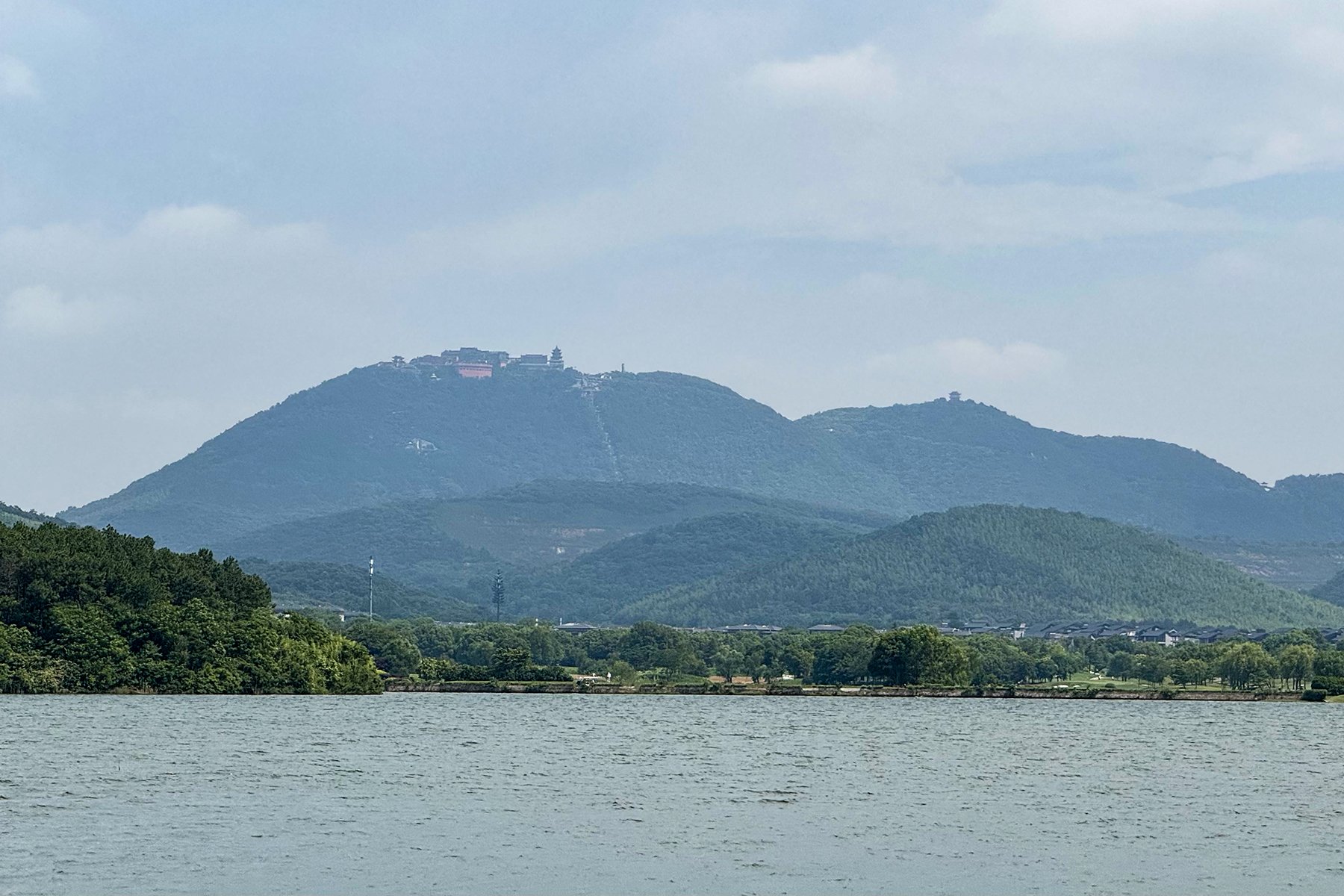
Zhenjiang (镇江) sits where the Grand Canal meets the Yangtze River — a junction that made it strategically vital for a thousand years and gave it a grandeur that outlasted the trade routes that built it. The city served as Jiangsu's provincial capital until 1949, and while Nanjing has since absorbed its administrative role, Zhenjiang still has the bones of a serious place: a long Yangtze waterfront, several mountain parks rising directly from the city fabric, and old streets that recall its treaty-port heyday.
The three mountain parks are the main draws. Jinshan Park is built around a pagoda and monastery that appear to rise straight out of a lake — the scene that made Zhenjiang famous in Chinese landscape painting, and the setting of the classical tale of Madame White Snake, in which a snake spirit floods the temple to rescue her mortal husband. Jiaoshan is an island in the Yangtze reached by ferry, with a temple complex, bamboo groves, and earthwork forts from the Opium War period. Beigushan, the most atmospheric, commands a terrace above the river with views across the Yangtze toward Yangzhou; the Three Kingdoms general Liu Bei allegedly spotted the strategic importance of this bluff from the river and resolved to hold it.
The other compelling reason to come to Zhenjiang is its vinegar. Zhenjiang black vinegar (镇江香醋), aged and fragrant, is one of China's four great regional vinegars and the reason the city's steamed dumplings taste different from those anywhere else. The China Vinegar Culture Museum is more interesting than its name suggests, but the real education comes from sitting down to crab dumplings with a small dish of the local product. The Xijindu ancient street, a restored ferry crossing district near the river, has enough atmosphere for a pleasant evening stroll even if some of the shopfronts are now selling tourist goods.
Zhenjiang is on the main Shanghai–Nanjing high-speed rail line and easy to visit as a day trip or an overnight stop. It makes a natural pair with Yangzhou, which is directly across the Yangtze and accessible by ferry in twenty minutes.