Yangzhou (扬州) is one of China's great old cities, and one of its most underappreciated. For much of the Tang and Song dynasties it was among the wealthiest places in the empire — a salt-trading hub where Arab and Persian merchants mingled with Chinese scholars and where the salt merchants' gardens became among the most lavish in the country. Marco Polo claimed to have governed it for three years, which historians dispute but which tells you something about the city's reputation. That prosperity is still visible today: Yangzhou has more and better classical gardens per square kilometre than almost anywhere in China.
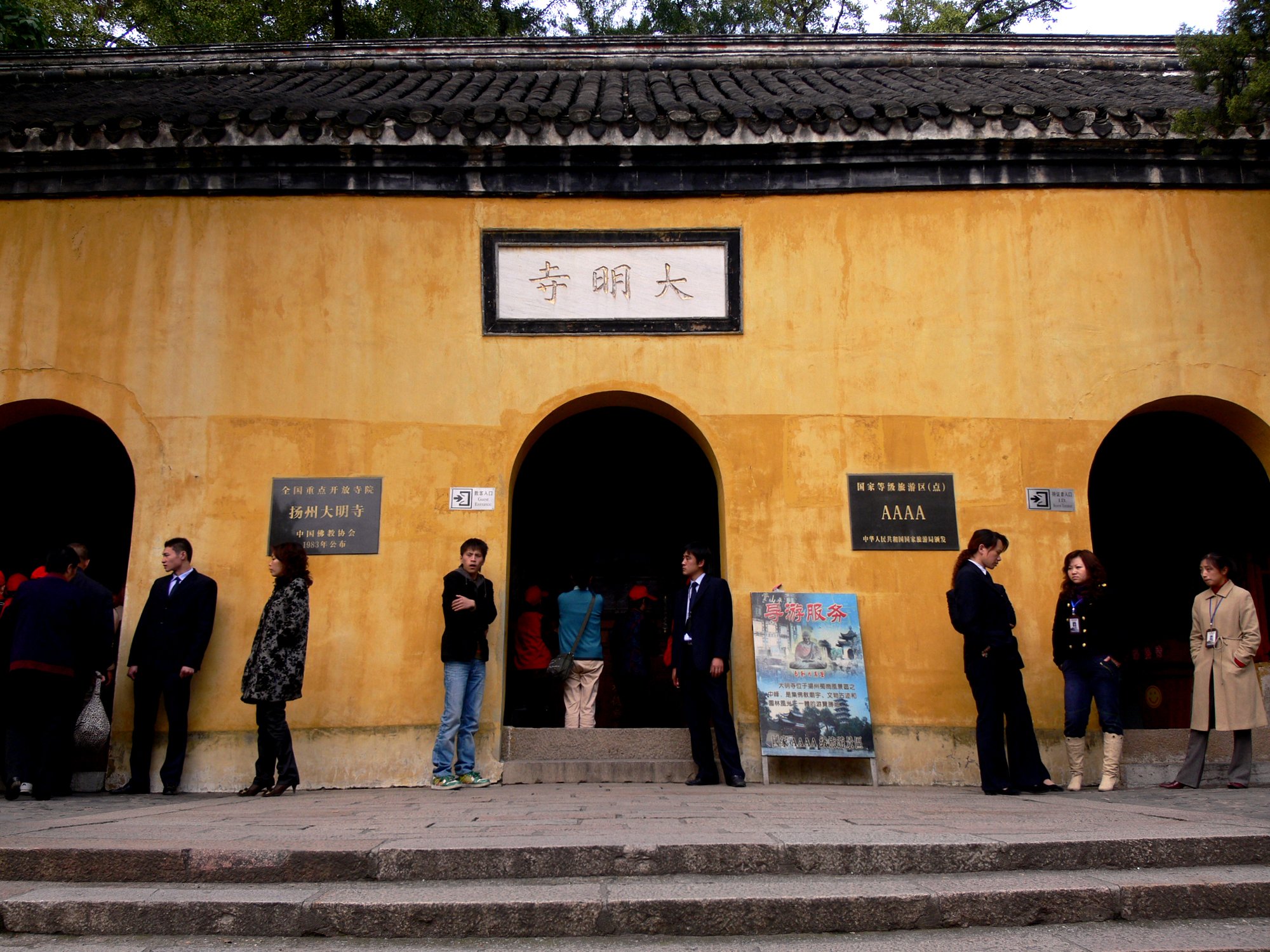
The centrepiece is Slender West Lake (瘦西湖), a long, thin waterway shaped to fit within the city rather than dominate it. The Five Pavilion Bridge, straddling the water on a lotus-shaped base, is the most photographed structure in Yangzhou and deservedly so. Nearby are two outstanding private gardens: Ge Yuan, built by a bamboo merchant and famous for its seasonal rockery scenes, and He Yuan, a late Qing estate where corridors wind around rockeries and a two-storey covered walkway circles the courtyard. Daming Temple, founded in the 5th century and rebuilt after 19th-century destruction, sits on a low hill north of the lake and houses a nine-storey pagoda visible from much of the city.
Beyond gardens and temples, Yangzhou is a serious food city. Huaiyang cuisine — one of the four great schools of Chinese cooking — was refined here, and the local version is genuinely exceptional: subtle, sweet-inflected, and obsessed with knife work. Yangzhou fried rice (扬州炒饭) has escaped the city and gone global, but in its birthplace the standard is different. Lion's Head meatballs, braised for hours with crab, and thousand-layer tofu skin are equally worth seeking out at any of the old restaurants around Dongguan Street. Begin the day at Yechun Teahouse for the traditional Yangzhou morning meal.
Yangzhou sits north of the Yangtze and is accessible by high-speed train — the newer Yangzhoudong Station is the faster option from Nanjing or Shanghai. The old city is compact enough to cover on bicycle, and the canal infrastructure of the Grand Canal, which runs through town, gives the whole place a waterborne character that feels distinctly different from the cities to the south. The Crane Mosque and Puhaddin Mausoleum in the Muslim Quarter are reminders that Arab merchants settled here for centuries. If you are spending time in Jiangsu and want somewhere that rewards slower exploration, Yangzhou is the best choice outside Suzhou.