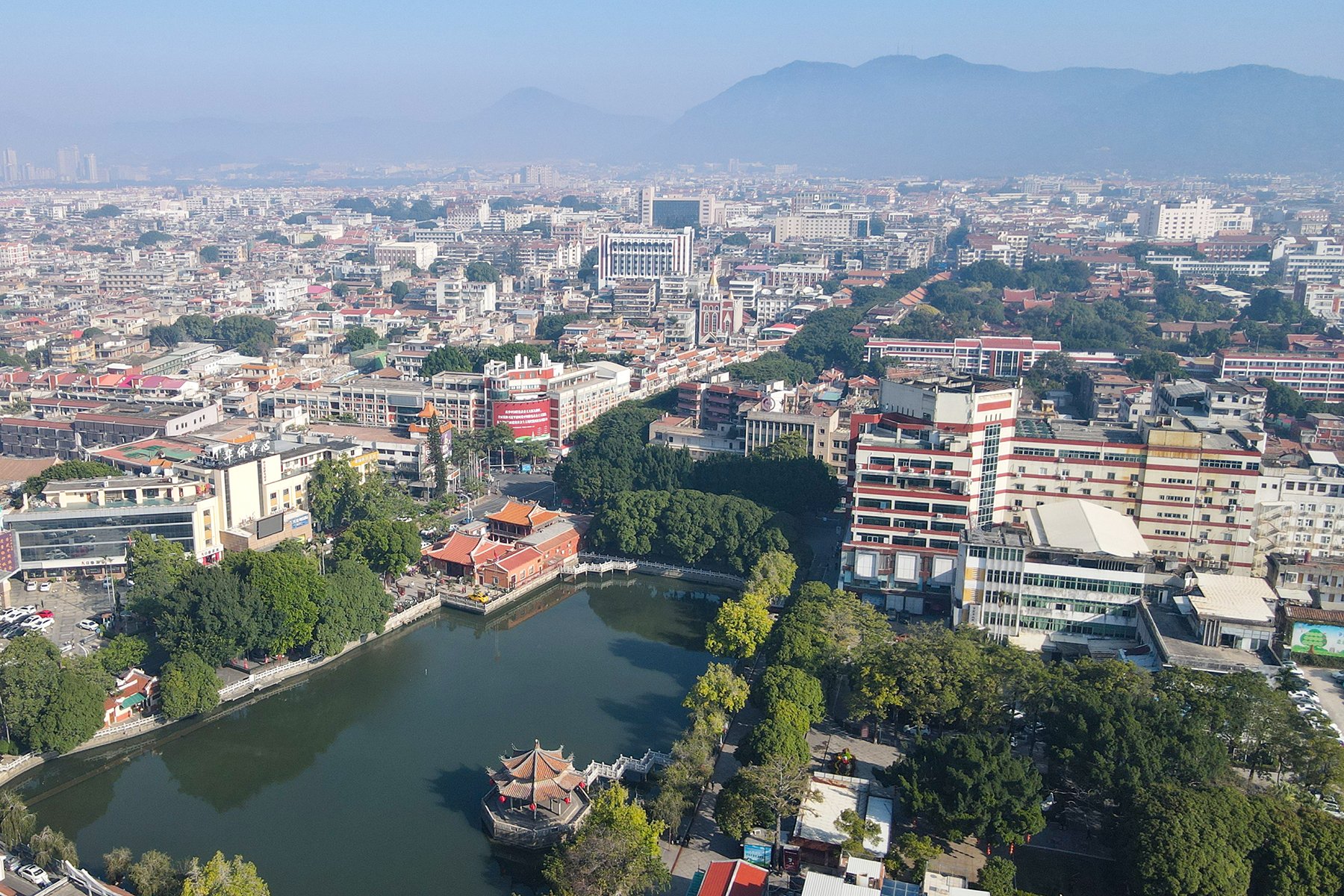
Around a thousand years ago, Quanzhou was arguably the busiest port in the world. Arab, Persian, Indian, and Jewish merchants settled here by the tens of thousands, ships from across the Indian Ocean unloaded silk and loaded spices, and the city Marco Polo called Zaiton — a name that gave English the word "satin" — was the eastern terminus of the Maritime Silk Road. Ibn Battuta passed through in the 14th century and was astonished by the scale of it. In 2021, UNESCO inscribed sixteen Quanzhou sites as "Quanzhou: Emporium of the World in Song-Yuan China."
Most Chinese cities of this age have been largely rebuilt. Quanzhou has not, at least not entirely, and that is its great appeal. Kaiyuan Temple, founded in 686 AD, is the largest Buddhist complex in Fujian, its twin Song-dynasty stone pagodas rising above ancient banyan trees. The Qingjing Mosque on Tumen Street dates to 1009 and is the oldest surviving mosque in China — a reminder that this was once a city where Arab merchants built permanent institutions. The Maritime Museum holds the physical evidence of all this trade: stone inscriptions in Arabic, Persian, Tamil and Syriac, and the hull of a 13th-century trading vessel recovered from the harbour. The Lingshan Islamic Cemetery on the eastern edge of the city contains the graves of Arab traders with inscriptions dating to the Song dynasty.
The Luoyang Bridge, a few kilometres north of the city, is one of the great feats of Song-dynasty engineering — a 1,200-metre causeway across a tidal estuary, built in the 1050s using an ingenious technique of growing oysters on the stone foundations to cement them in place.
Quanzhou is a working city rather than a polished tourist destination, and it's better for it. The old town around Zhongshan Road still has the scale and texture of a historic Chinese city, and the famous Lantern Festival in spring sees every merchant along the old streets competing to hang the most elaborate lanterns. Tieguanyin oolong tea from nearby Anxi is sold everywhere and worth bringing home.