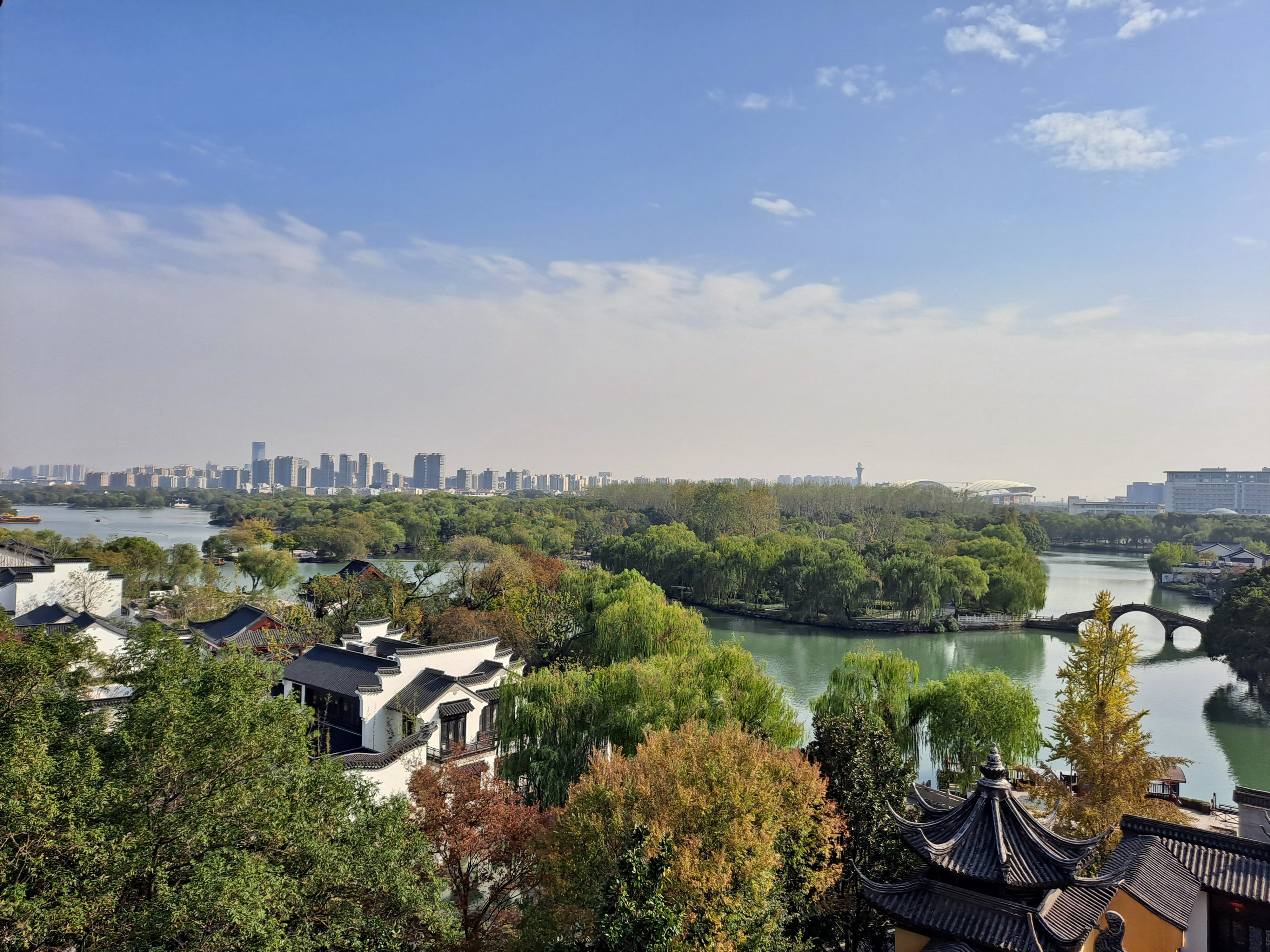
Jiaxing sits in the flat, watery plain north of Hangzhou, in the heart of the Jiangnan region that for centuries fed and clothed the Chinese empire with its silk, rice, and fish. The city itself is understated — less than an hour from Shanghai by high-speed train, it functions as a secondary stop on a circuit that usually begins elsewhere — but it rewards attention. South Lake is the city's centrepiece, with a pavilion set on a mid-lake island that is one of the more pleasant classical garden views in northern Zhejiang. Jiaxing is also famous throughout China for its zongzi, glutinous rice parcels wrapped in bamboo or lotus leaves and filled with pork belly, a food so associated with the city that chain shops selling them have spread across the country.
The main reason most visitors come to Jiaxing is as a base for the canal towns to its west and east. Wuzhen, forty minutes away, is the most photographed water town in China, its stone bridges and canal-side wooden buildings carefully restored and lit at night for maximum effect. Xitang, closer to Shanghai, is slightly less polished and slightly more atmospheric — narrow covered lanes run beside the canals, and the town empties out on weekday mornings to leave something resembling genuine quiet.
Jiaxing is also a small site of modern Chinese history: the Red Boat memorial on South Lake where the Chinese Communist Party held its First National Congress in 1921, after being forced out of Shanghai by police, is preserved as a memorial. It is a peculiar footnote to the canal town scenery, and one that draws its own stream of visitors. Less visited but equally interesting is the Kim Ku hideout on Meiwan Street, where the Korean independence leader hid from Japanese colonial police during the 1930s.