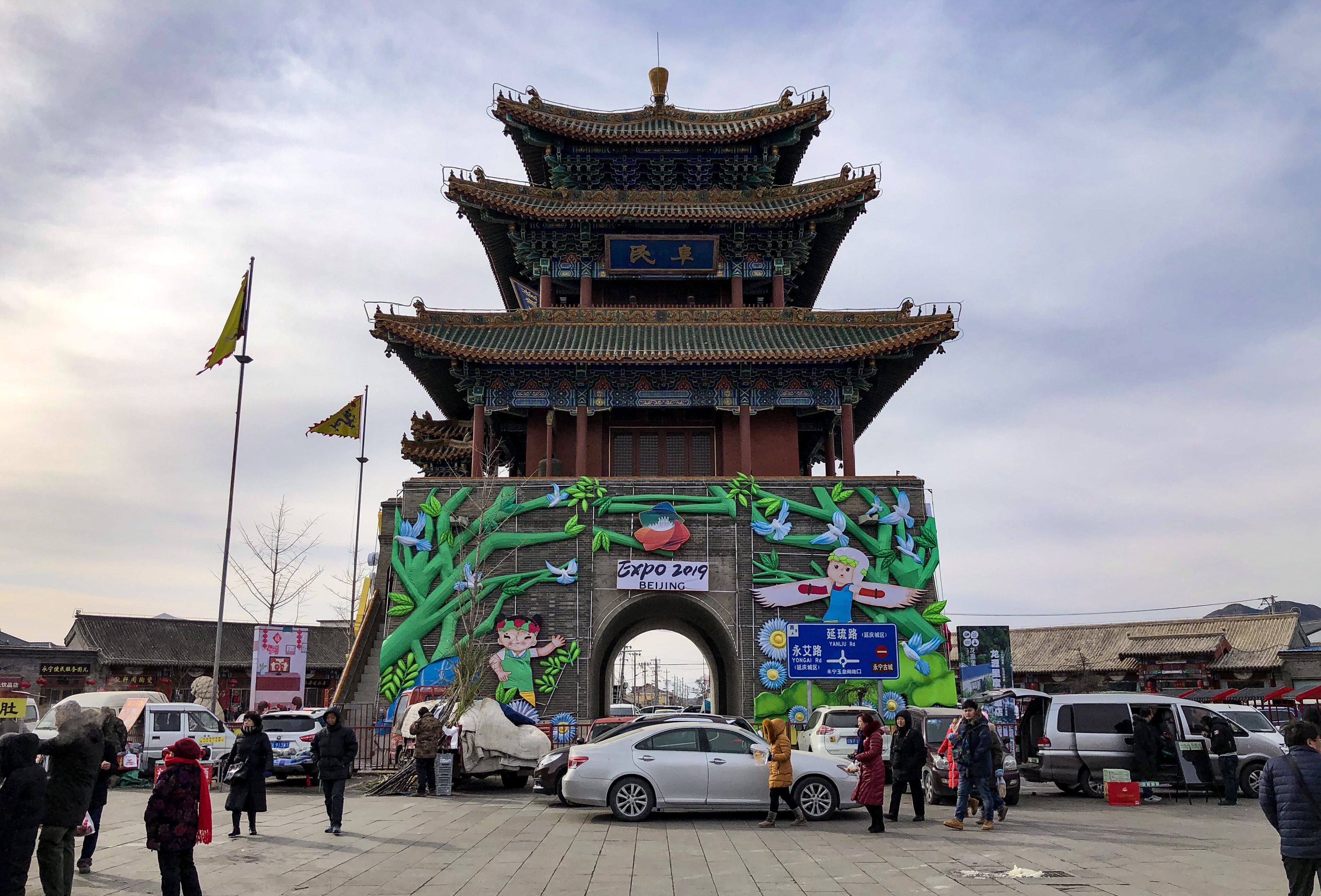
Yongning is a county-level city 20 kilometres south of Yinchuan, administratively part of the capital's urban agglomeration but distinct in character from the provincial centre. It is notable as one of the heartlands of the Hui Muslim community in China and a historical focal point of Islamic culture in the northwest.
The most significant site near Yongning is the Nanguan Mosque, one of the largest mosques in China — a modern, Arabian-influenced structure that replaced an older building destroyed during the Cultural Revolution. It can accommodate thousands of worshippers and draws pilgrims from across the region, particularly during Ramadan and Eid. The architecture is deliberately non-Chinese in style, with domes and minarets that signal the community's identity as distinct from the Han Buddhist mainstream. The Najiahu Mosque nearby offers an older, Chinese-style counterpoint.
Yongning sits in the irrigated farmland between the Yellow River and the Helan Mountains, the same strip of fertile land that has made this area habitable for two millennia. The surrounding countryside is flat and agricultural, planted with rice, wheat, and the wolfberries — goji berries — that Ningxia exports internationally. The area's farmers are predominantly Hui, and the villages have a character that is quieter and more pious than the bustle of Yinchuan.
Most travellers visit Yongning as a half-day trip from the capital. Local buses from Yinchuan's south bus station cover the route in about 30 minutes. There is no compelling reason to stay overnight, but for those interested in Hui culture and the texture of everyday life in China's most Muslim province, the town and its surrounding villages repay a slow afternoon.