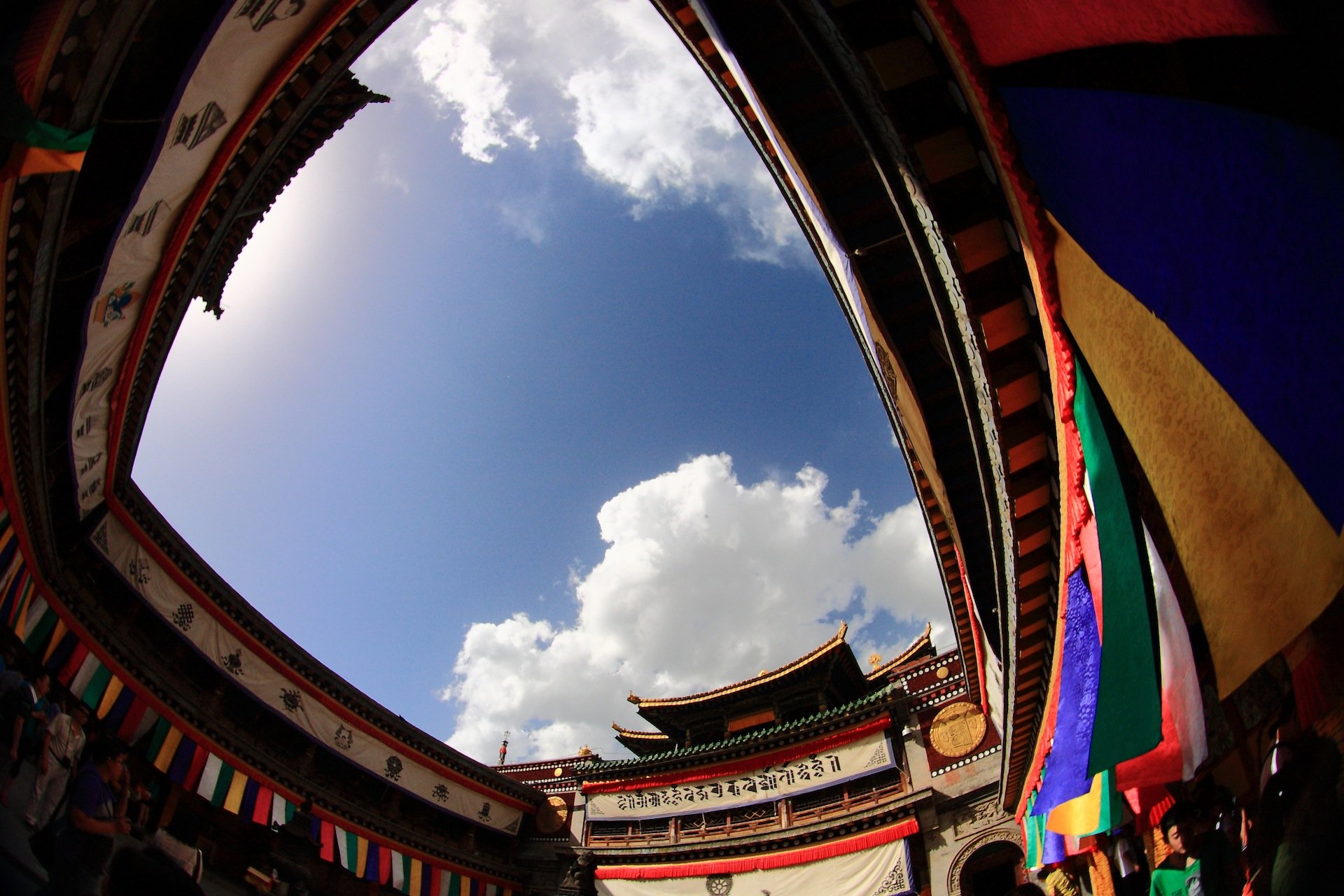
Huangzhong is a small city 28 kilometres southwest of Xining, visited almost entirely for one reason: the Kumbum Monastery, known in Tibetan as Kumbum Jampa Ling and in Chinese as Ta'er Si. The monastery was built in 1583 on the site of a sacred tree that is said to have sprung from a drop of blood when Tsongkhapa — the founder of the Gelug school of Tibetan Buddhism — was born here in 1357. It is now one of the largest and most influential monasteries in the Amdo region of historical Tibet, with around 600 monks in residence.
The monastery complex is extensive, covering several dozen hectares of hillside. The most important buildings are the Hall of Butter Sculptures, where monks spend months each winter creating elaborate three-dimensional tableaux from yak butter coloured with mineral pigments — displayed at the annual Butter Festival in the first month of the Tibetan calendar — and the Hall of Great Prayers, the largest hall, which holds a golden reliquary said to contain Tsongkhapa's hair. The Hall of Great Golden Tiles, its gilded copper roof visible from below, marks the sacred birthsite itself. The various chapels are filled with murals and thangka embroideries of exceptional quality.
Four major Summons Ceremonies take place through the year, featuring philosophical debate sessions, chanting, and the public display of large thangkas. The monastery is active and working; monks conduct prayers through the day and the sound of chanting drifts across the courtyards. The entrance fee is 80 yuan, which covers most of the buildings, with some chapels charging separately.
Buses run to Huangzhong from Xining's gymnasium bus stop every 30 minutes and take about an hour. Taxis from the city centre cost around 60 yuan. Most visitors come on a half-day or full-day trip from Xining; the town itself has a few Tibetan restaurants and the Kumbum Hotel for those wishing to stay.