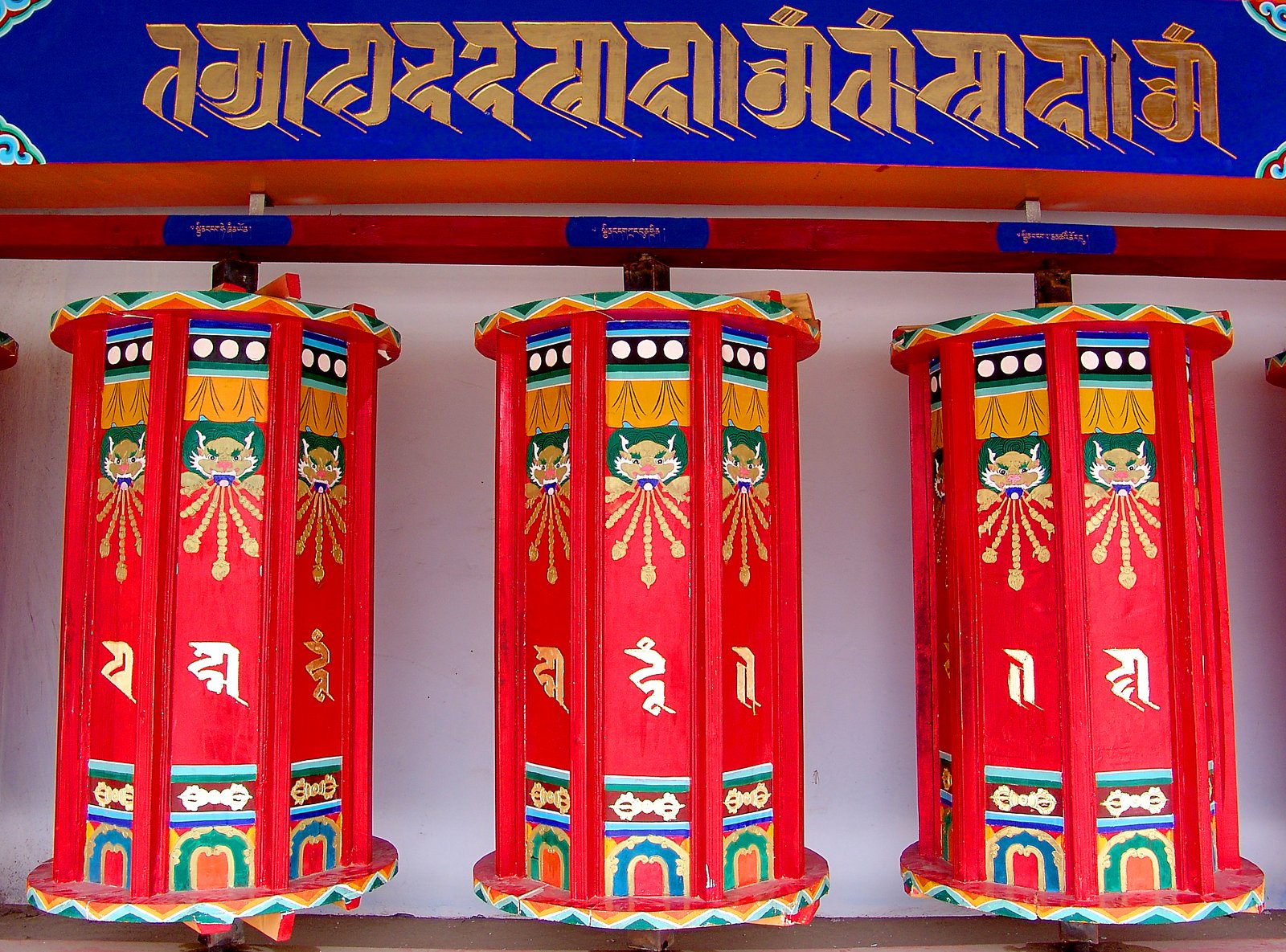
Tongren — Rebkong in Tibetan — is a small city in Huangnan Prefecture in southeastern Qinghai, long renowned as the centre of a living tradition of Tibetan religious art. The region has been producing thangka painters, butter sculptors, and muralists for centuries; many of the best-known examples of Amdo Buddhist art were made by artists from the villages around Tongren. The tradition continues: the monastery towns of Wutun and Gomar, within a few kilometres of the city, are still full of working artists.
The main monastery in town is Longwu, a Gelukpa institution established in 1301 on a hillside above the Longwu River. The complex includes a Future Buddha Hall with a large gilded Maitreya statue and several chapels with contemporary thangka cycles of considerable quality. Admission is 50 yuan. A few kilometres north of Tongren, the paired monasteries of Wutun Upper and Lower — divided between Nyingma and Gelug traditions — are filled with paintings, many of them centuries old. The Wutun artists' workshops accept visitors, and watching painters work on traditional compositions with mineral pigments is the most rewarding experience in the area. The Regong Arts Museum in the town centre provides context before visiting the monasteries. Note that during late July to early September women are not permitted in parts of the upper monastery.
Tongren is about four hours by bus from Xining; services depart roughly every 30 minutes. The town is small enough to walk, with the monastery and the valley below easily covered on foot. Accommodation ranges from basic guesthouses at around 60 yuan to mid-range options at 130 yuan. The surrounding valley, with its terraced fields and white-walled village monasteries, is worth exploring on foot or by hired vehicle.
The population is predominantly Tibetan, with Tibetan language dominant in everyday life. The annual Monlam Chenmo prayer festival, usually in February or March by the Tibetan calendar, brings pilgrims from across the region and is one of the more atmospheric religious events in Qinghai.