Yushu — Jyekundo in Tibetan — is a city in southern Qinghai at 3,700 metres, the administrative centre of a large prefecture that extends to the borders of Sichuan and Tibet. It is one of the most distinctly Tibetan cities in China, with Tibetan architecture, Tibetan language, and a pace of life that is closer to Lhasa than to Xining. Much of the old town was rebuilt after a severe earthquake in 2010, but the city has recovered and regained its character.
The defining monument is the Gyanak Mani Stone Complex (Manishicheng), a few kilometres outside town, which houses what is claimed to be the largest collection of carved mani stones in the world — over two billion prayer stones stacked into walls and structures covering a substantial area. The stones are engraved with the mantra Om Mani Padme Hum and images of deities, accumulated over centuries by devotees. The circuit around the mani wall is a genuine pilgrimage route; monks, nuns, and lay Tibetans walk it throughout the day. Twenty yuan by taxi from the centre.
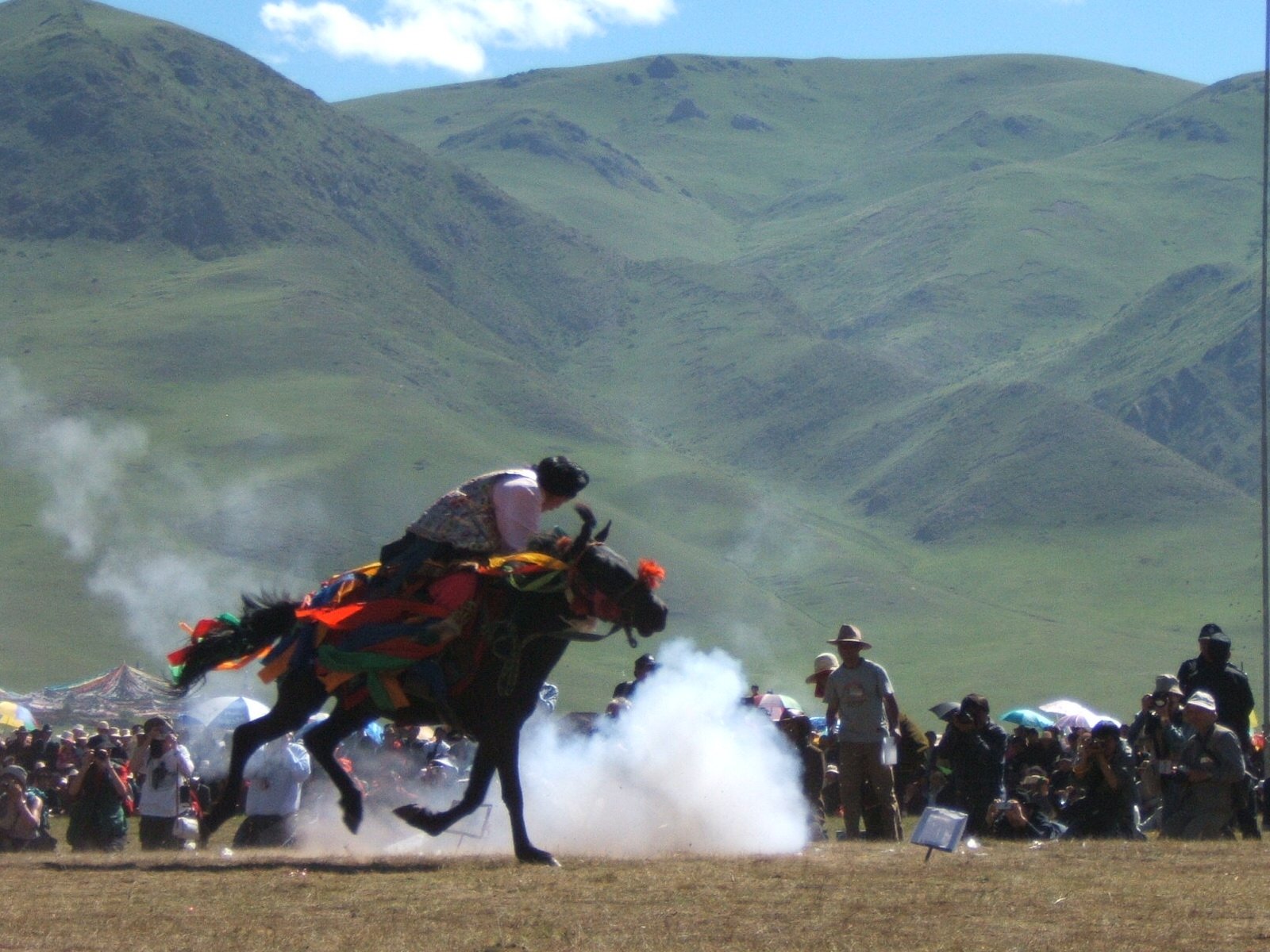
Several active monasteries operate in and around town, including Jyekundo Dondrubling, the largest, and the smaller Jorang and Qiulindo monasteries. The Princess Wencheng Temple, 20 kilometres from town, commemorates the Tang dynasty princess who passed through this area on her way to marry the Tibetan king in the 7th century; the temple is carved into a cliff face and the monks there reportedly speak some English. The annual Horse Festival in late July brings nomads from across the plateau for racing, displays of horsemanship, and traditional dress. Yushu is also the main gateway to Sanjiangyuan National Park, the source region of the Yangtze, Yellow, and Mekong rivers.
Yushu has an airport with connections to Xining, Chengdu, and Lhasa. The bus from Xining takes 12 to 20 hours on a route crossing high passes; the journey is spectacular but demanding. Most visitors fly. The altitude is serious — acclimatise in Xining before arriving if possible, and do not exert yourself for the first day.