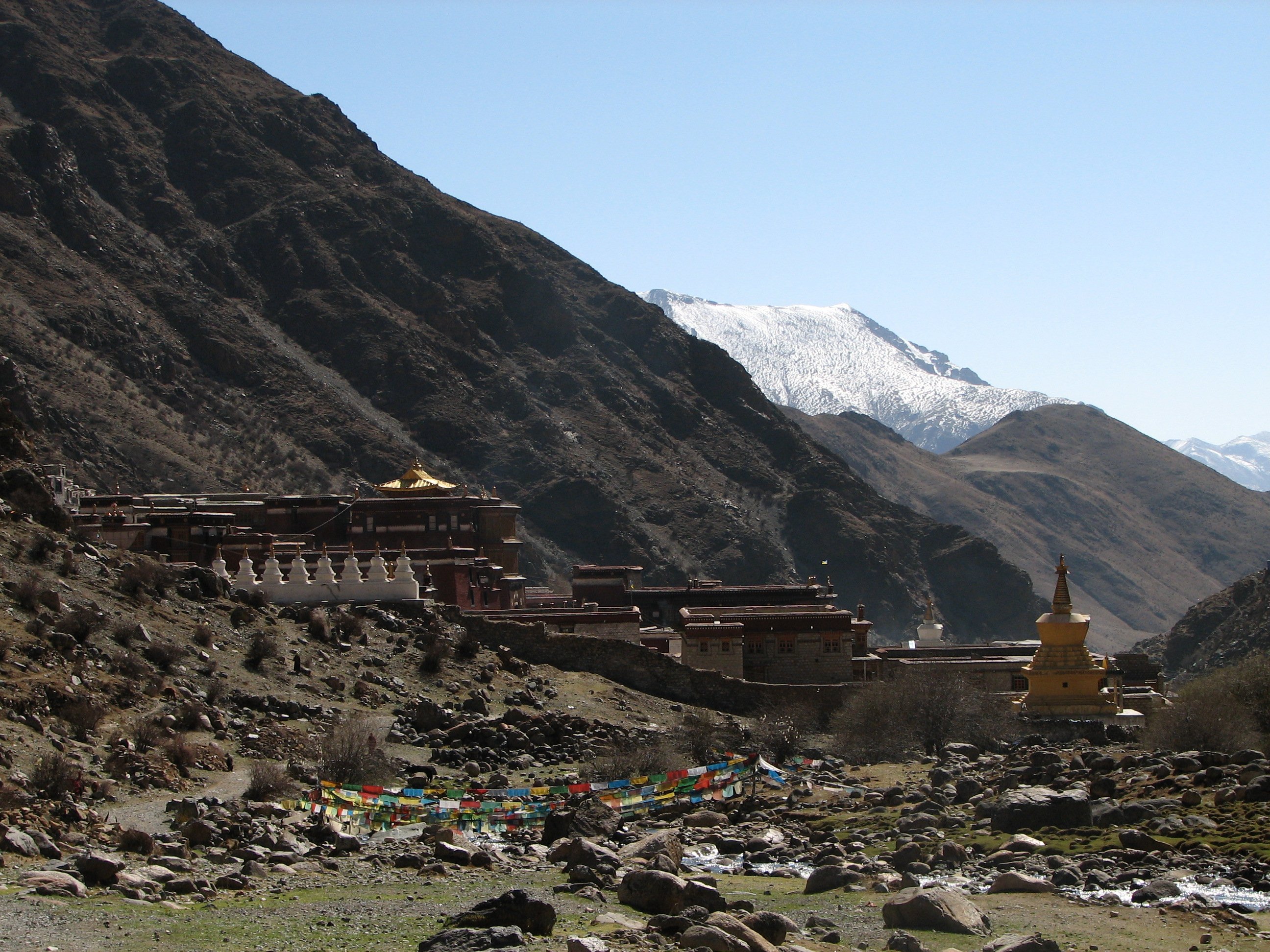
Tsurphu Monastery sits at 4,300 metres in a narrow valley about 70 kilometres northwest of Lhasa, enclosed by high ridges on three sides and facing south down the valley. It is the traditional seat of the Karmapa, the head of the Karma Kagyu lineage of Tibetan Buddhism — the third highest figure in the faith after the Dalai Lama and the Panchen Lama. Founded in 1159 by Düsum Khyenpa, the first Karmapa, it is one of the oldest continuously functioning monasteries in Tibet and one of the most significant in the Kagyu school.
The monastery was devastated during the Cultural Revolution and largely rebuilt from the 1980s onwards. The restoration is substantial: the main assembly hall is large and active, the walls are bright with new murals, and several hundred monks are in residence. This gives Tsurphu a different atmosphere from the more heavily touristed monasteries closer to Lhasa — it feels lived-in rather than preserved. The complex also houses a famous five-metre thangka that is displayed during the Tsurphu Festival, held in the fourth month of the Tibetan calendar.
The 17th Karmapa, Ogyen Trinley Dorje, was enthroned at Tsurphu in 1985 but fled to India in 2000, reportedly walking over the Himalayas in winter. His absence has left a vacancy at the monastery's centre, though the institution itself continues under the administration of regents. The situation is politically sensitive and not something to raise with monks.
Tsurphu is reached by minibus or hired vehicle from Lhasa, typically as a long half-day trip or combined with a visit to Namtso Lake in a two-day itinerary. The drive up the valley from the main road passes nomadic settlements and offers a taste of the pastoral plateau that the tourist trail around Lhasa largely misses.