The Fujian Tulou are among the most extraordinary domestic buildings anywhere in the world. These massive circular (and sometimes square or oval) earthen fortress-houses were built by the Hakka people from the 12th century onward in the mountainous western interior of Fujian, each one housing an entire clan community under one shared roof. A large tulou might be four or five storeys tall, with a diameter of 70 metres, enclosing a central courtyard with a well and an ancestral hall. The outer walls, up to 1.8 metres thick, had no ground-floor windows — a deliberate design against raids. Inside, hundreds of people lived in interconnected rooms arranged in rings. UNESCO inscribed 46 of them in 2008.
The most visited clusters are in Yongding and Nanjing counties, roughly three hours from Xiamen by bus. Hongkeng Folk Village in Yongding has the most concentrated grouping, including the famous Zhencheng Lou (a showpiece round tulou from 1912) and the smaller Rusheng Lou, which at just 17 metres across is one of the tiniest. The nearby Gaobei Tulou Cluster contains Chengqi Lou, the largest round tulou ever built at 73 metres diameter. In Nanjing county, the Tianluokeng Tulou Cluster — four round tulou surrounding one square one on a hillside — is probably the most photographed grouping, particularly from the viewpoint above.
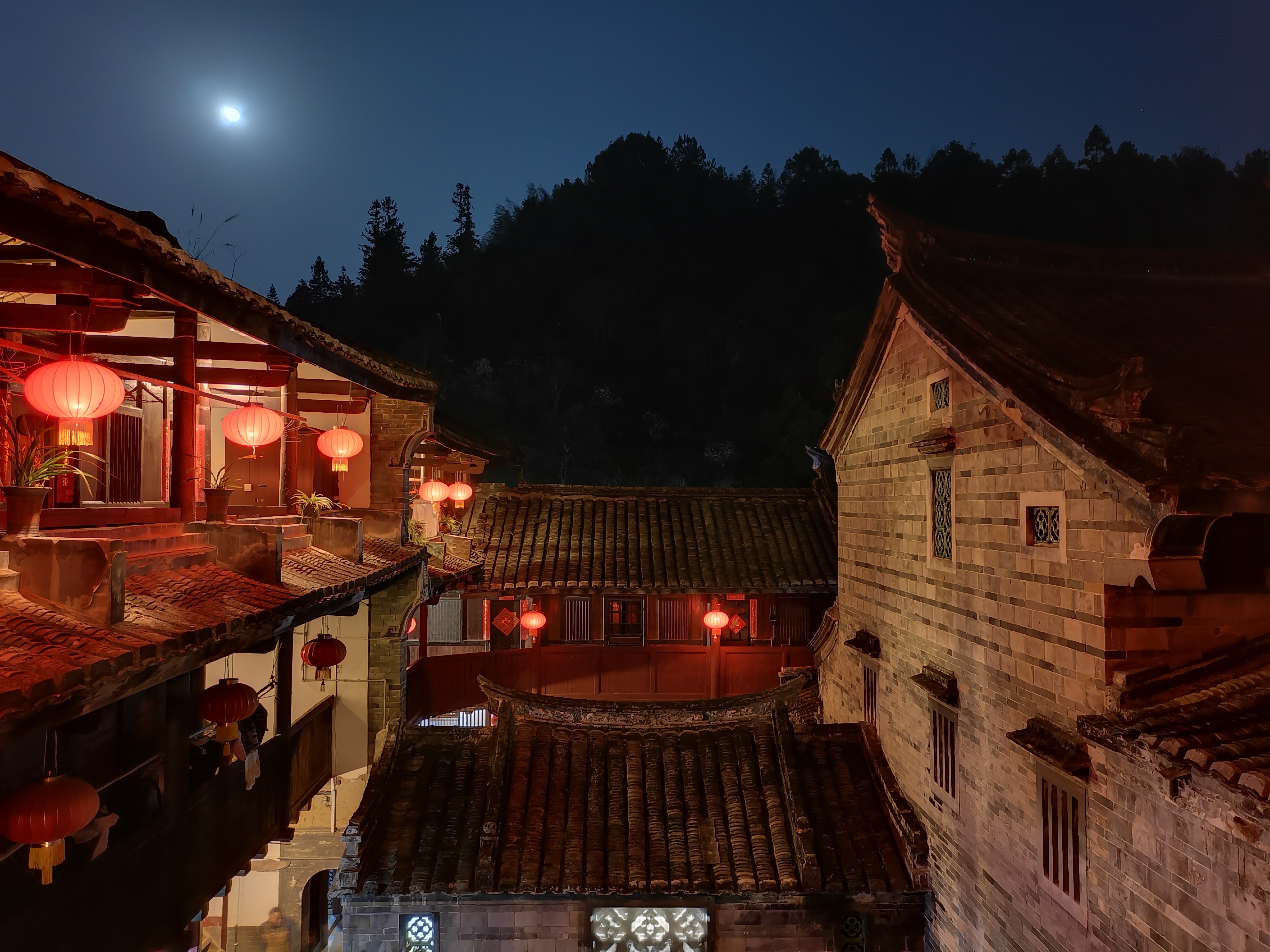
A few of the tulou have been converted into basic guesthouses, and spending a night inside one is worthwhile: the scale of the interior space, the communal rhythm of the place, and the quiet of the surrounding hills after the day-tourists leave are all memorable. Bring cash — the villages are remote. Spring and autumn are the best seasons; summer brings heat and crowds, winter can be cold and damp.