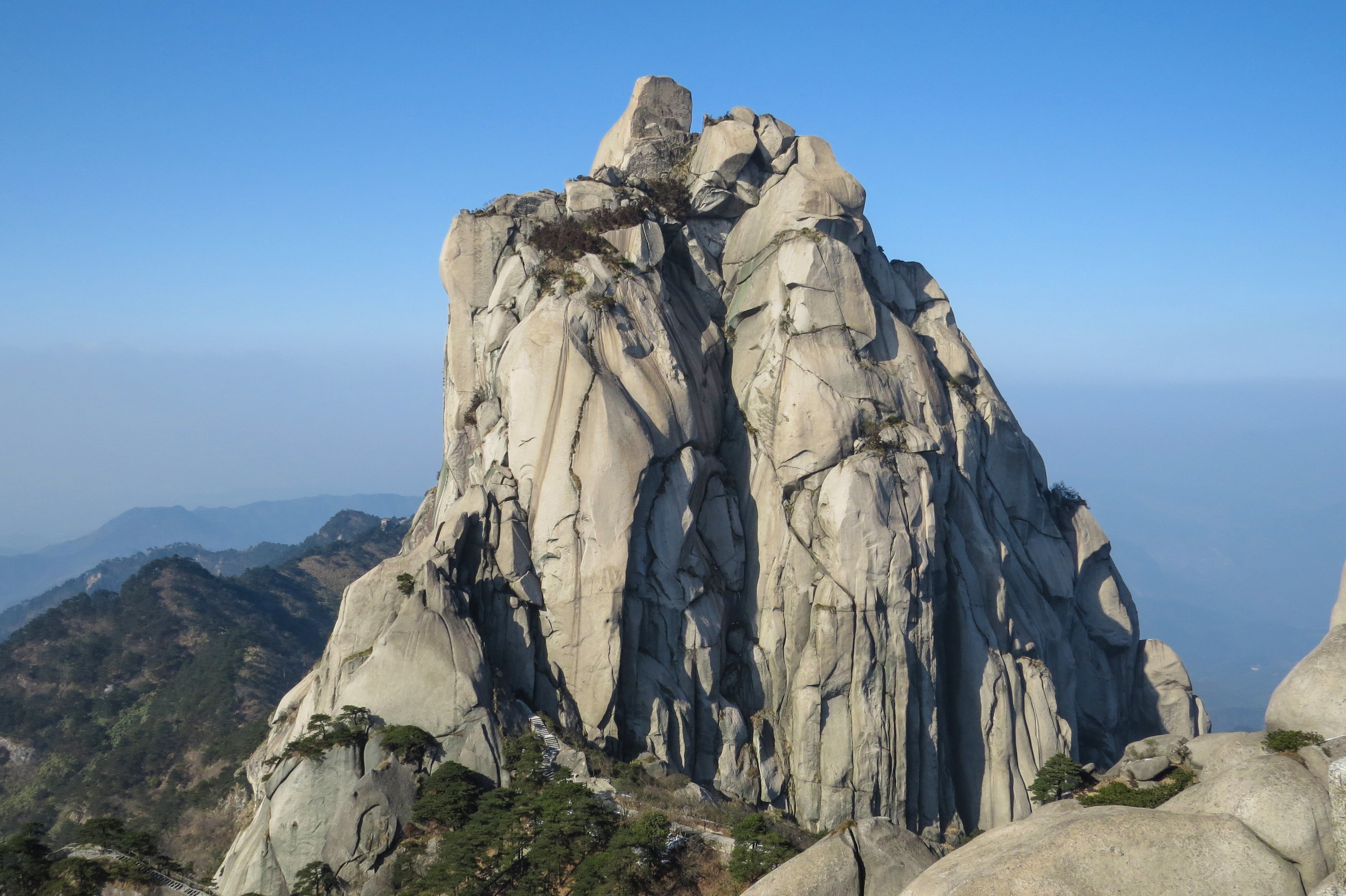
Tianzhu Mountain, the Heavenly Pillar, gave Anhui Province its abbreviated name — the character "Wan" in the province's informal designation derives from this peak, which was considered the spiritual anchor of the region. At 1,760 meters it is one of the highest summits in Anhui and ranks as an ultra-prominent peak in the Asian classification system. It sits in Qianshan County, near the city of Anqing in the western part of the province, away from the tourist circuits of the south. That distance from Huang Shan and the ancient villages is part of its appeal: the crowds that fill the cable cars on the Yellow Mountains in summer are largely absent here.
The geological character of Tianzhu Mountain is its most distinctive feature. The summit area is formed by massive granite peaks and formations that have been shaped over millennia into dramatic towers, arches, and walls — the kind of tortured rock formations that appear in classical Chinese landscape paintings and that feel, in person, more theatrical than real. The mountain was designated a UNESCO Global Geopark in 2011, recognition of a landscape that encompasses 45 peaks above 1,000 meters alongside deep canyons and extensive cave systems.
Mystery Valley is the site that draws the most visitors: a maze-like corridor formed where enormous boulders have fallen and stacked against each other, creating 53 interconnected caves, tunnels, and passages that thread through the rock over several hundred meters. Navigation is genuinely disorienting in the best possible way, and the pools and shafts of light within the cave system reward those who take their time.
Two routes ascend from the base — an eastern approach that is steeper and more dramatic, and a western route that is longer but less demanding. The mountain sees heavy rainfall in summer; spring and autumn offer the best combination of weather and scenery. Access is via Anqing, which has both an airport and rail connections.