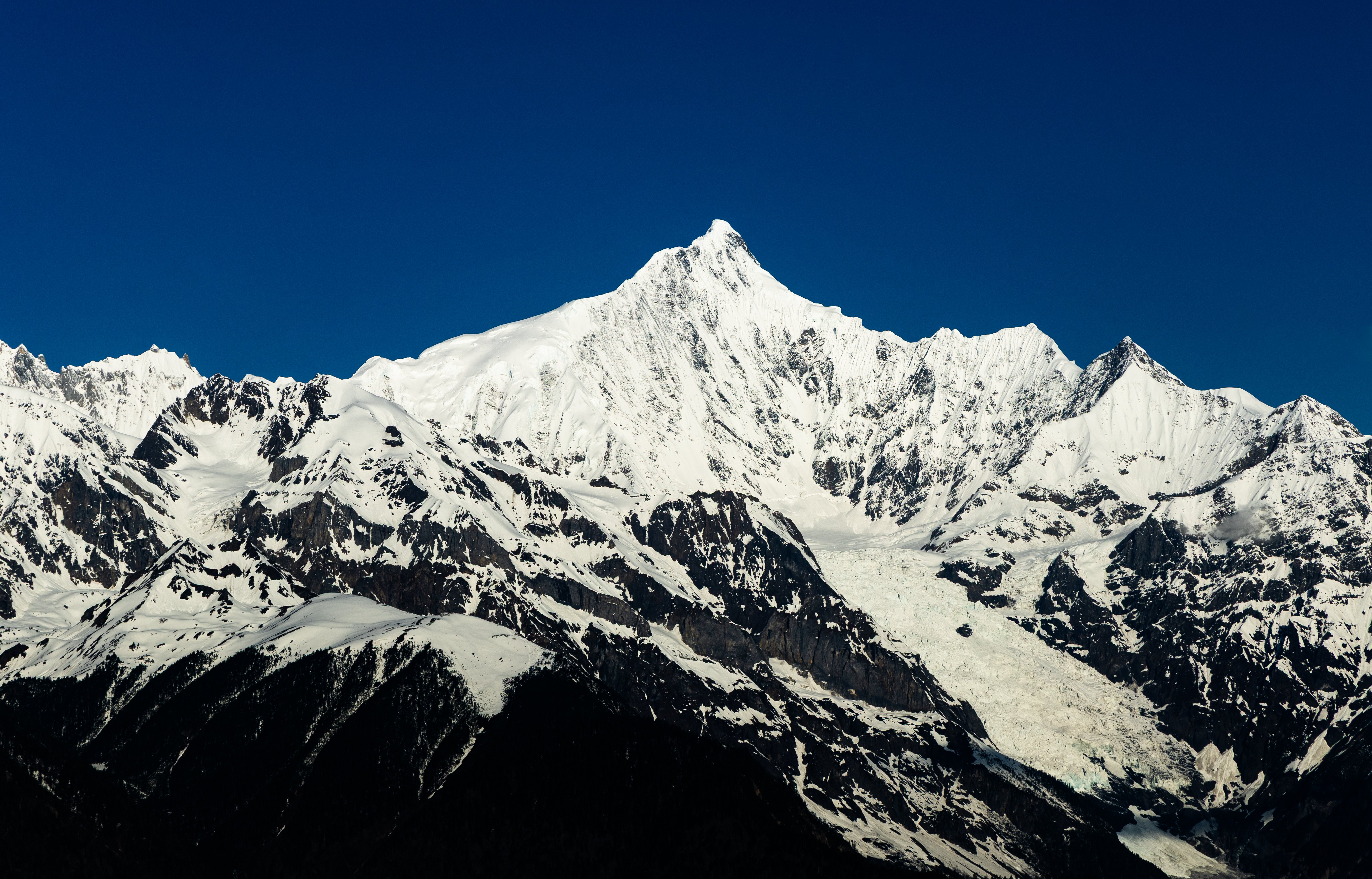
Yubeng is a small Tibetan village in the Meili Snow Mountain range of northwestern Yunnan, inaccessible by road and reached only by a steep trail over a high mountain pass from the nearest roadhead at Xidang. The walk in takes six to eight hours on foot, or several hours on muleback, and the difficulty of the approach has kept Yubeng from the mass tourism that has transformed most of Yunnan's scenic areas. What you find on arrival is a cluster of traditional stone-and-timber farmhouses at around 3,100 metres, with Kawa Karpo — the sacred and unclimbed 6,740-metre peak — visible above the valley walls. It is one of the most dramatic mountain settings in China accessible to ordinary hikers.
The village is divided into Upper and Lower Yubeng, connected by a short path through a gorge. Most guesthouses cluster in Lower Yubeng. From here, three main trekking routes push further into the mountains: the Holy Waterfall (3,600m), a sacred site reached in four to five hours that generates rainbows in morning light and is considered curative by Tibetan pilgrims; the Ice Lake (3,900m), a glacier-fed alpine lake requiring a full day; and the Holy Lake (4,300m), the most demanding option at a strenuous ten-hour round trip. All three can be done in combination over two or three nights.
The Tibetan community in Yubeng are practicing Buddhists for whom Meili Snow Mountain is one of the eight sacred mountains of Tibetan Buddhism, and the sense of genuine religious geography — as distinct from the staged spirituality of tourist sites — gives the trekking here a different quality. Prayer flags, mani stone walls, and the turning of prayer wheels are functional rather than decorative. Yubeng is on the kora circuit for pilgrims circumambulating Kawa Karpo, a multi-day walk that passes through.
Getting there requires reaching Deqin or Feilai Si by bus from Shangrila (three to six hours), then a local vehicle or on foot to Xidang, then the trail. Budget two nights minimum in Yubeng to make the approach worthwhile. Accommodation is basic guesthouse style, food is simple Tibetan fare, and electricity comes from small solar panels. The experience belongs to a different category from most Yunnan travel.