Mangalagiri
©
Mangalagiri

Mangalagiri

Andhra Pradesh temple town known for Panakala Narasimha Swamy Temple and distinctive Mangalagiri handloom cotton

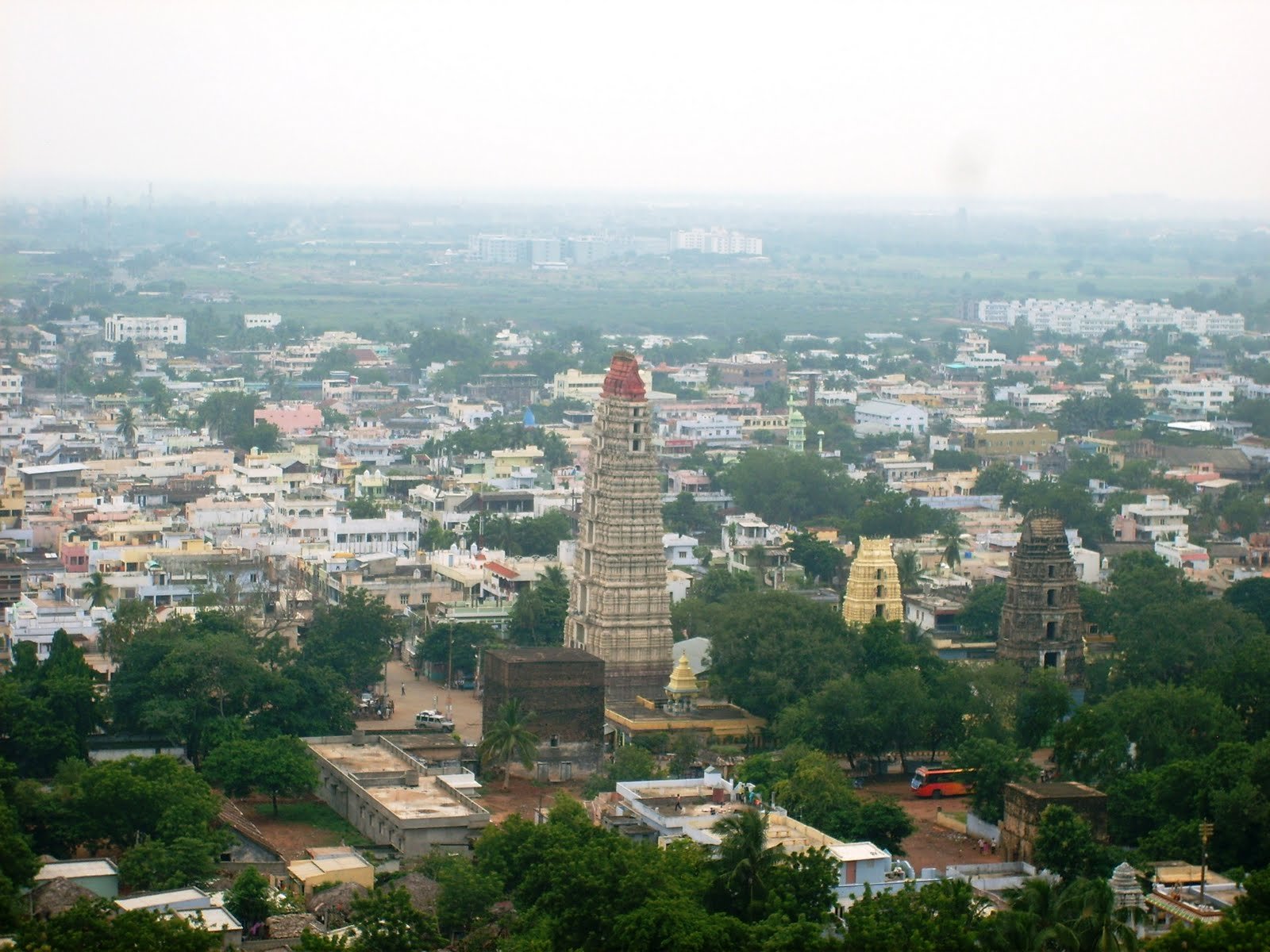
Mangalagiri is a temple town between Vijayawada and Guntur on the busy NH-5 highway in Andhra Pradesh. The town is known for two things: the Panakala Narasimha Swamy Temple on the hilltop, where devotees offer jaggery water to the deity, and its handloom weaving — Mangalagiri cotton fabric, with its distinctive border patterns, is recognised across India.

The hilltop temple is the main draw for visitors. At the foot of the hill sits a second temple, Lakshmi Narasimha Swamy, with an eleven-storey tower built in the early 1800s by Raja Vasireddi Venkatadri Naidu. Nearby attractions include the Undavalli Caves (ancient rock-cut temples) and Bhavani Island in the Krishna River, both on the road towards Vijayawada.

Guide

Day Trips

Mangalagiri sits within easy reach of the main sights of the Krishna delta, all reachable in under an hour. The Undavalli Caves, twelve kilometres north on the road into Vijayawada, are a 5th-century rock-cut temple complex carved into a sandstone bluff above the river — four storeys of cells, columned halls and a long reclining Vishnu in the upper cave. Bhavani Island, in the middle of the Krishna at Vijayawada, is the city's local picnic spot and accessible by a short boat ride from Prakasam Barrage.

The capital region site of Amaravathi, twenty-five kilometres west, holds the remains of one of the most important Buddhist stupas in southern India — third century BCE — and an excellent small museum. The hilltop Kanaka Durga Temple in Vijayawada, the most visited shrine in coastal Andhra, is twenty minutes north. For something more substantial, Kondaveedu Fort south of Guntur is a half-day hike up a forested ridge with the ruins of a 14th-century Reddy kingdom citadel at the top.

Guide

Getting There

Mangalagiri sits on the busy NH-16 highway between Vijayawada (about 20 kilometres north) and Guntur (about 15 kilometres south). Frequent buses run from both cities, and most southbound APSRTC services between Hyderabad and Chennai stop here on request. The journey from Vijayawada by bus takes thirty to forty-five minutes depending on traffic.

By rail, Mangalagiri station is on the main Chennai–Howrah line and is served by several daily passenger trains. Most express services do not stop here; from Vijayawada Junction — a much larger station with connections from across India — local taxis or autos to Mangalagiri are quick and cheap.

The nearest airport is at Vijayawada (Gannavaram), about 35 kilometres northeast, with daily flights to Hyderabad, Bengaluru, Chennai and Delhi.

Guide

Things to Do

Mangalagiri's sights split into two halves: the temples on and around the hill in the town centre, and the weaving workshops scattered through the side streets. A few hours covers the temples; longer if you climb the hill in the cool of the early morning and stop to watch weavers at work afterwards.

Guide

When to Go

The best months are November to February, with daytime temperatures in the high 20s and low humidity. March to early June is hot — daily highs over 40°C are normal in May — and the climb up Mangalagiri Hill becomes punishing. The southwest monsoon (June to September) brings sticky humidity but mostly afternoon thundershowers rather than long rain.

The temple's biggest festival is Narasimha Jayanti, in April or May, when the hilltop shrine fills with pilgrims for several days and overflow accommodation in Vijayawada gets tight. The annual Brahmotsavam, in February, is a more visually striking event — daily processions of the deity around the temple in elaborate vahanams.