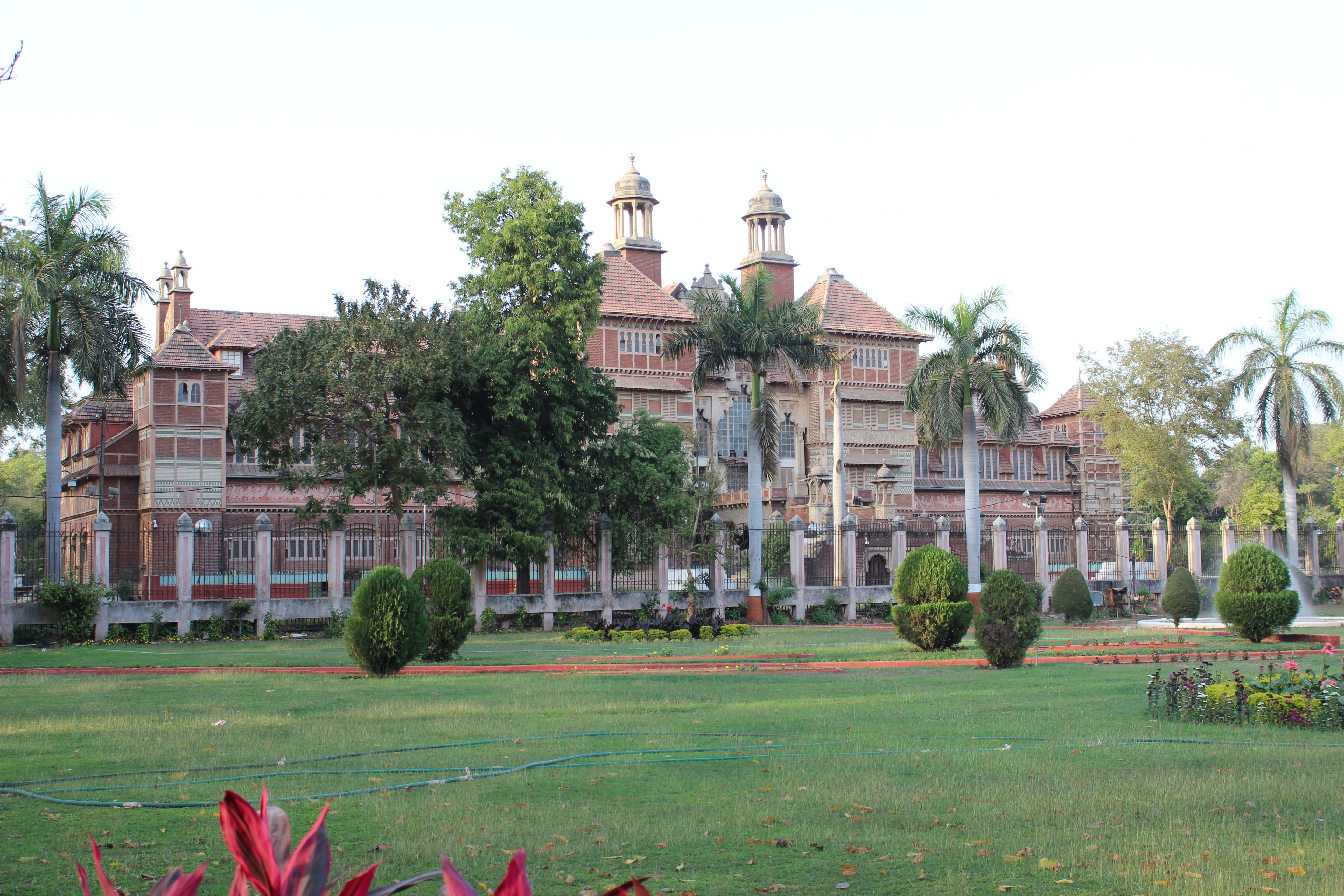
Vadodara -- still commonly called Baroda -- is Gujarat's third-largest city and one of its most pleasant. The legacy of the Gaekwad dynasty, who ruled the princely state of Baroda for over two centuries, is everywhere: grand palaces, wide tree-lined avenues, and a genuine emphasis on education and the arts that persists to this day. It is the kind of Indian city that rewards a slower visit -- not loud, not chaotic, just confident in its own history.
The set piece is the Laxmi Vilas Palace, completed in 1890 for Maharaja Sayajirao III and reportedly four times the size of Buckingham Palace. The Gaekwad family still lives in part of it; the rest is open to visitors, and the Durbar Hall with its Belgian stained glass and Venetian mosaic floor is a genuine jaw-dropper. In the palace grounds, the Maharaja Fateh Singh Museum holds the Gaekwads' private collection of European old masters, including works attributed to Raphael and Murillo, alongside a roomful of Raja Ravi Varma portraits painted for the family.
Across town, Sayaji Baug is the green heart of the city -- 45 hectares of public park laid out by Sayajirao, with a small zoo, a planetarium, and the Baroda Museum and Picture Gallery at its centre. The museum's Mughal miniatures and Egyptian mummy are worth the entry fee on their own. Wander out into the surrounding neighbourhood of Sayajigunj for chai stalls and the kind of unhurried evening walk that this city does well.
Vadodara is also a serious university town. The Maharaja Sayajirao University, founded in 1949 from earlier colleges, is one of India's better-known fine arts schools, and the student presence keeps the food scene lively and the bookshops stocked. The city sits on the main Mumbai-Delhi rail line, two hours south of Ahmedabad, which makes it an easy stop on a Gujarat itinerary -- and the perfect base for a day trip to Champaner-Pavagadh, the UNESCO World Heritage site about 50 km east, where a Sultanate-era city sits ruined at the foot of a sacred Hindu hill.
Note that Gujarat is a dry state -- no bars, no clubs, no alcohol in restaurants. Travellers come for the architecture, the museums, and the food, not the nightlife.