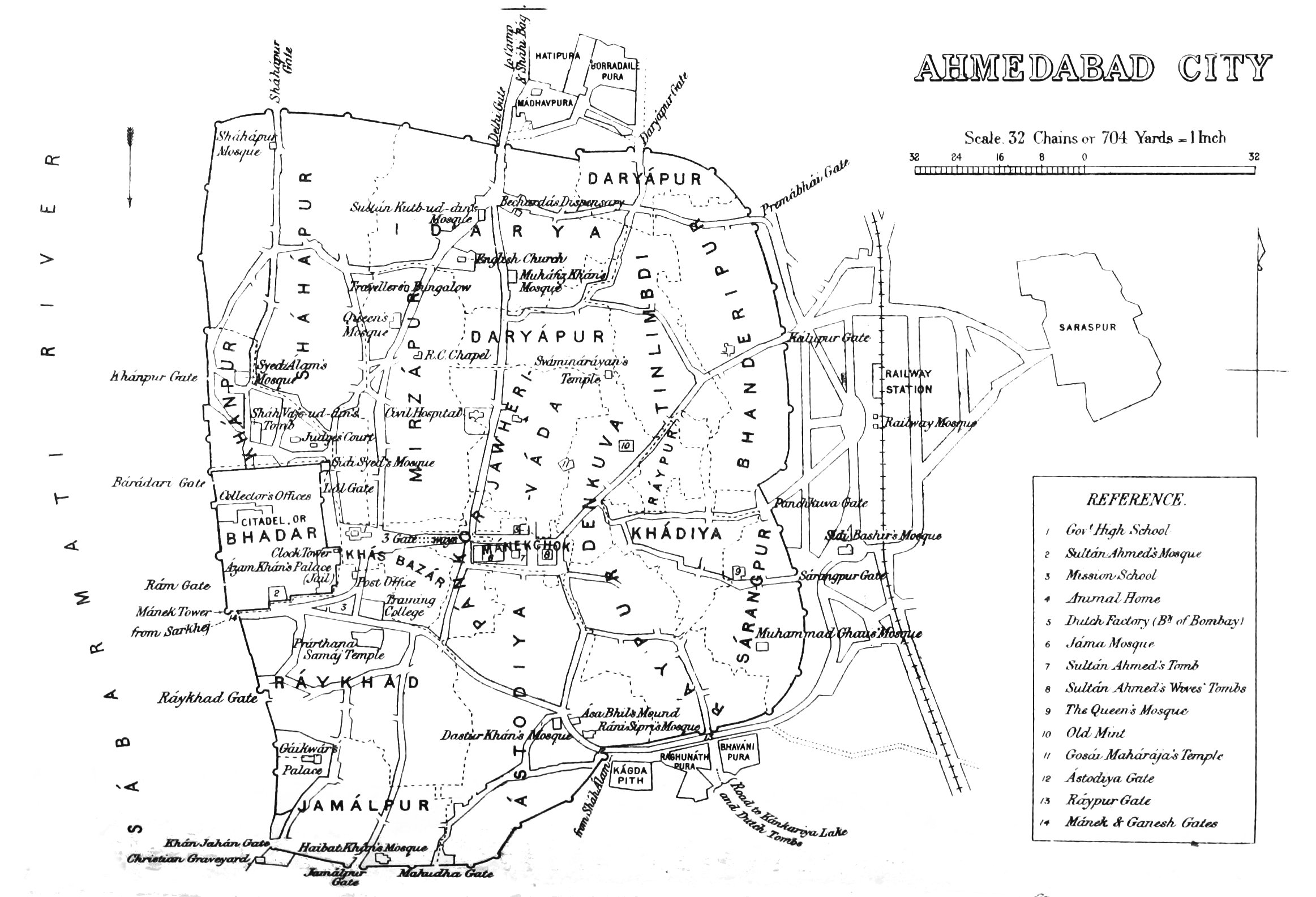
Ahmedabad is Gujarat's largest city and its cultural heart, founded by Sultan Ahmad Shah in 1411 on the banks of the river Sabarmati. You might know it as the city where Mahatma Gandhi established his ashram, which remains a national pilgrimage site on the river's western bank.
The old walled city is a dense, fascinating maze of pols -- traditional neighbourhoods with carved wooden houses, hidden courtyards, and community gates that were locked at night for protection. The heritage walk through the old city, starting from the Swaminarayan Temple in Kalupur and ending at the Jama Masjid, is the best way to experience this side of Ahmedabad. UNESCO recognised the walled city as India's first World Heritage City in 2017.
Modern Ahmedabad sprawls west across the Sabarmati, with broad avenues, malls, and the striking modernist architecture of Le Corbusier and Louis Kahn. The Calico Museum of Textiles, housed in a carved wooden haveli, is one of the finest textile museums in the world. The transformed Sabarmati Riverfront and the curving Atal Bridge are the new public face of the city.
Gujarat is a dry state, so there is no bar culture to speak of. The city compensates with excellent street food, vibrant night markets at places like Law Garden and Manek Chowk, and the spectacular Navratri celebrations in October, when the entire city dances through the night for nine days straight. During Makar Sankranti in January, the whole city takes to the rooftops for a massive kite-flying festival -- look up and you will see thousands of kites filling the sky.