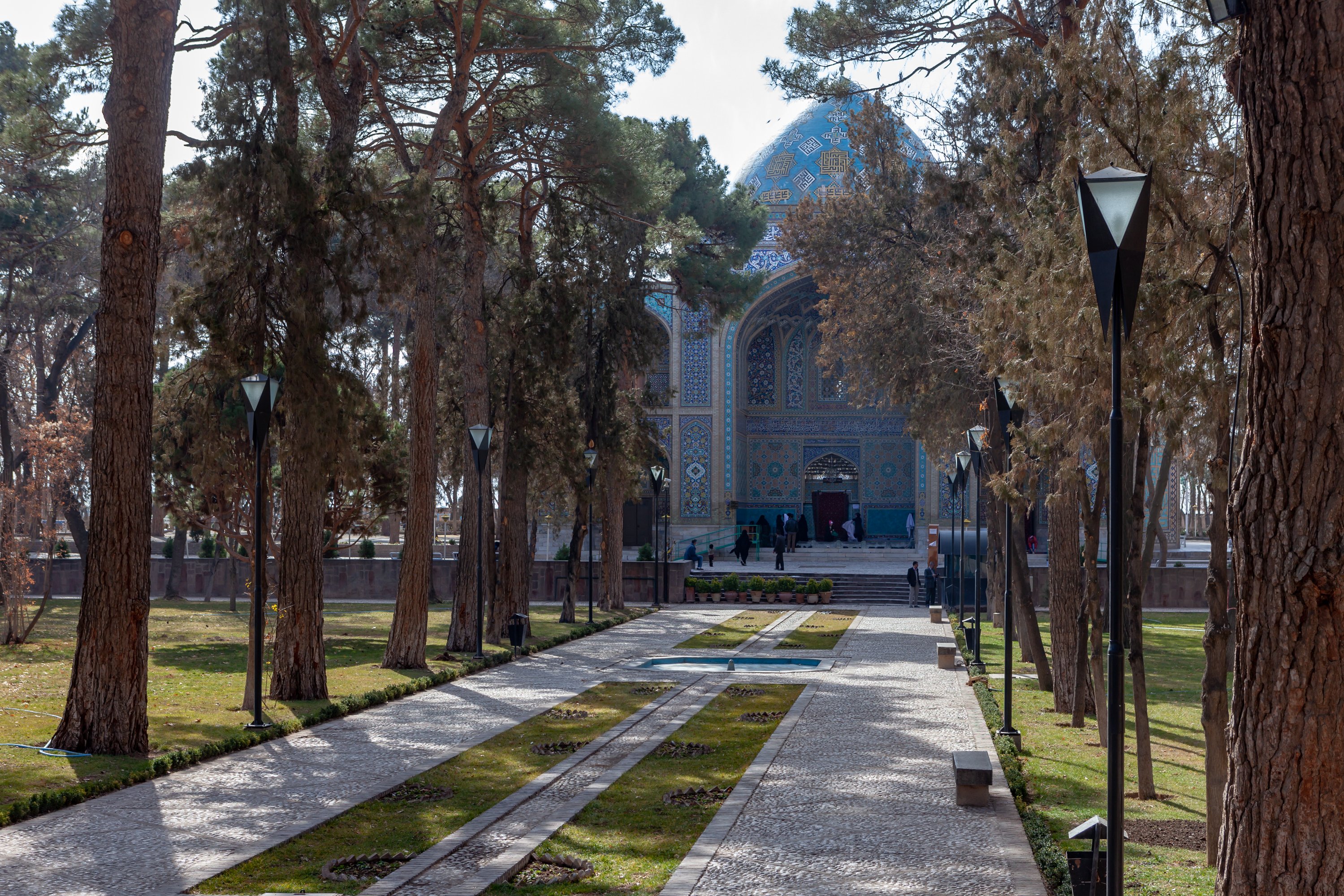
Neyshabur lies 115 km west of Mashhad on the old Mashhad–Tehran road, and for a few centuries in the early Islamic period it was one of the greatest cities of the Persian world — a centre of learning, ceramics, and trade until the Mongols sacked it in 1221. The medieval city never fully recovered. What you visit today is a modest provincial town, but one wrapped around two of the most resonant tombs in Iran.
Omar Khayyam — the 11th-century poet, mathematician, and astronomer known in the West for the Rubaiyat — was born here and is buried on the city's outskirts beneath a striking modern mausoleum. The white marble structure, with its open lattice canopy and quiet surrounding garden, is the highlight of any visit; come early or late to have it to yourself. A short walk away is the tomb of the mystic poet Attar, set in its own landscaped grounds, and the small but lovely Imamzadeh Mahruq with its turquoise-tiled dome.
The hills around Neyshabur hold the famous turquoise mines, which have supplied the gemstone for thousands of years and remain one of the largest sources of high-quality stone in the world. Workshops and bazaar stalls in town sell loose stones and finished jewellery at honest prices — bargain politely and inspect the colour in daylight. The town also makes a good base for nearby village walks and the ruins of medieval Neyshabur, now a low archaeological mound east of the modern centre.
Neyshabur is an easy day trip from Mashhad — a taxi or shared car takes a little over an hour each way — but the two tombs and the bazaar reward a slower, half-day visit rather than a rushed loop.