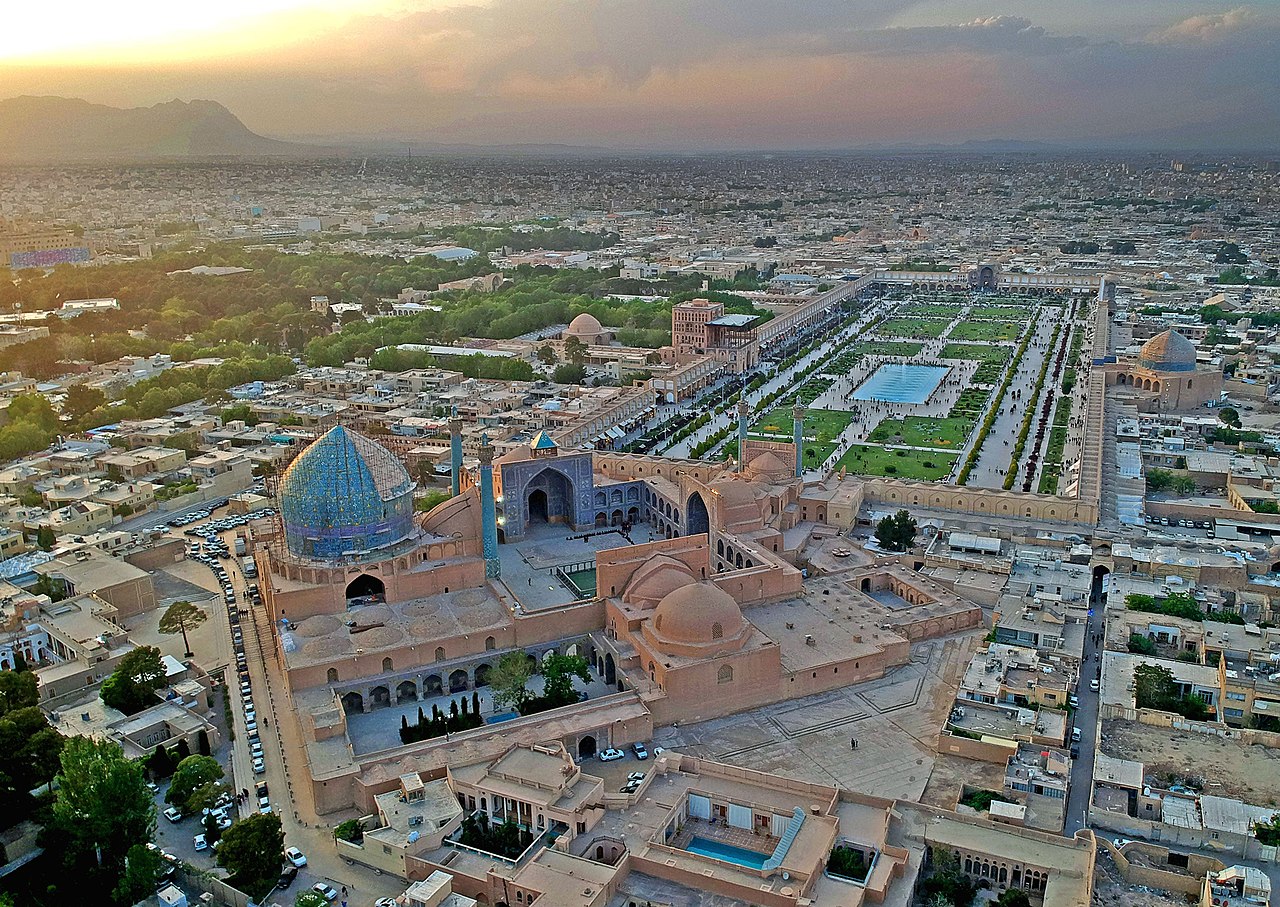
Isfahan — also spelled Esfahan — is one of Iran's great imperial cities, and many Iranians consider it the most beautiful city in the country. The Persian proverb "Isfahan nesf-e jahan ast" — Isfahan is half the world — captures something real: the city's central Naqsh-e Jahan Square alone is one of the largest public squares on earth, and the skyline of turquoise domes and minarets visible from its edges has barely changed since the Safavid era.
The city reached its zenith under Shah Abbas I (1587–1629), who chose it as the Safavid capital and transformed it into a showcase of Persian architecture and craftsmanship. The mosques, palaces, and bazaars he built around Naqsh-e Jahan Square remain the city's core, together forming one of the great UNESCO World Heritage Sites. Isfahan was cosmopolitan under the Safavids — Armenian Christian merchants settled in the Jolfa district, Jewish traders had their quarter, and diplomats from Europe arrived at the royal court — and traces of that diversity remain visible in the churches and synagogues that survive.
The Zayandeh River runs through the city, crossed by a series of historic bridges that become evening promenades. The Si-o-Se Pol, with its 33 arches and tea houses tucked into the lower level, is where Isfahanis gather at dusk to walk and sing. The older Khaju Bridge, a few kilometres east, doubles as a dam and a pavilion, its alcoves painted with hunting scenes. These bridges are not merely infrastructure — they are social institutions, and spending an evening on one is as much a part of visiting Isfahan as seeing the mosques.
The bazaar stretches for kilometres under its domed roofing, connecting the great square to the older commercial city. Isfahan is known for its craft traditions: silver filigree (malileh-kari), inlaid woodwork (khatam), and hand-block-printed textiles (ghalamkari) are all still made and sold here. The neighbourhood of Jolfa, south of the river, preserves the traces of the Armenian community Shah Abbas resettled here from the Ottoman frontier — its Vank Cathedral, with a frescoed interior rivalling anything in Europe, is unlike anything else in Iran.