Mosul is Iraq's second-largest city, straddling the Tigris in the far north of the country and long known as the Pearl of the North. It sits on the site of ancient Nineveh, capital of the Assyrian Empire, and for centuries was one of the most cosmopolitan cities in the Middle East — a place where Arab, Kurdish, Assyrian Christian, Turkmen, and Yazidi communities lived side by side.
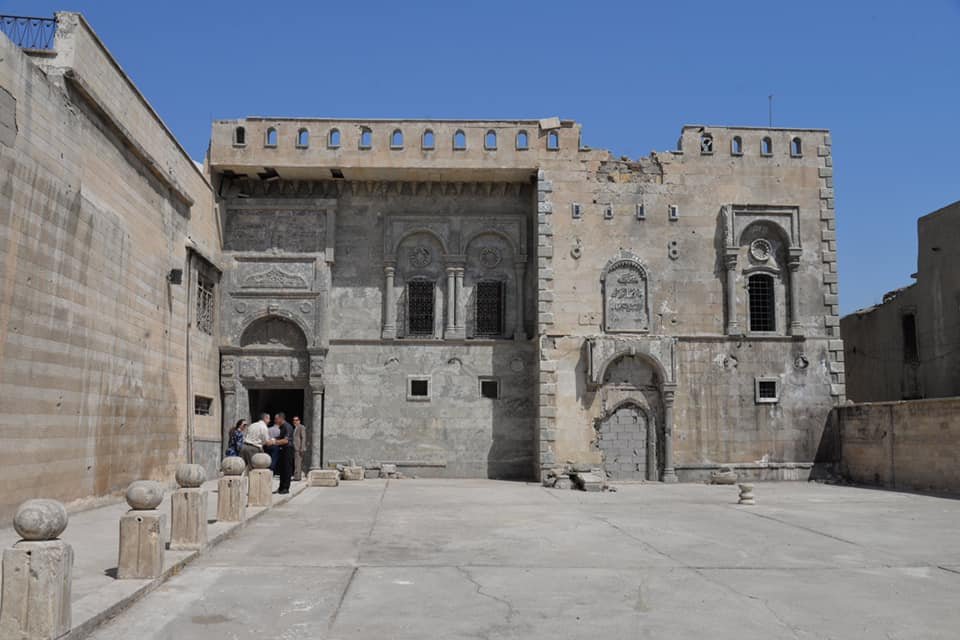
Your first impression arriving from the south may not be positive. The modern outskirts are utilitarian and, after the devastation of the 2016–17 battle to retake the city from ISIS, much of the Old City on the west bank remains in ruins. But Mosul is rebuilding. Along the river, surviving Ottoman houses line the waterfront, and minarets, church spires, and domes still punctuate the skyline.
Among the historic monuments, the thirteenth-century Chamoun al-Safa church has a deep underground courtyard and a cemetery with ornate tombstones of Moslawi merchants. The Syrian Orthodox Church of Mar Toma (St Thomas) is lavishly decorated inside despite its plain exterior, with a small glass-fronted niche displaying relics of St Thomas. The Al-Nuri Great Mosque, built by Nur ad-Din in the twelfth century, was famous for its leaning minaret — the "hunchback" — which tragically collapsed during the 2017 fighting and is now being reconstructed with UNESCO support.