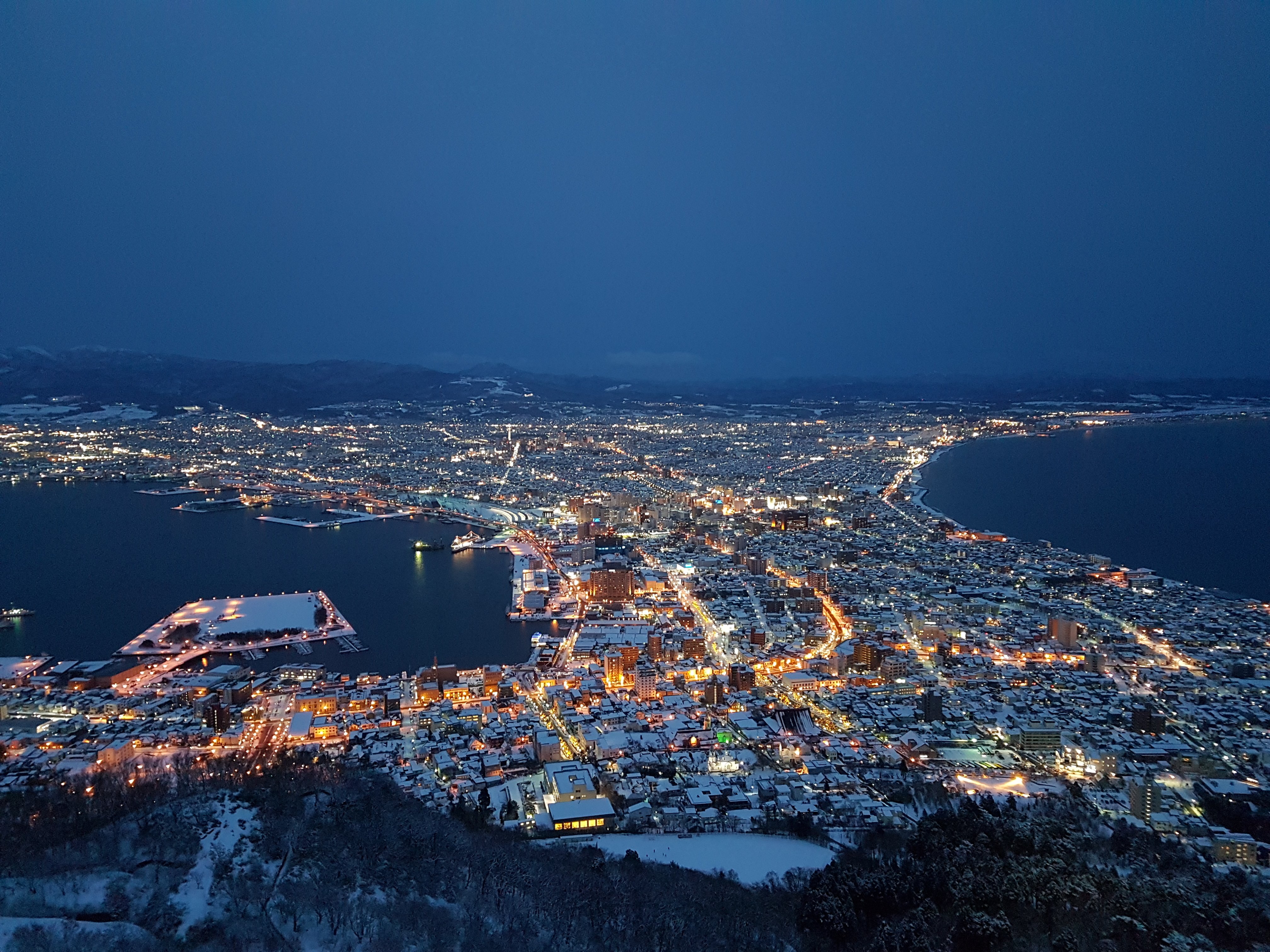
Hakodate sits at the southern tip of Hokkaido on a narrow peninsula, with the sea on three sides and the volcanic cone of Mount Hakodate rising to 334 metres at its western end. It is one of the most historically interesting cities in northern Japan — the first Japanese port opened to international trade in 1854 under pressure from Commodore Perry's expedition, and the legacy of that early foreign presence shows in the sloping streets of Motomachi, where Russian Orthodox churches, a former British consulate, and Western-style merchant houses survive in good condition.
The view from Mount Hakodate at night is famous throughout Japan, consistently rated among the country's top three night views alongside those from Nagasaki and Kobe. The lights of the city below spread across the narrow peninsula, with dark water on both sides and the glow of the port visible to the north. The ropeway runs until 10pm, which makes it genuinely easy to see the view after dark. The Goryōkaku fortress, a distinctive five-pointed star fort built in 1866, was the last redoubt of pro-Tokugawa forces who held out against the new Meiji government through the winter of 1868–69. The fort park is now a cherry blossom destination and the adjacent tower gives excellent aerial views of the star shape.
Hakodate's morning market, open from 5am, is one of the best in Hokkaido: a dense cluster of stalls selling fresh seafood including live crab, sea urchin, and the local specialty of hakodate squid. The Kanemori Red Brick Warehouses on the waterfront have been converted to shops, restaurants, and a beer hall, and the area around the old port retains a working character that more polished tourist waterfronts have lost. The Motomachi slope district above the Kanemori warehouses contains the best concentration of Western-era architecture, including the Holy Resurrection Orthodox Church and the Former British Consulate.
The city makes a convenient stopping point between the ferry from Honshu — the Seikan Tunnel rail link has now mostly replaced the Tsugaru Strait ferry, though the latter still runs — and the rest of Hokkaido. Yunokawa Onsen, a hot spring district on the eastern edge of the city, provides a gentle end to a day of walking the Motomachi slopes.