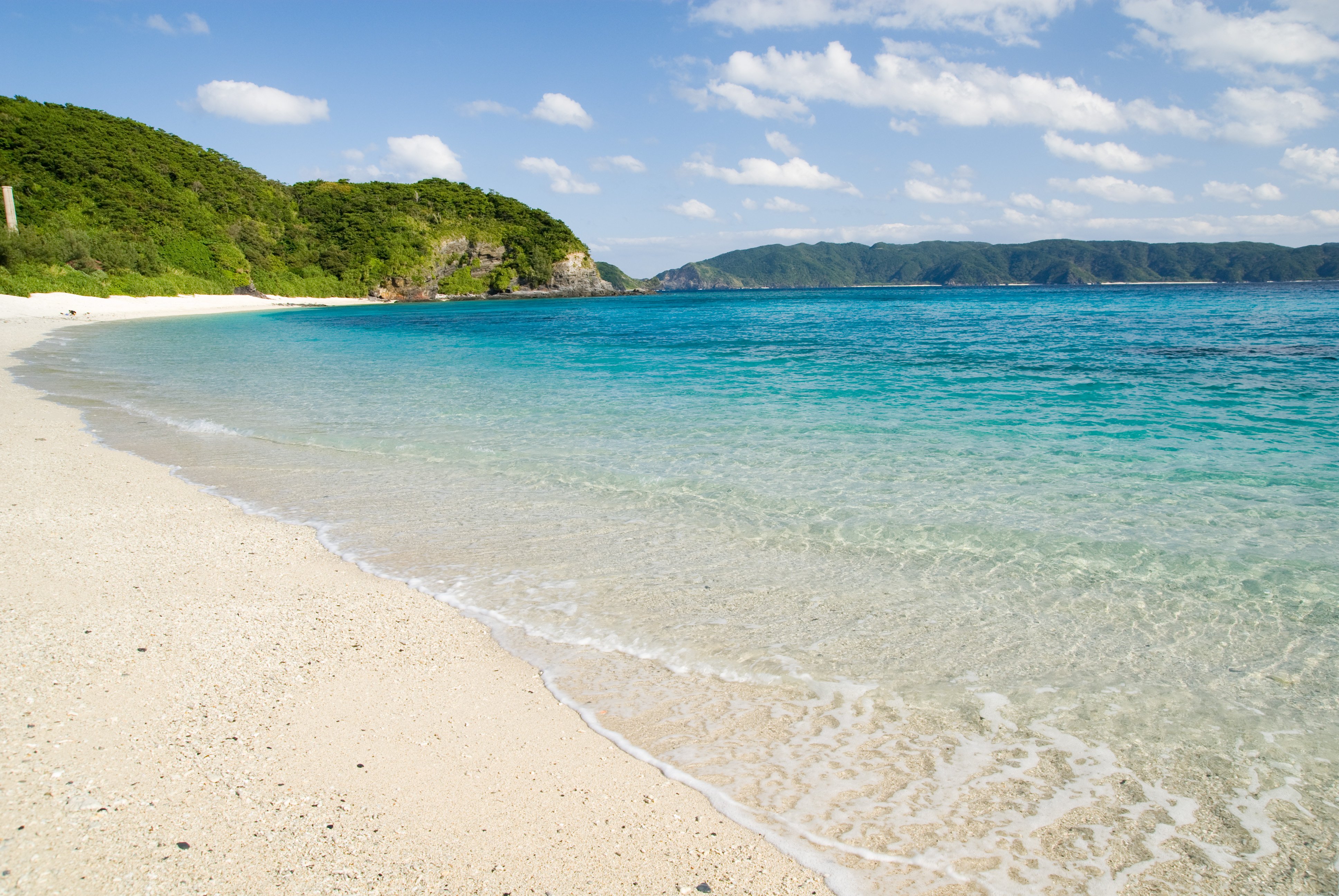
Okinawa is the largest of the Ryukyu Islands and a place unlike anywhere else in Japan. Subtropical climate, turquoise water, coral reefs, and a distinct cultural identity shaped by centuries as the independent Ryukyu Kingdom set it apart from the mainland. The food is different, the music is different, and the pace of life is noticeably slower.
The island stretches roughly 110 kilometres from north to south. The southern end is urban and densely populated, centred on Naha, the capital, with its lively Kokusai Street and the reconstructed Shuri Castle. The central part of the island is dominated by US military bases -- a legacy of World War II that remains a defining and contentious feature of daily life. The northern half is where Okinawa gets wild: forested hills, mangrove estuaries, and quiet beaches that feel a world away from the resort strips further south.
Okinawa was the site of one of the bloodiest battles of World War II, and that history is deeply present. The Peace Memorial Park in the south, the Himeyuri Monument, and the former Japanese Navy Underground Headquarters are sobering reminders. But Okinawa is also famous for longevity -- it is one of the world's Blue Zones, where people routinely live past 100, attributed in part to the local diet of bitter melon, tofu, and pork.
The diving and snorkelling here are outstanding, particularly around the Kerama Islands just offshore and at Cape Maeda's Blue Cave. On the island itself, Cape Manzamo offers dramatic cliff scenery, and the Churaumi Aquarium in the north is one of the largest in the world. Six UNESCO World Heritage castle ruins are scattered across the island, with Nakagusuku, Katsuren, Nakijin, and Zakimi all accessible without a guide. The Yambaru forest in the north is the island's wildest corner, home to endemic birds found nowhere else on earth. In the south, Gyokusendo Cave descends into a spectacular limestone underworld. For something more low-key, rent a car and explore the quiet coastline, stopping at small beaches and family-run soba shops along the way.