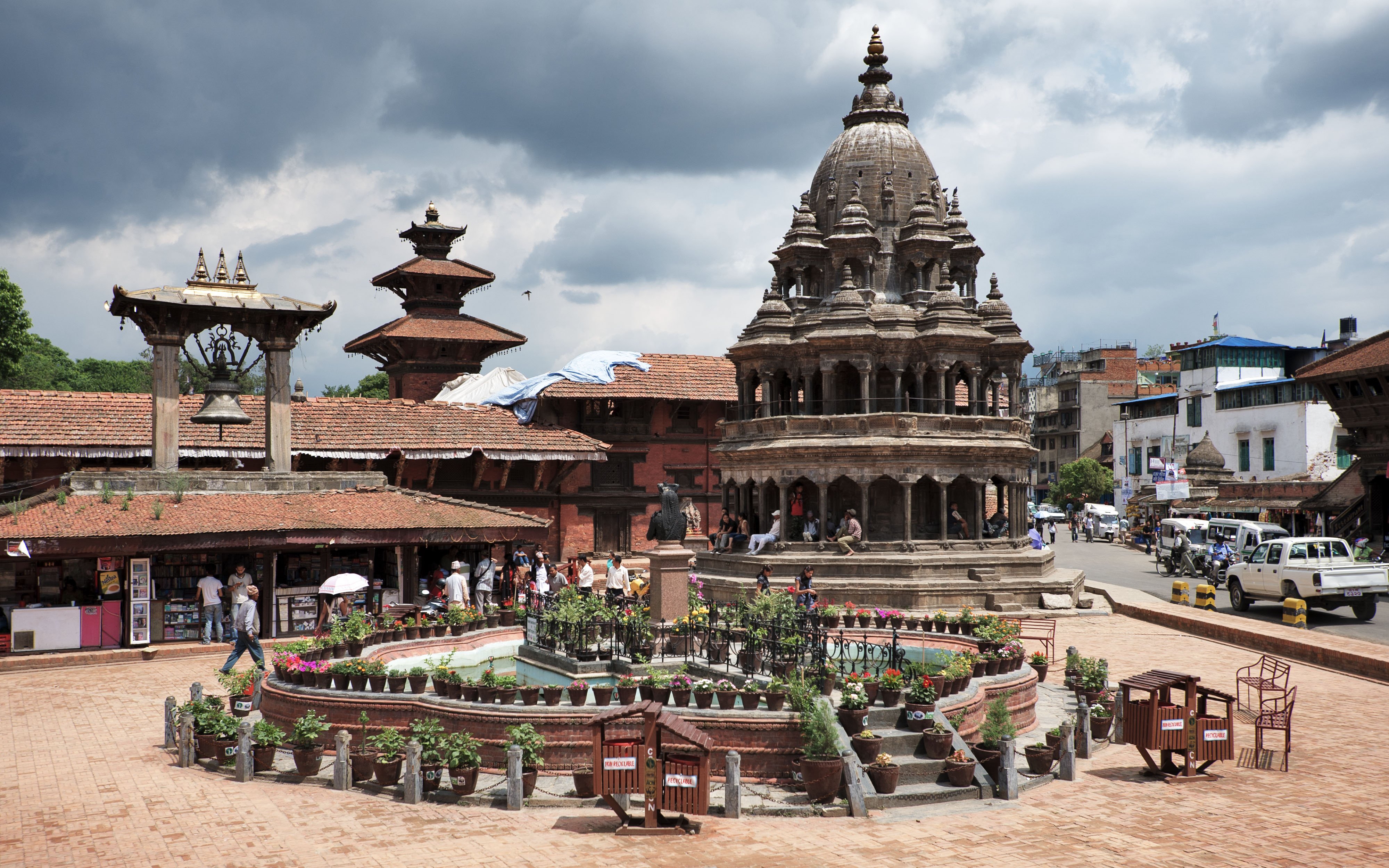
Lalitpur — better known as Patan — sits just across the Bagmati River from Kathmandu, close enough to reach in twenty minutes yet distinct enough to feel like a different world. Where Kathmandu can be hectic and commercial, Patan has a quieter, more refined character. It's a city of courtyards, carved wooden windows, and some of the finest Newari architecture in the valley.
The heart of the city is Patan Durbar Square, a UNESCO World Heritage Site of remarkable density: three main temples, a royal palace complex, and dozens of smaller shrines arranged around a central courtyard. The craftsmanship — stone carvings, gilt roofs, intricate woodwork — reflects centuries of patronage by the Malla kings. Even after the 2015 earthquake caused serious damage, the square retains its power. The Patan Museum, housed in the old royal palace, holds the finest collection of Himalayan sacred art anywhere.
Patan has long been the valley's centre for metalwork and crafts. The tradition continues: workshops around Hiranya Varna Mahavihara (the Golden Temple) and the streets of Oku Bahal still produce bronze statues, singing bowls, and thangka paintings using techniques passed down for generations. Buying direct from craftsmen here tends to be both better quality and more honest than buying in tourist shops elsewhere. Beyond Durbar Square, the Krishna Mandir, Kumbheshwar Temple, and Mahabouddha Temple are all worth seeking out, and the Jawalakhel area at the city's southern edge is home to a Tibetan refugee carpet centre and Nepal's only zoo.