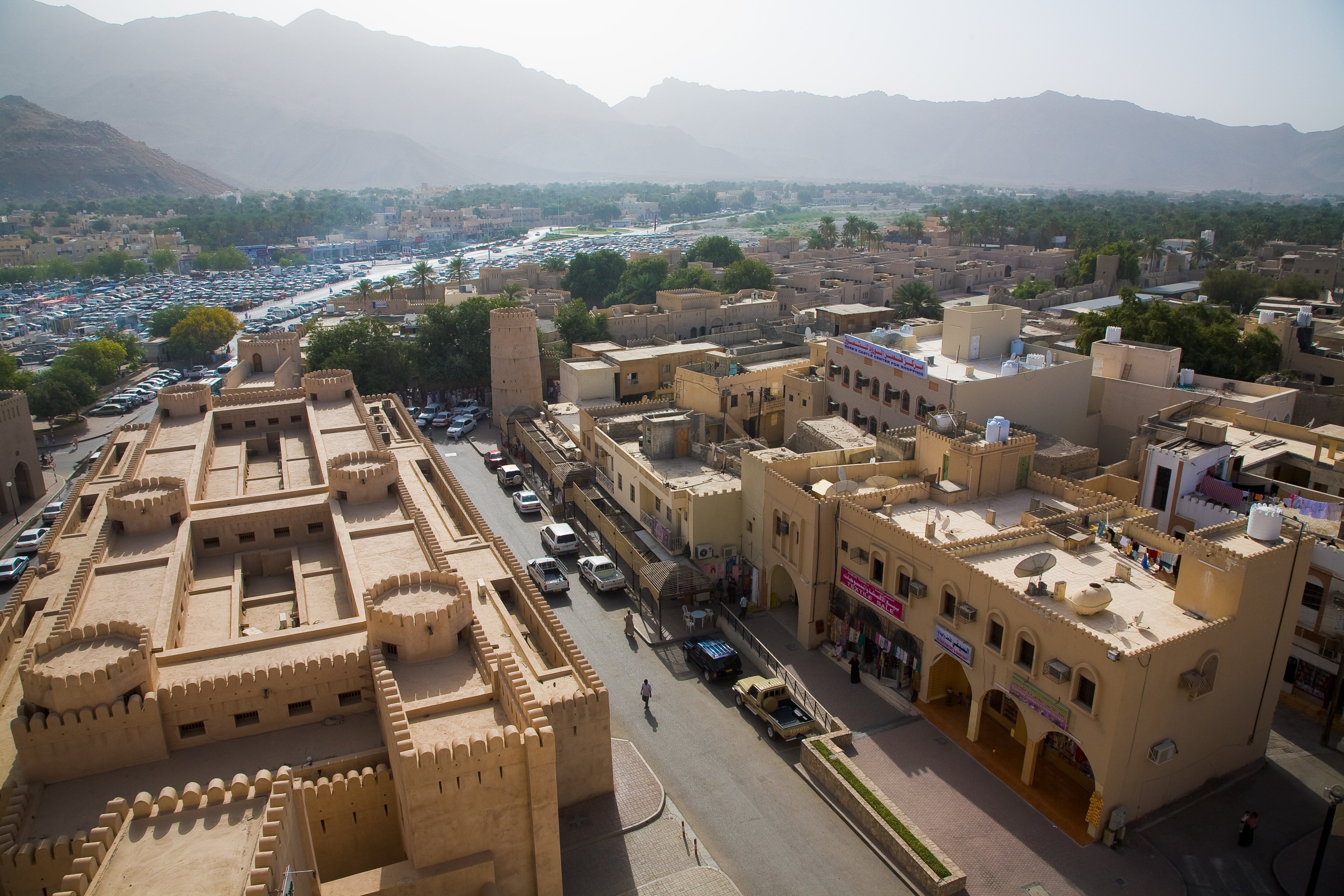
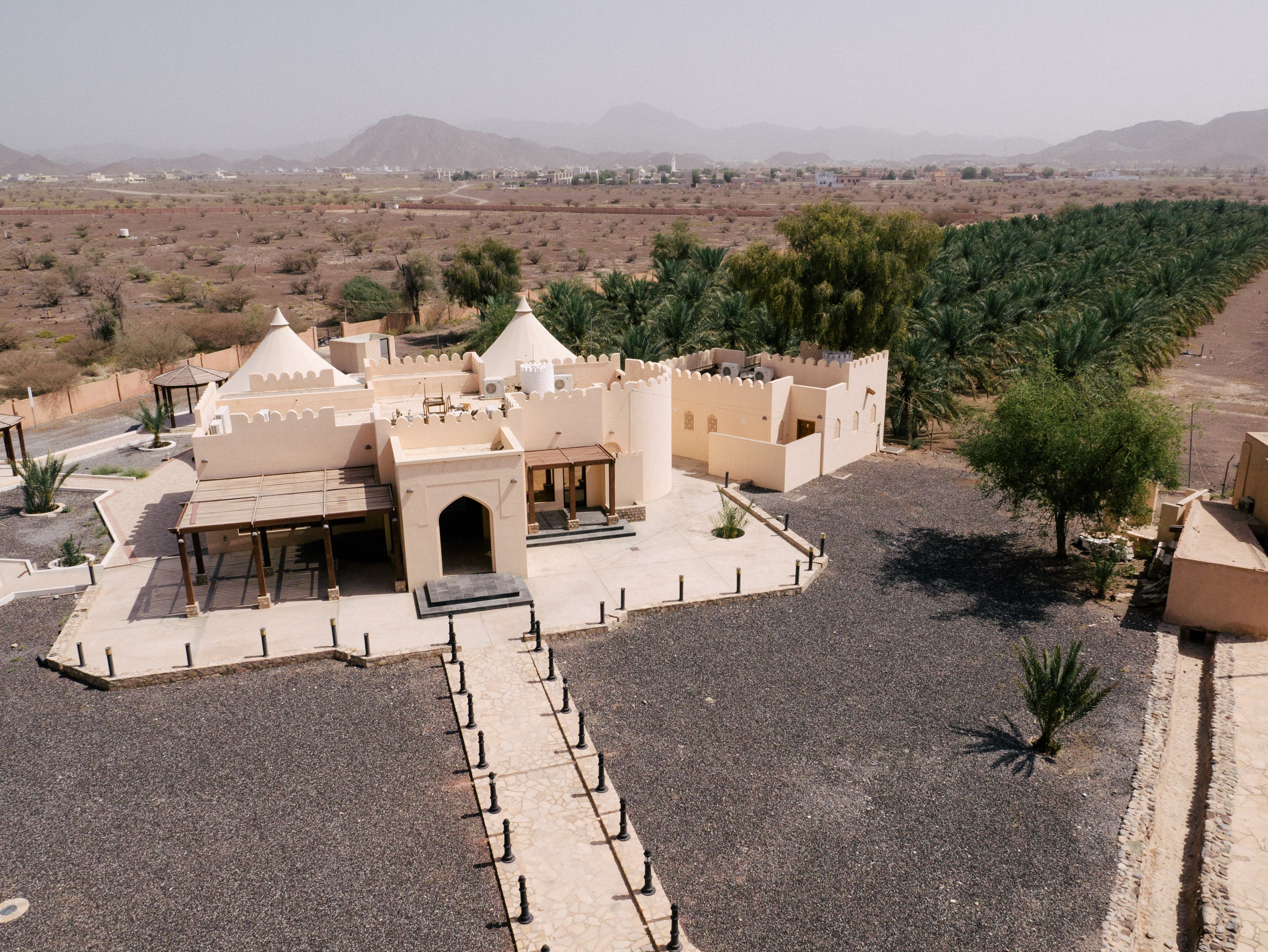
Muscat is a good base for exploring the rest of Oman. Nizwa, the old imperial capital in the interior, is about a 90-minute drive inland — a huge circular fort, a Friday livestock market where goats and cattle are sold in the traditional way, and a proper old souk dealing in silverware, dates, and pottery. The mountain villages of Jebel Akhdar (the Green Mountain) sit above Nizwa at over 2,000 metres, cooler than the coast, with terraced pomegranate orchards and rose-water distilleries that have been producing the same product for centuries. A 4×4 is needed for the final climb to the Jebel Akhdar plateau. Inland from Nizwa, Jabrin is a small oasis town whose 17th-century fort is the most elaborately decorated in Oman — painted ceilings with geometric patterns and Quranic calligraphy in rooms that once housed a royal library and school.
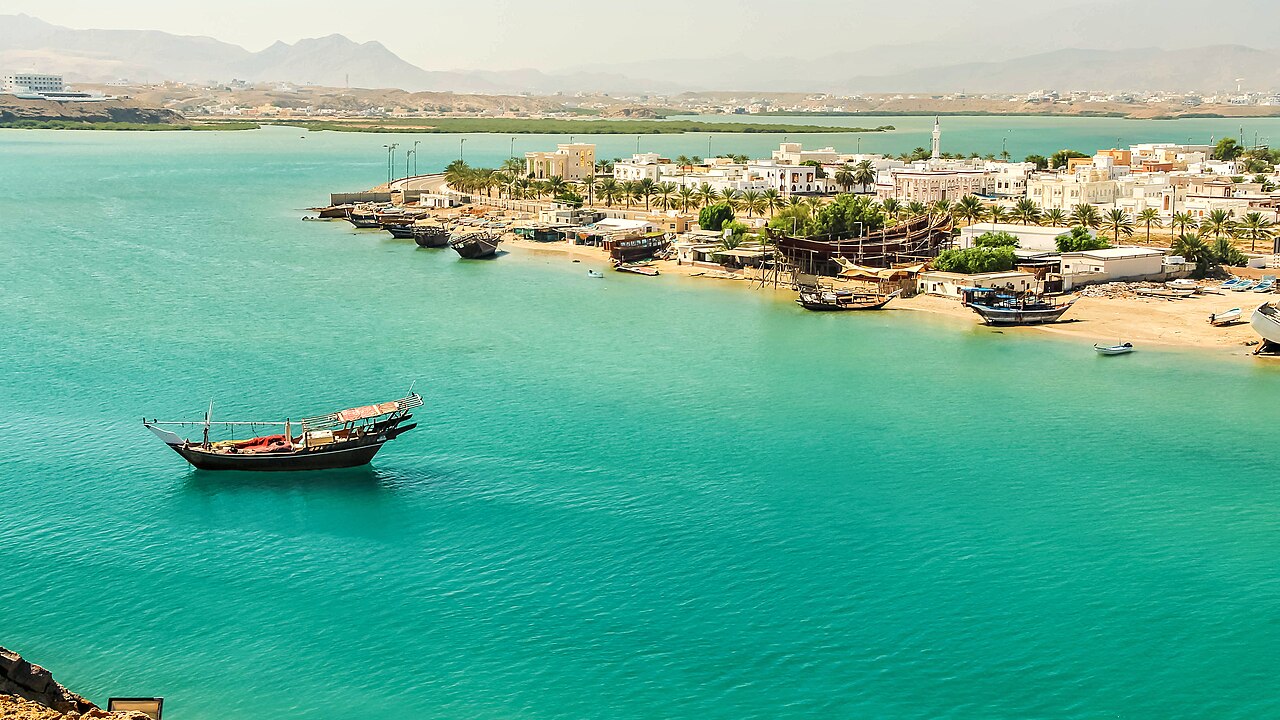
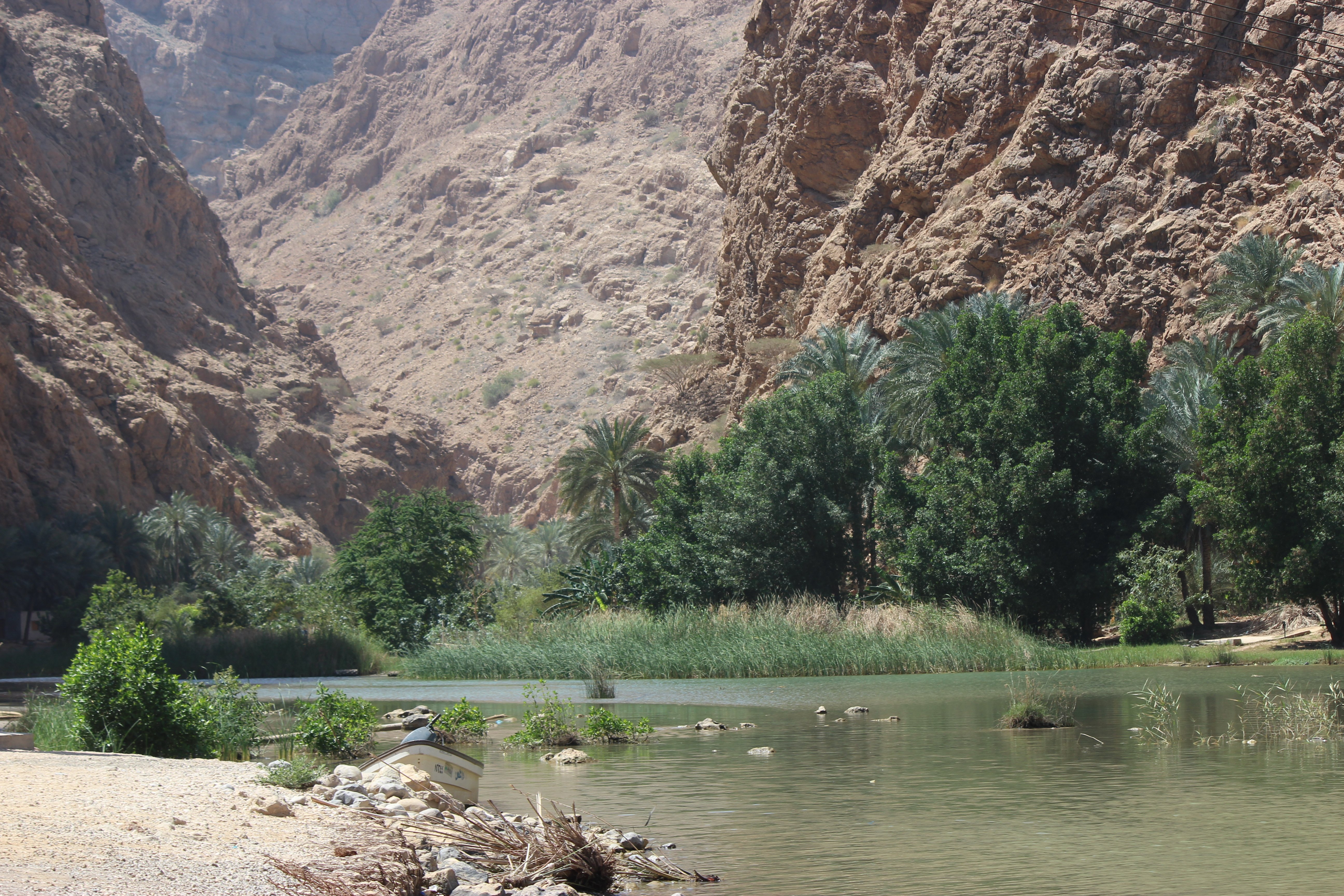
South along the coast, Wadi Shab is a spectacular spring-fed gorge two hours from Muscat, with turquoise pools at its inner end and a hidden waterfall inside a cave reached by swimming. The Bimmah Sinkhole, 40 minutes further on, is a turquoise pool in a collapsed limestone cave that makes for an easy stop on the same road. Sur, another hour beyond Bimmah, is a dhow-building town where traditional wooden vessels are still constructed; Ras al-Jinz, just past Sur, is one of the world's most important nesting sites for green sea turtles, with guided night tours to watch females come ashore to lay eggs.
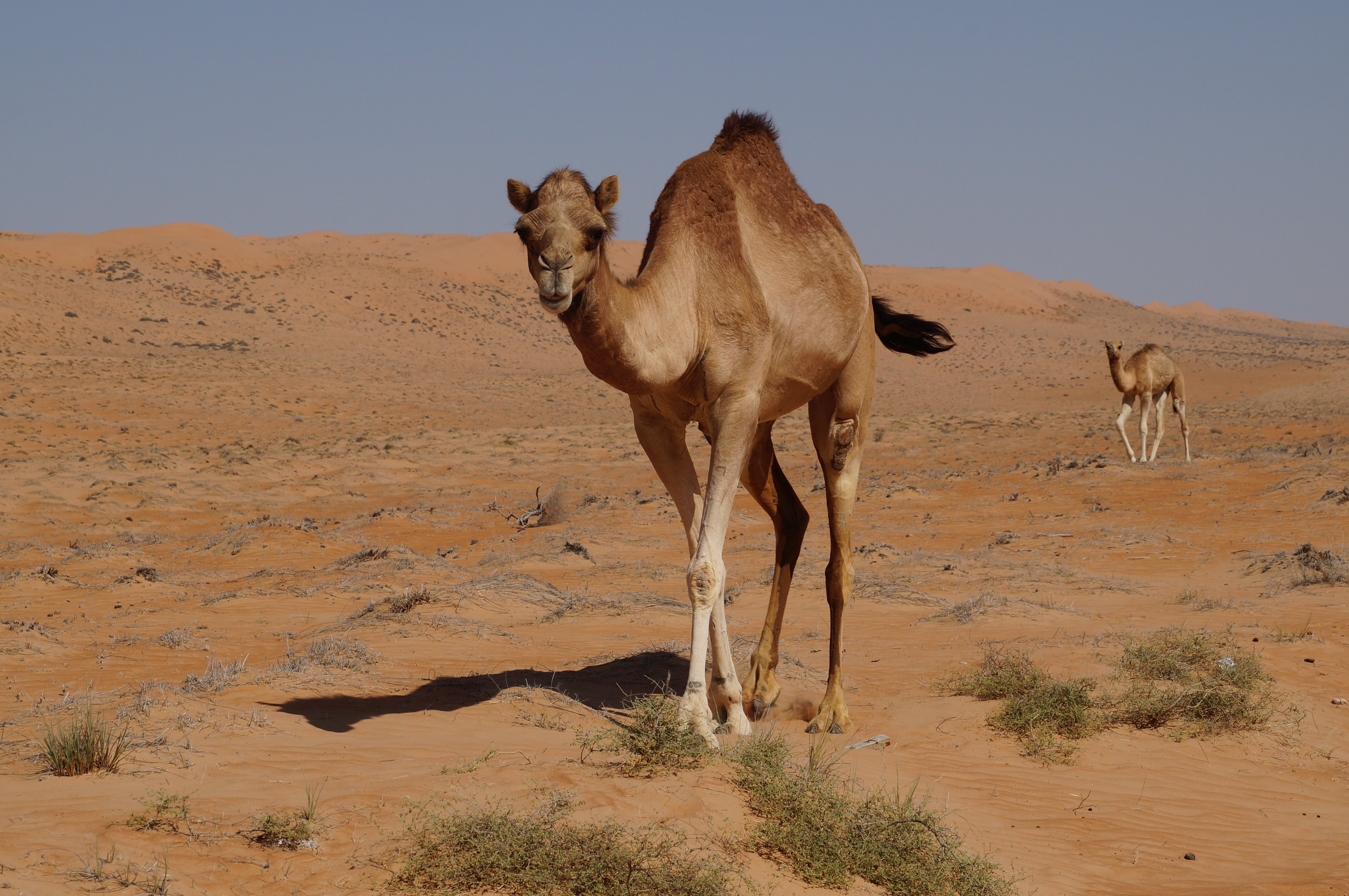
For desert scenery, the Wahiba Sands (Sharqiya Sands) are about two and a half hours south — classic red dunes rising over 100 metres, with Bedu settlements at the desert edge. Overnight stays in desert camps are considerably more satisfying than a hurried day trip if time allows.