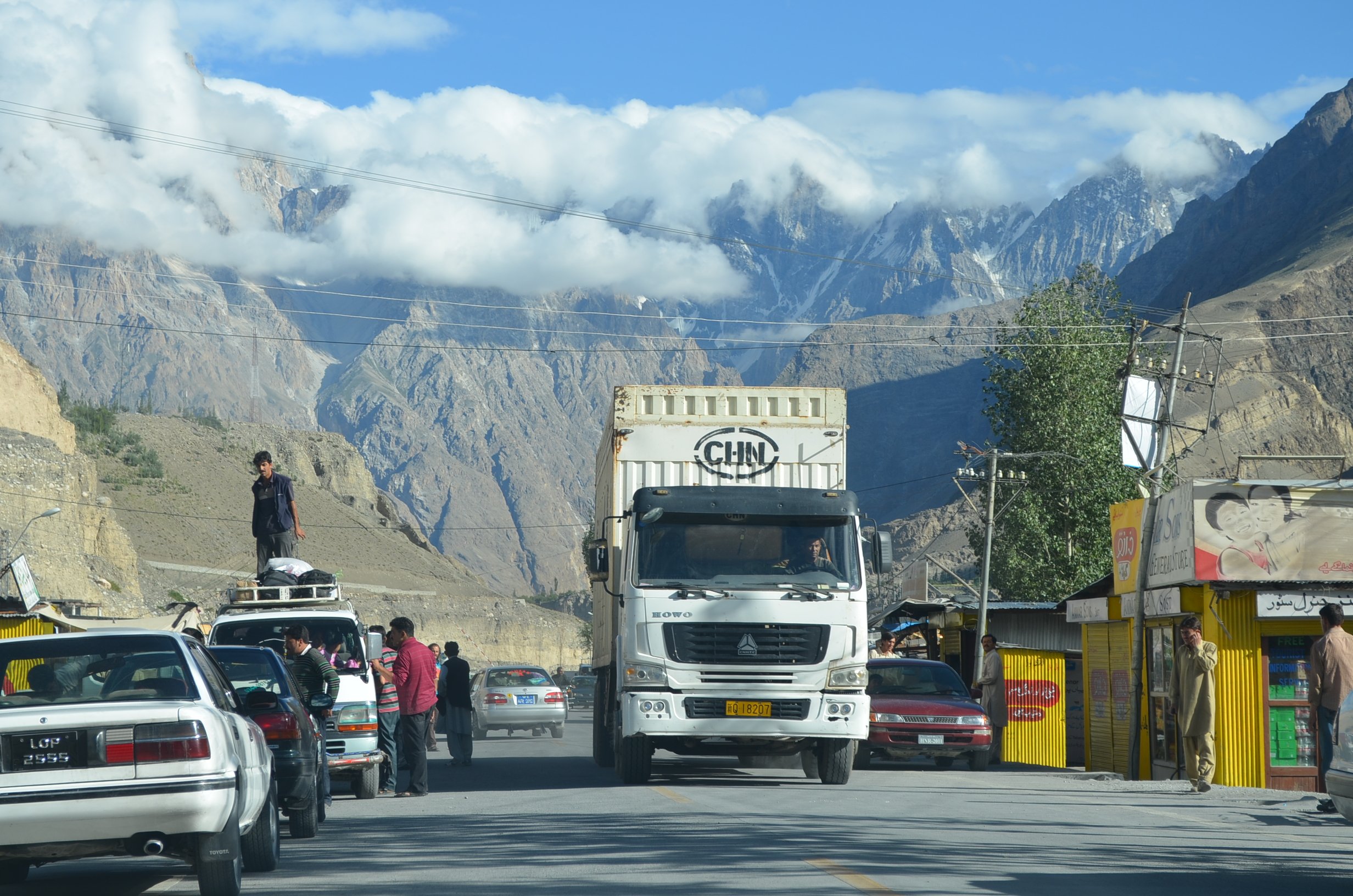
Karakoram Highway border town in Gojal Valley, beneath glaciated peaks near Khunjerab Pass.
Sost is the last town in Pakistan on the Karakoram Highway before the Chinese border at the Khunjerab Pass (4,693 metres). It sits in the Gojal Valley of Gilgit-Baltistan, a narrow settlement stretched along the road in a dramatic canyon landscape of rock and snow.
The town exists largely because of the border — Pakistani immigration and customs are based here, and all passenger and cargo traffic between Pakistan and China passes through. For travellers on the Karakoram Highway, Sost is either the last stop before crossing into China or the first taste of Pakistan coming the other way. There are a handful of basic guesthouses, restaurants, and shops catering to transit travellers.
The surrounding Gojal region is spectacular, with glaciated peaks on all sides and the Karakoram Highway winding through gorges of almost absurd drama — the Passu Cones and the Passu Glacier lie a short drive south. The Khunjerab Pass, about 85 kilometres north, is one of the highest paved international border crossings in the world, sitting in Khunjerab National Park, and open roughly May to November depending on conditions.
Guide
Eating Out
Sost is no culinary destination. The dhabas along the highway serve dal, chapatis, lentils, rice and the occasional grilled meat to truckers and travellers, all at very low prices. A few of the small guesthouses do simple meals to order — chai and parathas for breakfast, dal and rice for dinner. Stock up on bread, biscuits, dates and bottled water before crossing into China; once over the border, supplies of familiar food disappear.
Guide
Getting There
By road from the south: the Karakoram Highway runs north from Islamabad through Gilgit and Karimabad (Hunza). The drive from Gilgit takes about 6 hours through some of the most spectacular mountain scenery in the world. NATCO and other Pakistani operators run daily buses; private cars and 4x4s are widely available for hire in Gilgit.
By road from the north (China): foreign travellers can cross at the Khunjerab Pass from Tashkurgan, but the journey requires careful planning. Chinese border procedures are slow; the NATCO bus from Tashkurgan to Sost runs daily in season.
Pakistani immigration, customs and the office of the Northern Areas Police are all based at Sost. Cell phone signal is patchy north of Hunza; a Pakistani SIM with mountain coverage helps but cannot be relied upon.
Guide
When to Go
Late May through October is the only practical season — the Khunjerab Pass is officially open 1 May to 30 November, but in practice it can close earlier or later depending on snow. June to September is best for travellers, with reliable conditions on both sides of the border.
Even in midsummer, nights at Sost can drop close to freezing. Winter is severe: temperatures below –20°C, daily snowfall, and the highway often impassable from Sost north. The local Wakhi population mostly winters further down the valley in warmer places like Gulmit and Karimabad.