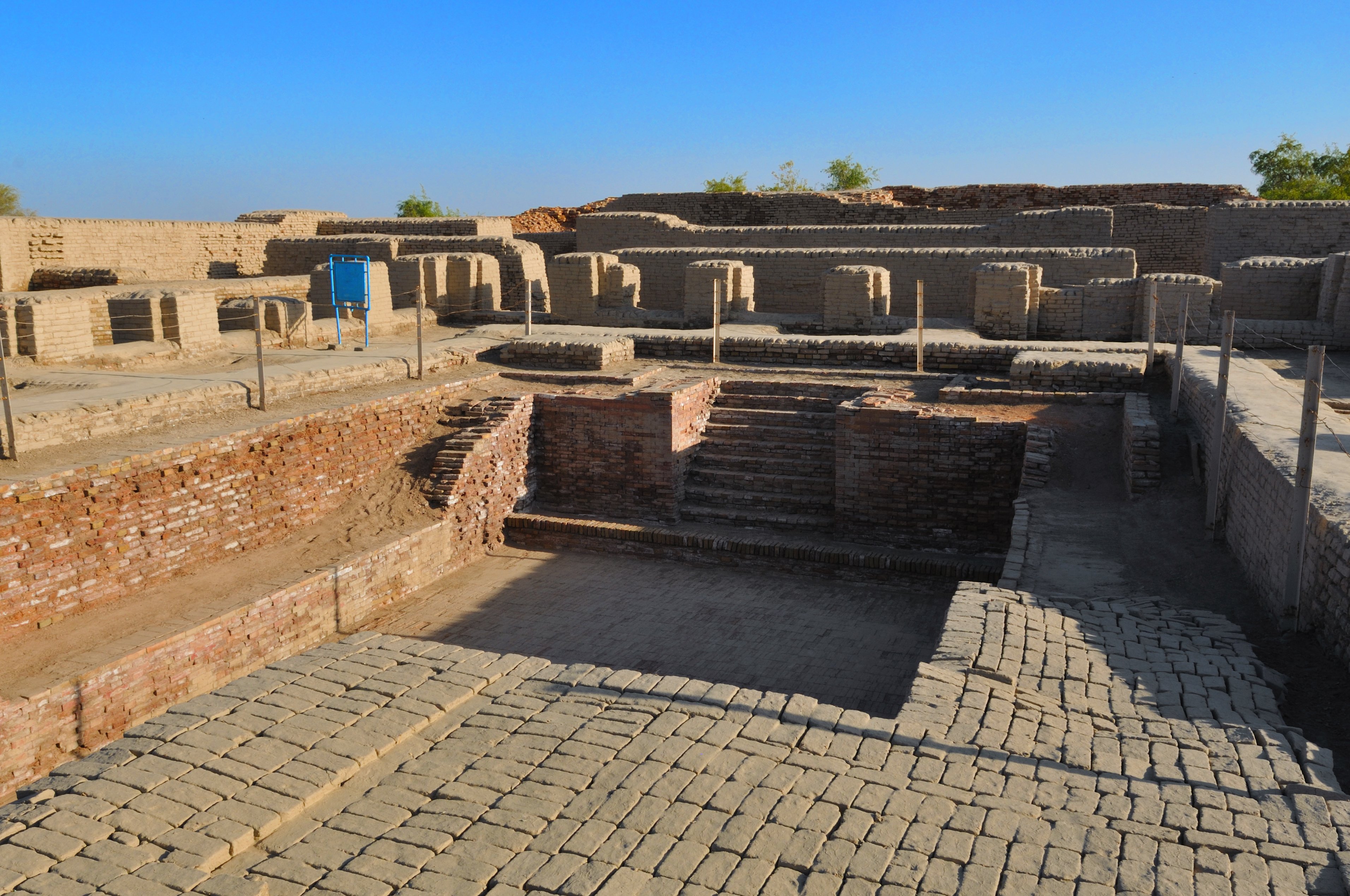
Moenjodaro is one of the great archaeological sites of the world — a 4,500-year-old city that was contemporary with ancient Egypt and Mesopotamia, and far larger than most people expect. The ruins sit in the flat plains of Sindh province, beside the Indus River, quietly extraordinary in their scale and sophistication.
Discovered in 1922, the city was once home to tens of thousands of people at its peak. What survives is startlingly modern in conception: a grid of streets, a covered sewage system more advanced than many cities of the 19th century AD, a great granary, a pillared assembly hall, and a large ritual bath known as the Great Bath. The buildings were made of fired brick, and many walls still stand to head height. The Lower City is where the residents lived and worked; the Site Museum holds replicas of the famous finds, including the bronze Dancing Girl and the carved Priest-King.
Visiting requires some imagination — there are no inscriptions that have been decoded, no royal tombs, no statues of gods or rulers. The Indus Valley Civilization left almost no images of itself. But that absence is part of what makes Moenjodaro haunting. A city of 40,000 people, thriving for centuries, and then — silence. No one knows why it ended.