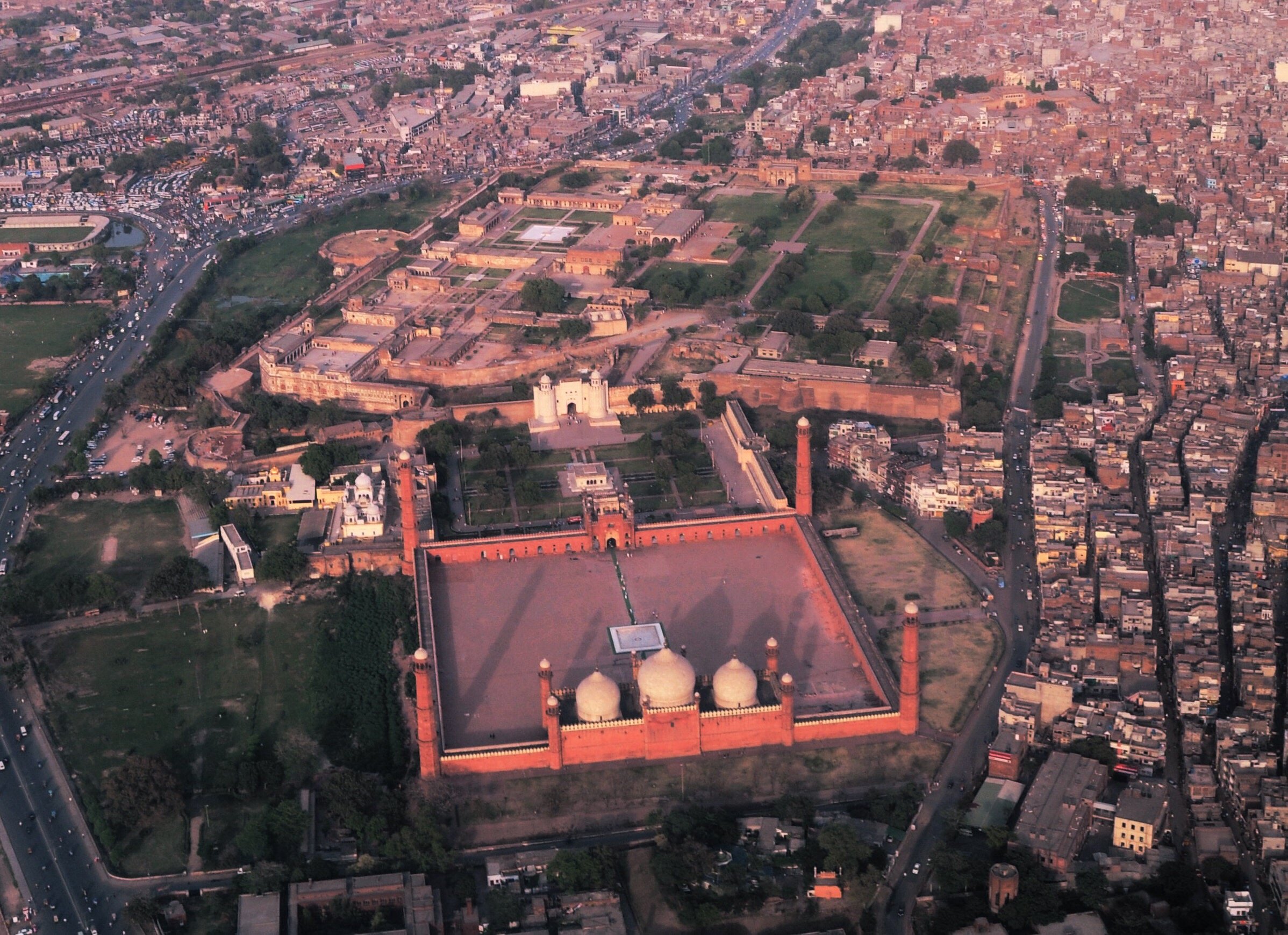
There is an old Punjabi saying that anyone who hasn't seen Lahore hasn't been born. The city is the historical and cultural capital of Pakistan — less frantic than Karachi, less bureaucratic than Islamabad, and by a distance the country's most atmospheric place to visit. It served as the capital of the Mughal Empire at its peak in the 16th and 17th centuries, and again as the capital of the Sikh Empire under Ranjit Singh in the early 19th century. The result is an unusually rich layering of monuments, from the fortress and gardens of the Mughals to the British-built Mall Road and the Minar-e-Pakistan.
The heart of the historic city is the Walled City on the north bank, around the Lahore Fort and Badshahi Mosque. The fort and mosque face each other across the Hazuri Bagh square, with the tomb of Ranjit Singh a few metres away. The Wazir Khan Mosque and the narrow bazaars of the old city are the other side of the same half-day. The Shalimar Gardens are a short drive east.
Modern Lahore spreads south along the Mall (Shahrah-e-Quaid-e-Azam), where the British built the colonial city — the Lahore Museum, the High Court, Government College — and further out into leafy Defence and Gulberg, where most of the good restaurants and hotels are. The food street on M.M. Alam Road is the city's contemporary eating hub, with everything from the famous Lahori breakfast (halwa puri, siri paya) to Punjabi meat cooked over a tandoor.
Lahore lies 25 km from the Indian border. The Wagah ceremony there — in which Pakistani and Indian border guards compete in an absurdly theatrical daily closing of the border — is one of the oddest spectacles in South Asia. The city is typically visited alongside the rest of Punjab (Islamabad, Taxila) or as a stop en route to the northern areas (Peshawar, the Karakoram Highway).
Best season: October through March. April to September is extremely hot, with a short monsoon in July–August.