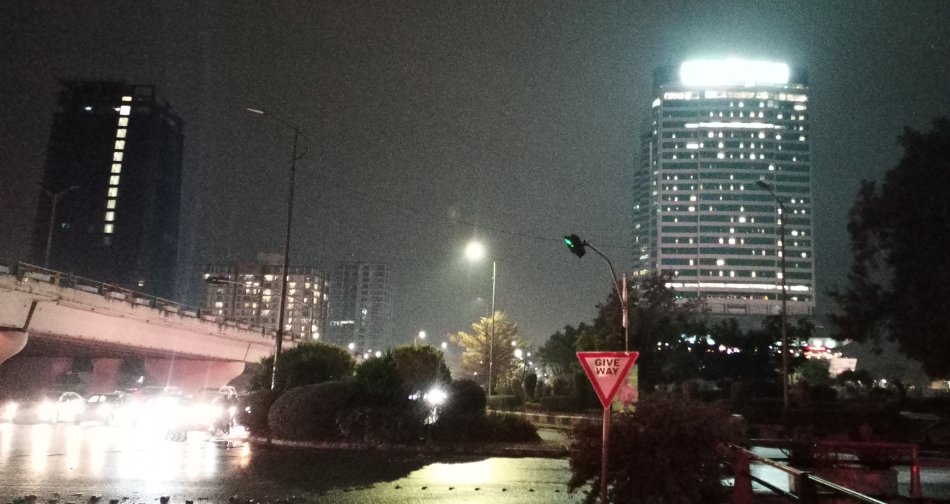
Islamabad is Pakistan's capital, planned from scratch in the 1960s and built at the foot of the Margalla Hills on the northern edge of the Potohar Plateau. In contrast to its chaotic twin city Rawalpindi — the old garrison town 15 km to the south — Islamabad is green, spacious, quiet, and rigidly gridded. Most travellers find themselves there briefly to handle bureaucratic errands: embassies, visas for onward travel to China or Iran, or permits for the Northern Areas. Few stay longer than they have to, but the city has more to offer than the utilitarian reputation suggests.
The Faisal Mosque, a gift from Saudi Arabia completed in 1986, is one of the largest mosques in the world and Islamabad's most distinctive landmark — a sweeping modernist white tent with four 90-metre minarets at the corners, built at the foot of the Margalla Hills. The Pakistan Monument on Shakarparian and the Lok Virsa ethnographic museum are both worth an afternoon. The Islamabad Museum and the Natural History Museum near Garden Avenue hold the main state collections.
The real draw for visitors who stay longer is the Margalla Hills National Park — an area of forested ridges immediately north of the city with dozens of marked hiking trails. Trail 3 and Trail 5 are the two most popular, with viewpoints down over the city and occasional wildlife including the odd leopard at dusk. The Daman-e-Koh viewpoint and the Pir Sohawa restaurants higher up the hills are reachable by taxi and give a sense of the city's landscape setting. Saidpur Village, a restored Mughal-era settlement under the Margalla cliffs, is the most atmospheric corner of the city.
Islamabad makes a convenient base for day trips to Taxila (a UNESCO site with the ruins of the ancient Gandhara civilisation), the Khewra Salt Mine (the second-largest in the world), and Murree (a colonial-era hill station). From the nearby airport at Islamabad, flights go on to Gilgit, Skardu, and the wider Karakoram — Pakistan's mountain country and one of the most spectacular trekking destinations in the world.
Summers (May–August) are hot, though cooler than the plains; winter nights drop close to freezing; the best months are October–November and March–April.