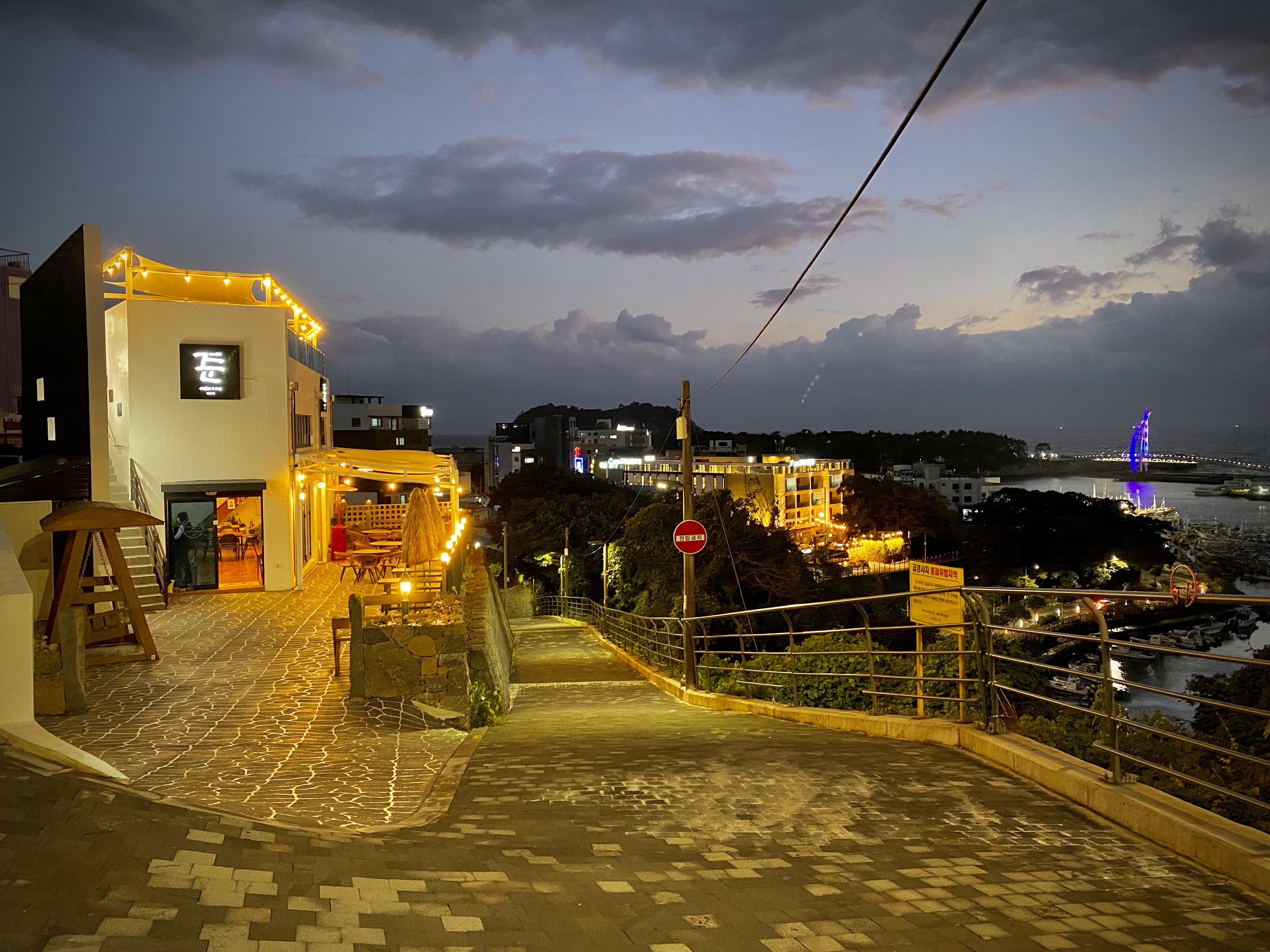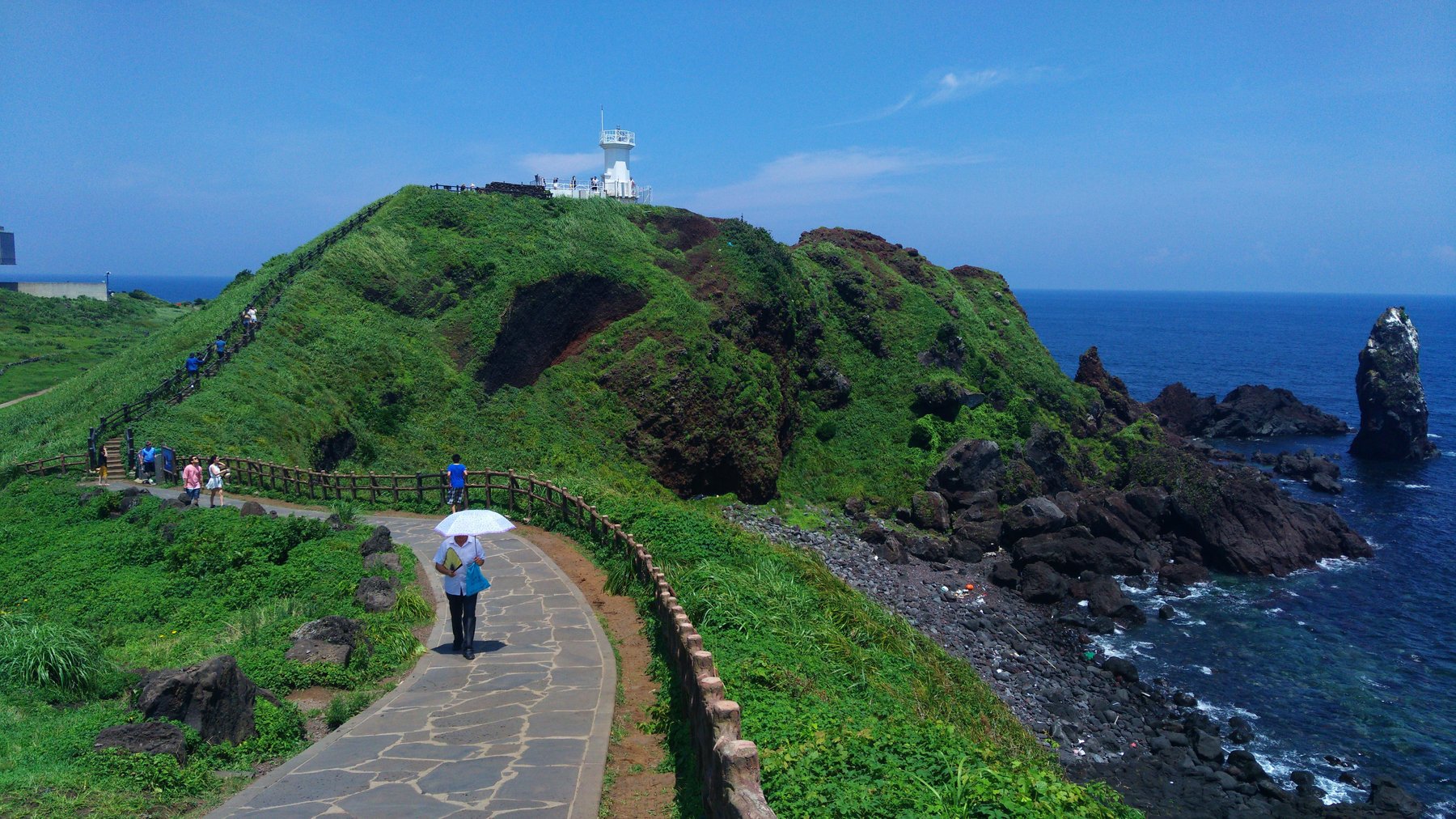
Jeju Island (Jejudo) is South Korea's largest island, a volcanic landmass about 100 km off the southwest coast of the mainland. It is the country's most popular domestic holiday destination — particularly for honeymooners — and was designated a UNESCO World Heritage Site for its volcanic landscape. The island has a unique history, dialect, architecture, and tradition that set it apart from the mainland.
Hallasan, the extinct volcano at the centre of the island, rises to 1,950 metres and is South Korea's highest peak. The slopes pass through subtropical, temperate, and near-alpine vegetation zones as you climb. At the summit, the crater lake Baengnokdam (White Deer Lake) is surrounded by more than 300 smaller volcanic craters scattered across the island. The Manjanggul lava tube on the northeast coast is another geological highlight — one of the longest lava tubes in the world.
The dol hareubang stone statues, the haenyeo diving women, and the Jeju Olle Trail walking network are the cultural anchors. Seongsan Ilchulbong on the east coast — a tuff cone rising from the sea — is the most dramatic viewpoint. Seogwipo, the island's second city on the south coast, is a calmer base and the starting point for the best coastal walks.
Jeju is an hour's flight south of Seoul or an overnight ferry from Busan. A rental car is the most practical way to explore — the island is large and public transport between sights is slow.