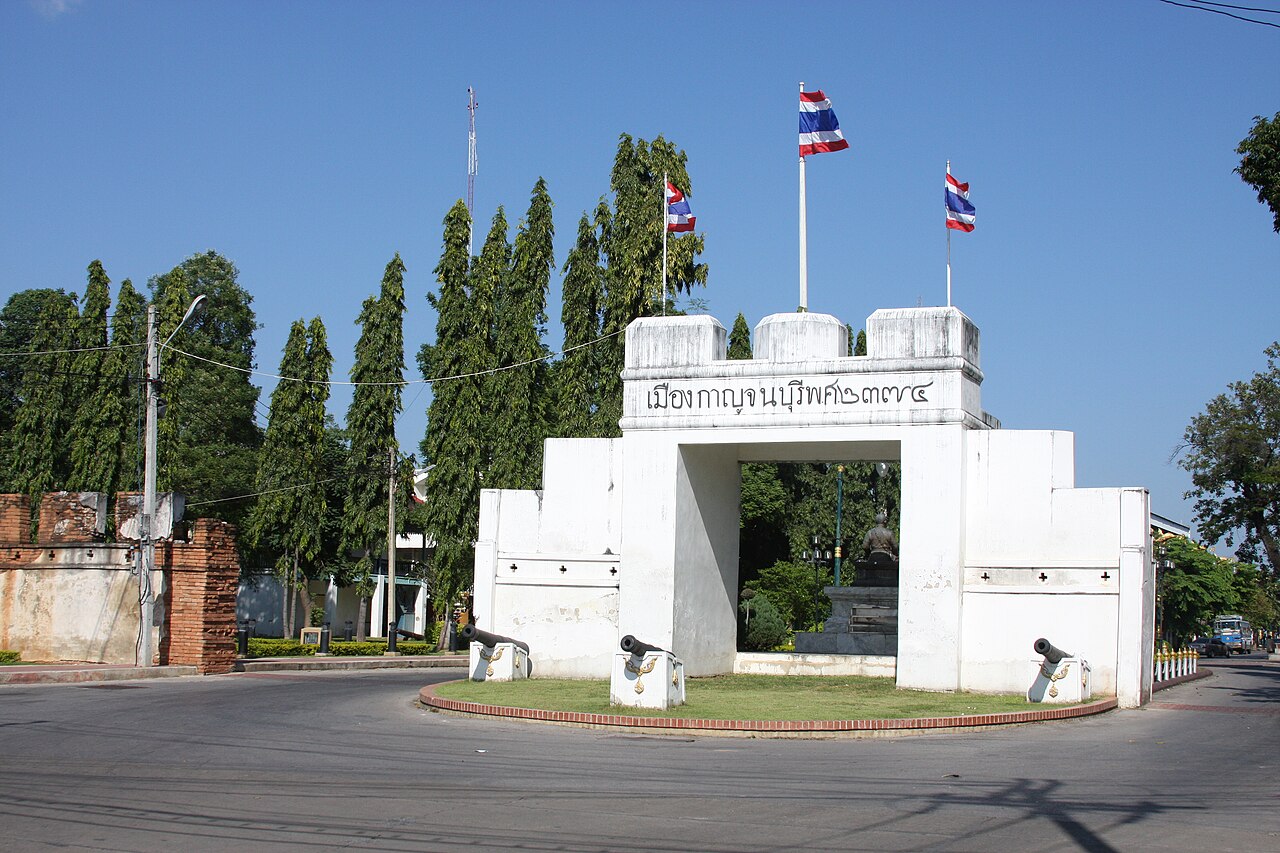
Kanchanaburi is a provincial capital in western Thailand, about 130 kilometres from Bangkok, best known as the site of the Death Railway and the Bridge on the River Kwai. During World War II, the Japanese forced Allied prisoners of war and Asian labourers to build a railway through the jungle to connect Thailand with Burma — tens of thousands died in the process. That history is palpable everywhere in the town: war cemeteries, museums reconstructing the camps, and the bridge itself, still used by local trains, draw visitors from across the world.
But Kanchanaburi is more than a war memorial. The surrounding province is one of Thailand's most scenic: dense jungle, limestone hills, river valleys, and waterfalls. Erawan National Park, 65 kilometres north, has a series of tiered waterfalls descending into clear turquoise pools — one of the most beautiful swimming spots in the country. Further north, the Sri Nakharin reservoir and its floating raft houses offer a quiet escape. The Sangkhlaburi district near the Burmese border has the longest wooden bridge in Thailand and Mon villages worth exploring.
The town itself sits at the confluence of the Khwae Noi and Khwae Yai rivers. The riverside area around the bridge is lined with restaurants, souvenir stalls and small hotels. Most travellers come on a day trip from Bangkok, but two or three nights allows time to take in both the wartime history and the natural surroundings.