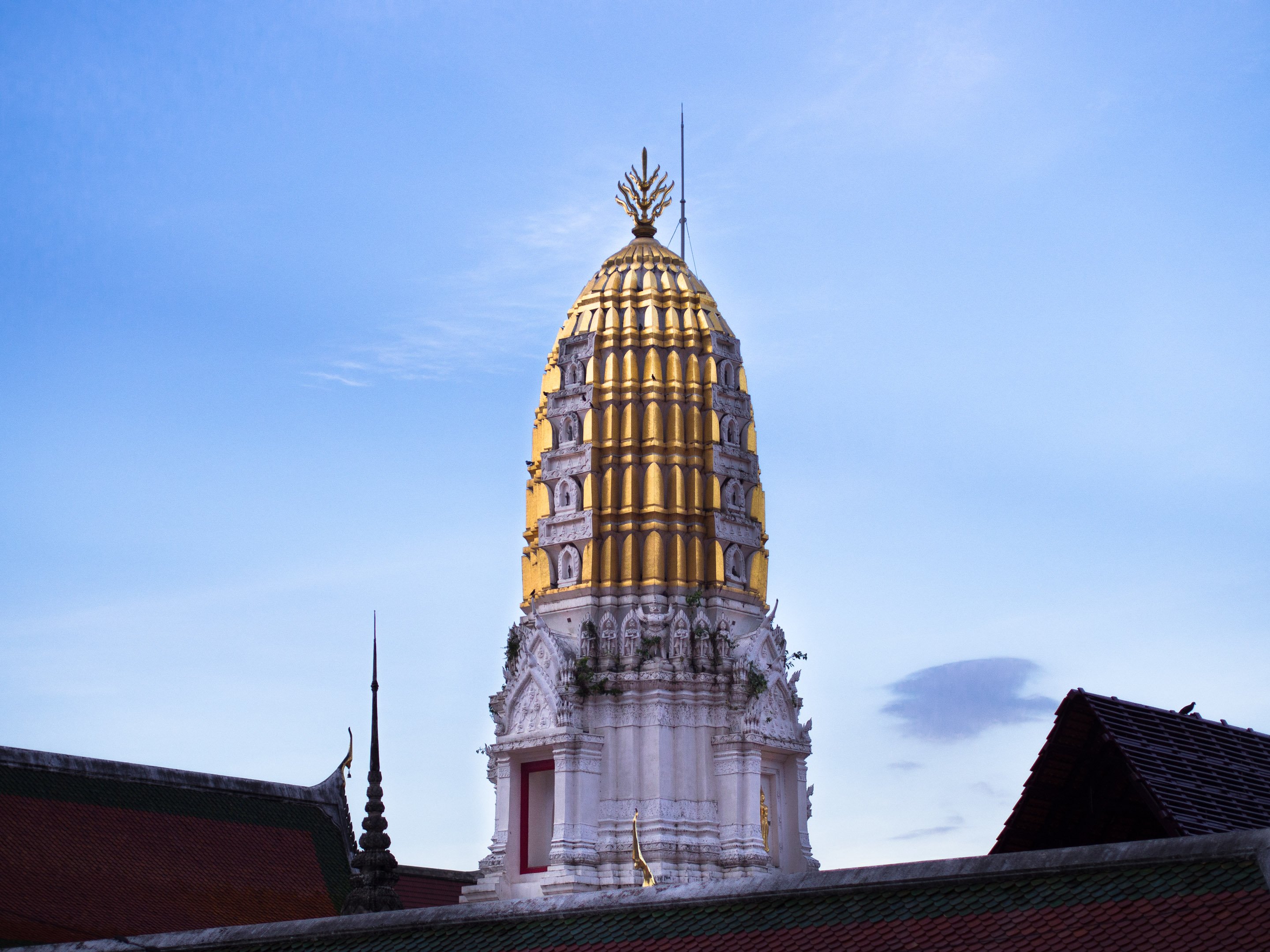
Phitsanulok is a provincial city 380 kilometres north of Bangkok, and one of the more rewarding stops on the route between Bangkok and Chiang Mai for travellers with an interest in Thai history and Buddhism. The city has almost no foreign tourists, which is both its primary charm and a practical reminder that the infrastructure is built for Thais rather than visitors.
The centrepiece is Wat Phra Si Rattana Mahathat — universally known as Wat Yai — which houses the Phra Phuttha Chinnarat, arguably the most beautiful Buddha image in Thailand. Thais travel from across the country to pay their respects, and the late-afternoon atmosphere around the gilded bronze figure is genuinely moving. Across the river, the Sgt Major Thawee Folk Museum holds one of the best collections of traditional rural Thai material culture anywhere, and the nearby Buranathai Foundry is a still-active bronze-casting workshop where Buddha images are made using methods unchanged for centuries.
Phitsanulok has a long history. It was a Khmer outpost in the early centuries, then the seat of the Ayutthaya viceroy ruling the Sukhothai region, and most significantly the birthplace in 1555 of King Naresuan the Great — the monarch who expelled Burmese rule from Thailand and is venerated today as a national hero. The Chan Royal Palace ruins on the north bank of the Nan River mark where the palace stood. A devastating fire in 1955 destroyed the old town, and modern Phitsanulok was rebuilt in a functional shophouse style without much architectural grace — but the temples survived, and the Nan River remains a pleasant place to spend an evening among the night market stalls and raft restaurants.