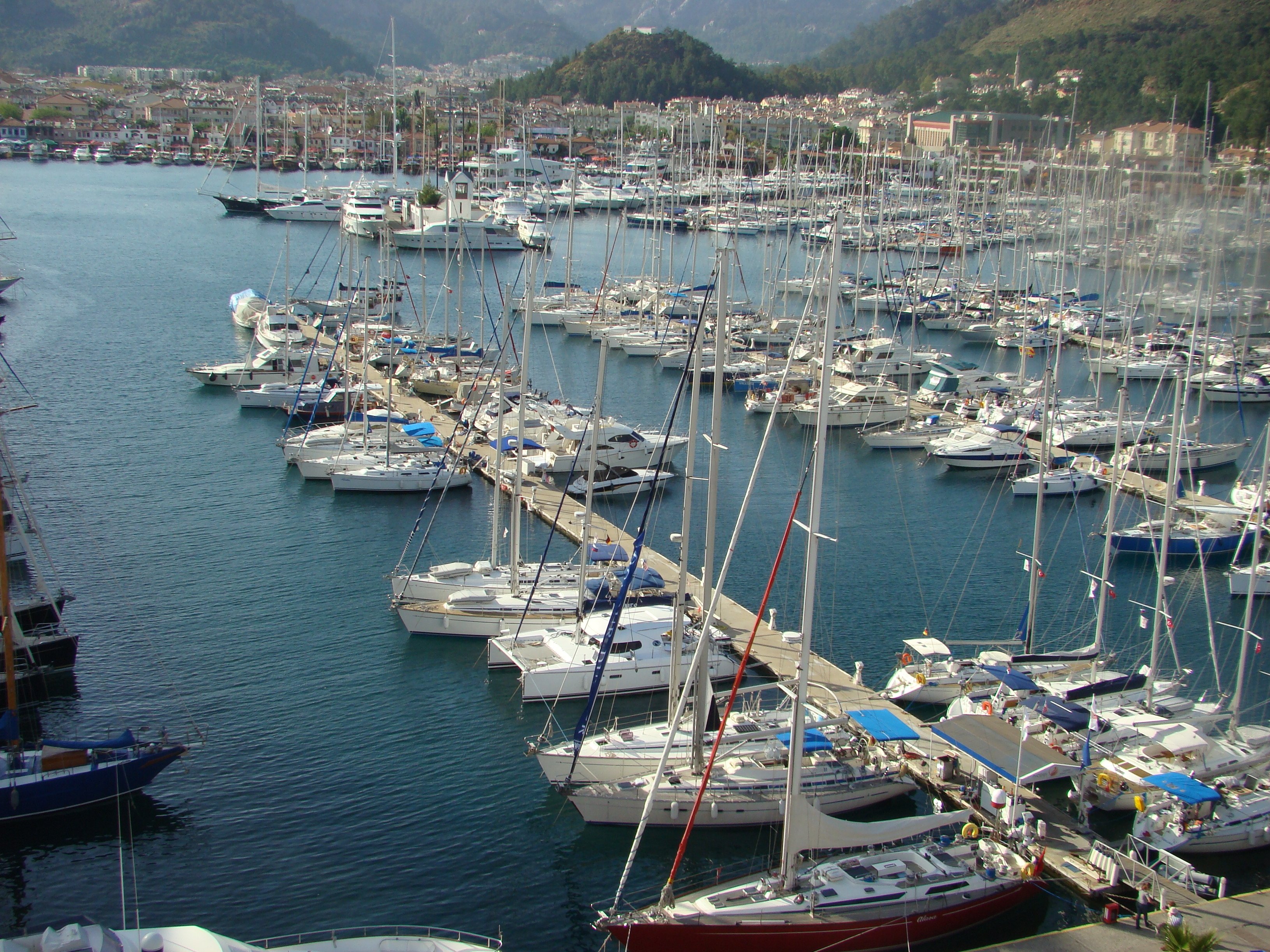
Marmaris is one of the biggest package-tourism resorts on Turkey's south-western coast, occupying a deep, pine-fringed natural harbour where the Aegean meets the Mediterranean. In the 1980s it was a quiet fishing town of a few thousand people; today it has a permanent population of around 35,000 that swells to several hundred thousand in summer, and a skyline of concrete apartment blocks that locals sometimes joke is why the name sounds so much like mimari as — "hang the architect".
Despite the overdevelopment, the setting is still spectacular. The bay is ringed by steep forested hills, the water is clear, and the peninsula extending west towards Datça holds some of the loveliest coastline in Turkey. The old town and the small bazaar, tucked behind the marina on Ulusal Egemenlik Bulvarı, are the most characterful corner of the city, and the hilltop Castle Museum, built by Suleiman the Magnificent in 1522, is worth an hour for the views and a decent local history display.
The main reason to come is the sea. Daily boat trips leave from the harbour for the bays of Turunç, Kumlubük, and Cleopatra's Island (Sedir), and longer "Blue Cruise" gulet charters run west along the Datça peninsula or east towards Fethiye. From the smaller resort of İçmeler, eight kilometres to the west, the water is clearer and the atmosphere marginally quieter. Inland, the road over the mountains runs to Dalyan and its loggerhead beach, and further along to Ephesus and Pamukkale — both long day trips, but doable.
Come for swimming, sailing, and cheap beer by the water. Do not come for authentic old Turkey — it has been replaced here by English pubs, Russian signs, and an enormous nightlife strip. For that kind of thing Marmaris does its job very well.