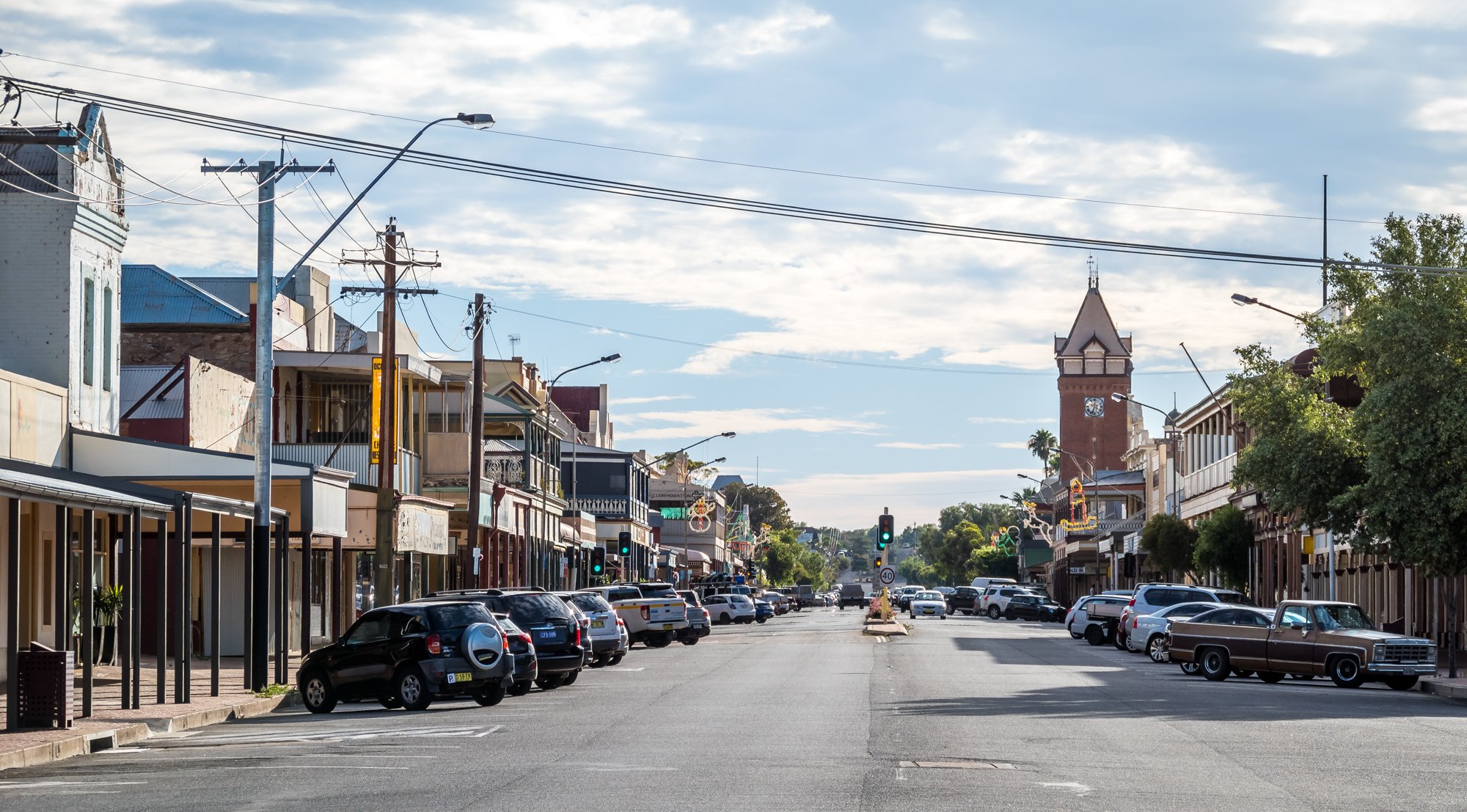
Broken Hill sits in the far west of New South Wales, surrounded by flat red desert — closer to Adelaide than to Sydney, and running on South Australian time despite being technically in NSW. It is one of the great mining towns of Australia, founded after Charles Rasp discovered a massive silver-lead-zinc lode in 1883. His mining company, BHP, grew into the largest company in Australia. Silver and zinc are still mined here, and you can tour several mines — the most memorable is Delprat's Mine, where you don a miner's outfit and descend 130 metres underground.
Broken Hill's labour history is as dramatic as its geology. Conditions in the early mines were appalling, and the unions that formed here were among the most militant in Australian history. The Big Strike of 1919-20, which lasted 18 months, finally won the miners improved conditions and became a landmark in the Australian labour movement.
The town is also an unexpected cultural centre. The harsh light and red earth have inspired generations of artists, and Broken Hill has more galleries per capita than you would expect from an outback mining town. The City Art Gallery houses the Silver Tree, an intricate silver sculpture, and work by local artists. The Sculpture Symposium — sandstone blocks carved by international artists on a hilltop nine kilometres out of town — is worth the drive for the sculptures and the sweeping views over the plains. The Royal Flying Doctor Service base offers tours that include a visit to the radio room handling calls from remote stations across the outback.