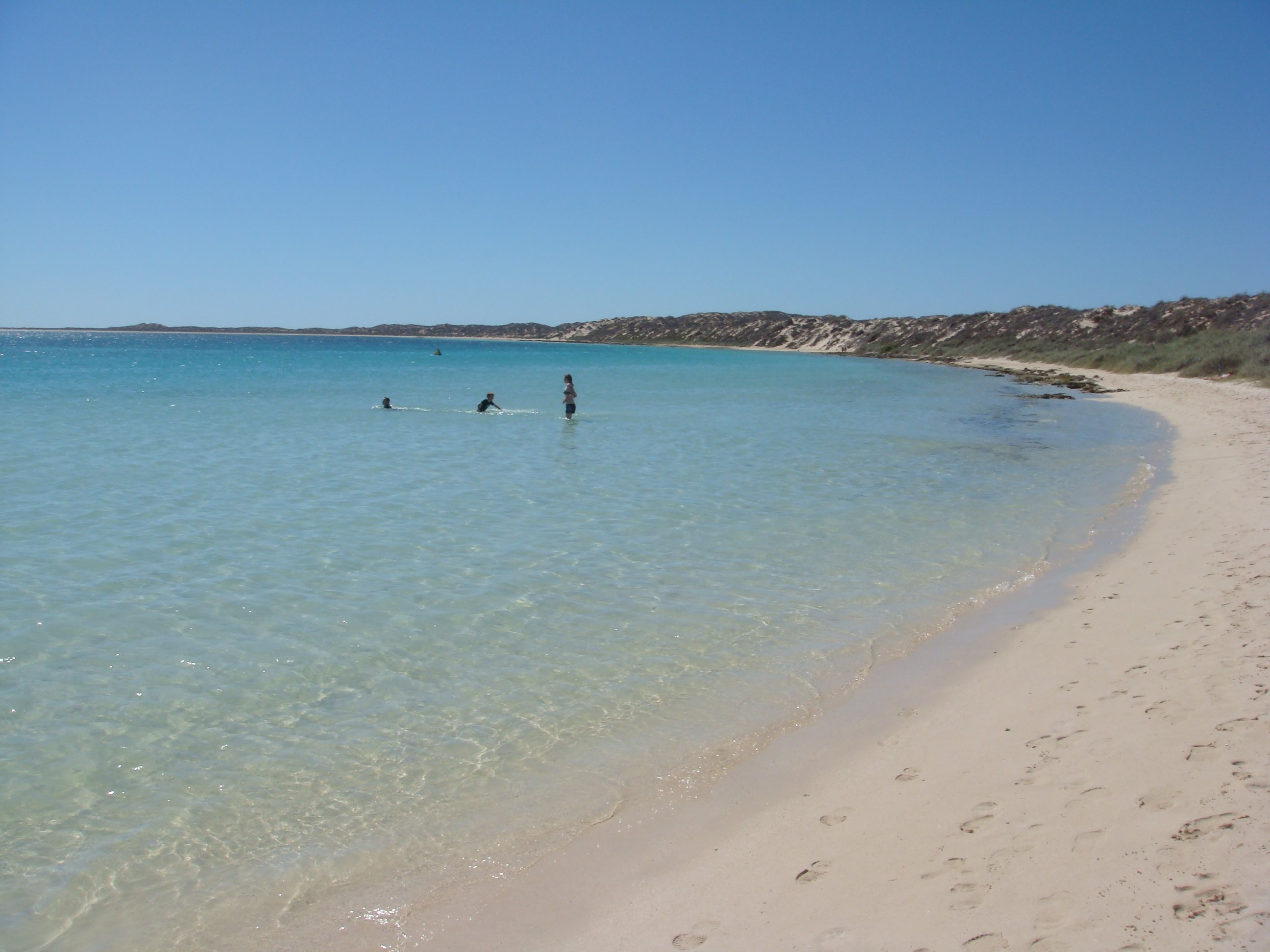
Western Australian reef township where Ningaloo's coral lies close enough to snorkel straight from shore.
Coral Bay is a small township on the coast of Western Australia, about 1,100 km north of Perth, at the southern end of the Ningaloo Reef. The reef here comes very close to the shore — in places you can wade straight into it — and that accessibility makes Coral Bay one of the best places in Australia to snorkel without getting on a boat.
The Ningaloo Reef is one of the world's longest fringing reefs and is notably less crowded than the Great Barrier Reef. The snorkelling around Coral Bay is excellent year-round, with turtles, rays, reef sharks, and a wide variety of fish common in the shallows. From March to July, whale sharks aggregate in the area and can be snorkelled with on guided trips — a genuinely remarkable experience, as these are the largest fish in the ocean. Resident reef manta rays make the manta trips a strong year-round alternative to the seasonal whale shark tours.
The town itself is small but has a handful of cafes, dive operators, and campsites. Bill's Bay, the main beach, is wide and calm, protected from the ocean swell by the reef. Exmouth, 150 km north, is the other base for accessing the reef and has more services.
Guide
Getting There
Coral Bay is remote. The town is 1,100 kilometres north of Perth and 150 kilometres south of Exmouth, accessed via the sealed North West Coastal Highway and the 80-kilometre Minilya–Exmouth Road that branches off it.
Driving from Perth is a two-day trip in normal conditions; most travellers break the journey at Geraldton, Kalbarri or Carnarvon. There are no direct passenger flights to Coral Bay — the closest airport is Learmonth, just south of Exmouth, with daily Qantas services from Perth. From Learmonth a shuttle bus or hire car covers the final 150 kilometres south. Integrity Coach Lines runs long-distance buses from Perth that stop in Coral Bay several times a week.
Guide
When to Go
Coral Bay's climate is hot, dry and tropical. Daytime temperatures sit between 25 and 35 degrees year-round, with the heat peaking from December to March. Rain is rare. The reef and the lagoon are calm and clear most of the year, with reduced visibility only after the occasional cyclone or wind event.
The best season depends on what you want to see. Whale shark season runs from late March to early August — these months also coincide with mild weather, which is the most comfortable time to be in the water and out of it. Humpback whale interactions run from mid-August to early November. Manta rays are present all year. Turtle nesting and hatching extends from November to April. Cyclones occur most often between January and March; the road north can occasionally be cut by flood for short periods, but it is rare to be stranded.