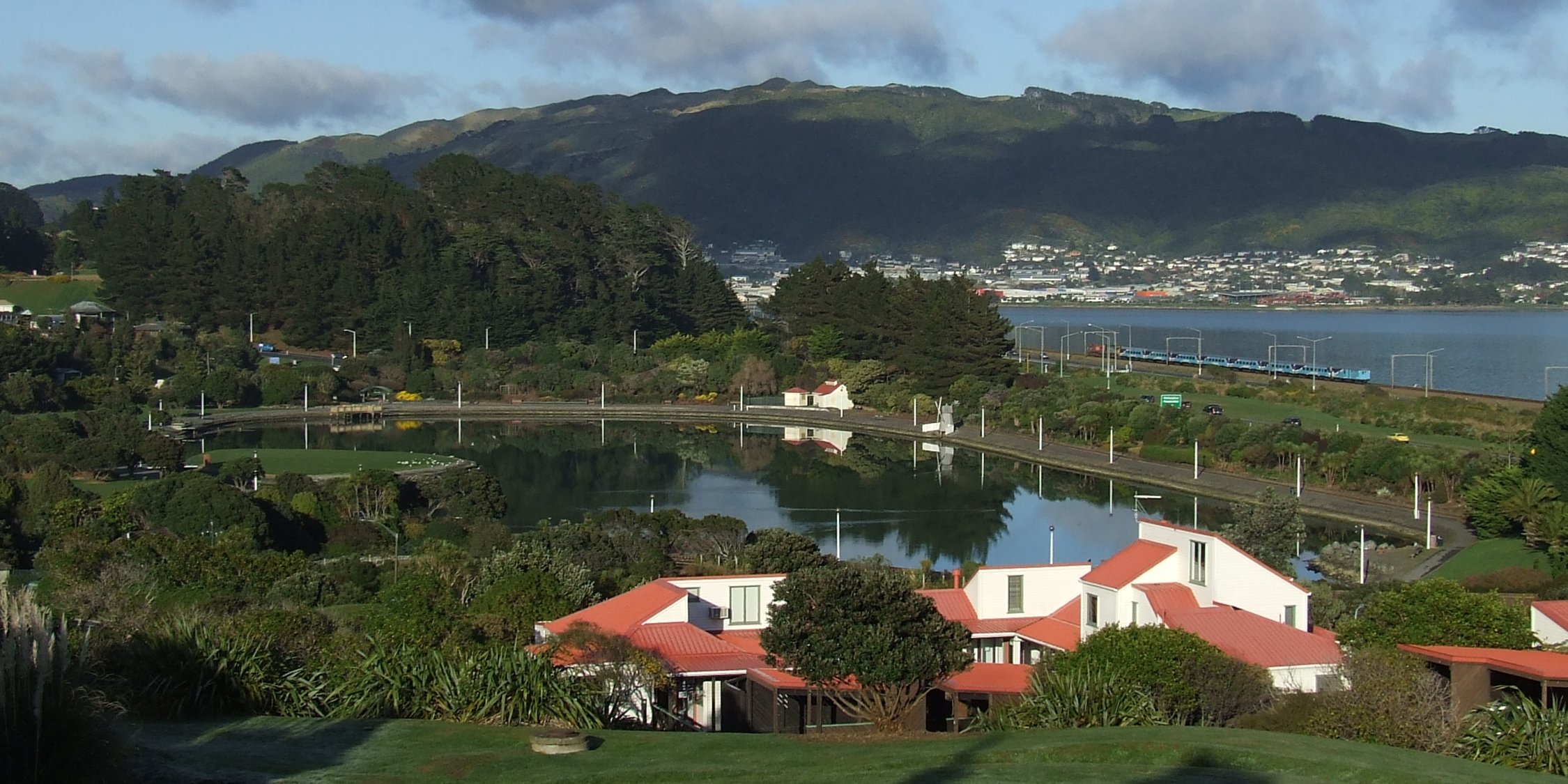
Porirua is one of the four cities of the Greater Wellington metropolitan area, twenty minutes north of the capital on the commuter rail line. The city wraps around a deeply indented twin-armed harbour and rises into the hills of the Tawa Range to the east. It is younger, less moneyed and more demographically diverse than Wellington itself — Porirua has the largest Pacific Island population of any New Zealand city, with strong Samoan, Tongan and Cook Islands communities, and one of the country's most significant urban Maori populations.
For visitors the main draw is the Pataka Art + Museum in the city centre — a genuinely excellent free gallery focusing on Maori and Pacific art that punches well above the weight of a town of 60,000. Otherwise Porirua's attractions are coastal: the long beaches at Plimmerton and Titahi Bay, the regional park on Whitireia Peninsula, and the harbour itself.
The harbour was once one of the most polluted in New Zealand — decades of sewage and urban runoff turned the inner arms into a stinking mudflat. A major restoration programme since the 2000s has cleaned things up considerably, and the Aotea Lagoon park along the eastern arm is now a popular family swimming spot in summer.
Porirua sits on the train line to the Kapiti Coast and is easy to visit as a half-day from Wellington. Most visitors don't bother, which is a pity — it is the part of Greater Wellington where the Pacific feels closest, and Pataka alone justifies the trip.