Dunedin is New Zealand's most Scottish city — its name is the old Gaelic word for Edinburgh — and that heritage shows in its Victorian and Edwardian streetscapes, its stone-built university, and a certain Presbyterian seriousness balanced by a fierce local pride. The South Island's second-largest city sits at the head of Otago Harbour, with the long finger of Otago Peninsula stretching out to sea beside it.
The peninsula is the main reason to linger. Within 20 minutes of the city centre you can watch the world's only mainland royal albatross colony wheeling overhead at Taiaroa Head, spot yellow-eyed penguins hauling themselves up the beach at dusk, and see fur seals sprawled on rocks below the cliffs. Nowhere else on earth are you this close to albatross. Elm Wildlife Tours runs excellent guided trips, and Larnach Castle — New Zealand's only castle — stands nearby with sweeping views.
Back in town, Dunedin has the energy of a proper university city — it has New Zealand's oldest university — with a music scene that punched well above its weight in the 1980s and 1990s. The "Dunedin Sound" (think The Chills, The Clean, Straightjacket Fits) gave the city cult indie status worldwide that still shapes its creative identity. The arts scene remains lively, with the Dunedin Public Art Gallery on The Octagon and the Otago Museum both free and worth a morning. The Otago Farmers Market on Saturday mornings is one of the best in New Zealand.
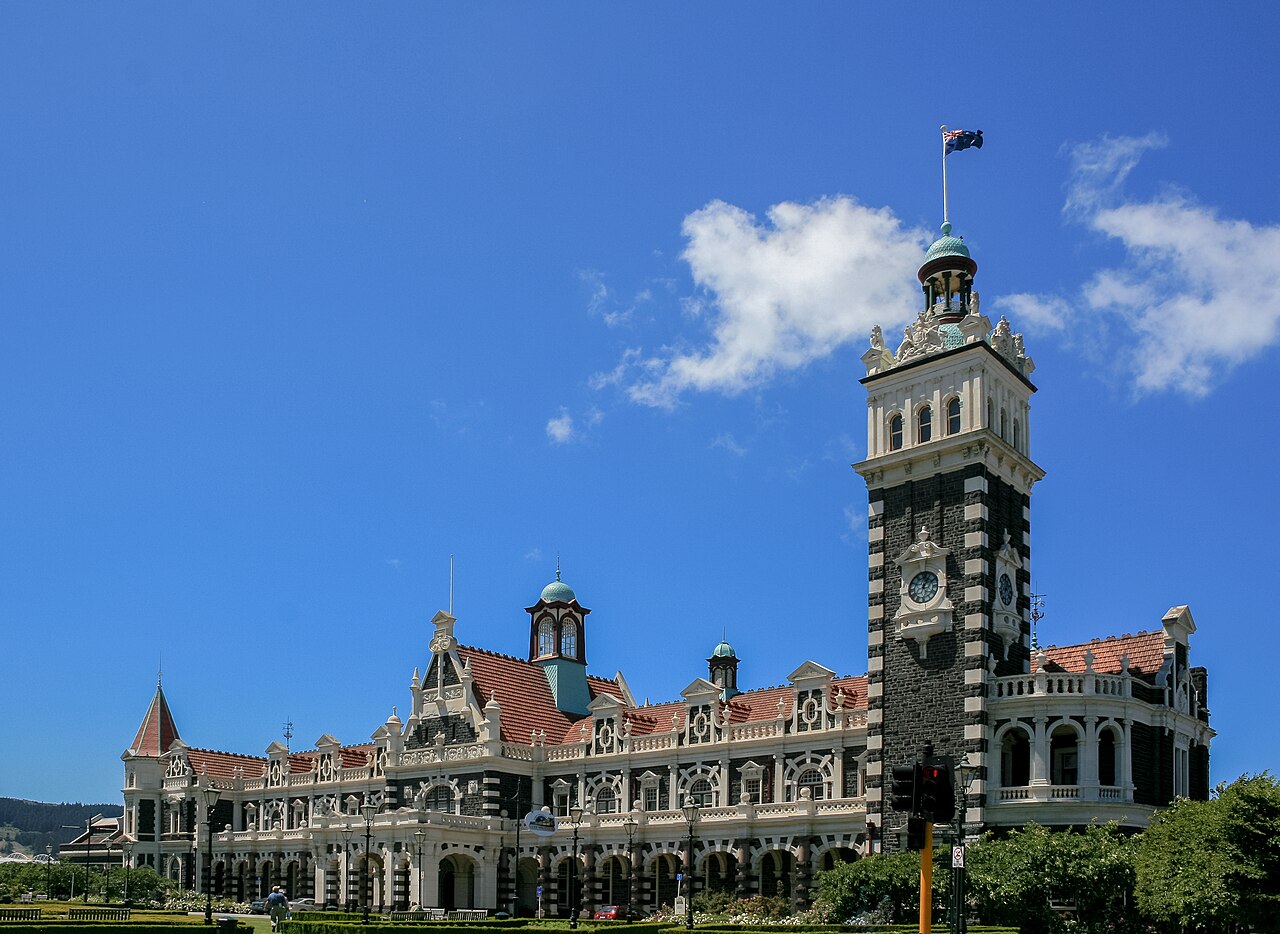
The architecture is genuinely impressive. The Dunedin Railway Station alone — all Flemish Renaissance stone and mosaic floors — is worth the trip across the car park. Olveston, a complete Edwardian townhouse frozen in 1966 when the last owner died, is one of the best house museums in the country. Baldwin Street — the world's steepest residential street — and the wild cove at Tunnel Beach are both worth the short drive from the centre.