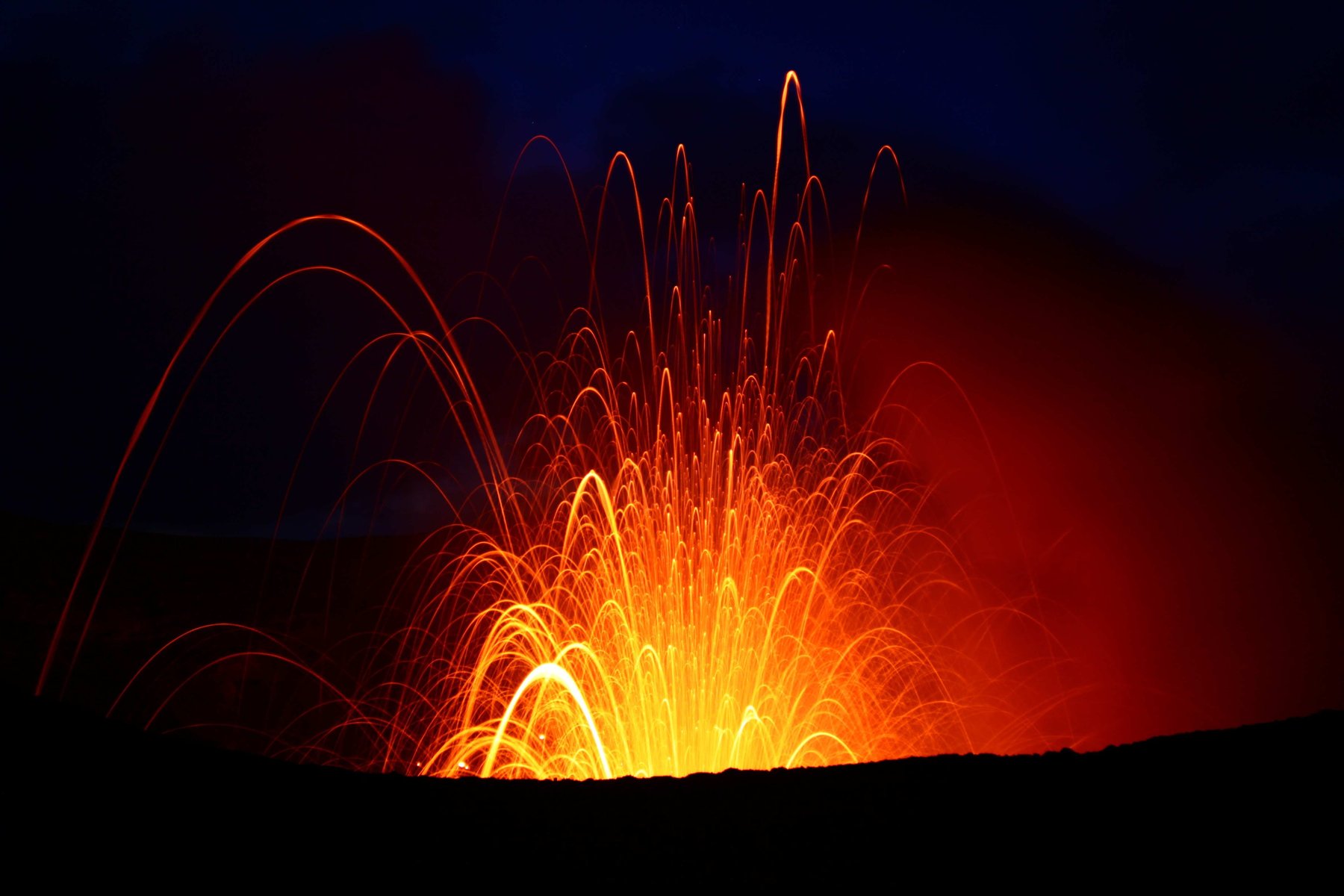
Southern Vanuatu island defined by Mount Yasur, an active volcano with an accessible crater rim.
Tanna is an island in southern Vanuatu, and one of the most rewarding destinations in the Pacific for travellers willing to get off the standard tourist circuit. The island's defining feature is Mount Yasur, an active stratovolcano whose crater is one of the most accessible in the world — you can walk to the rim and look directly into the glowing, erupting interior. The volcano erupts frequently (multiple times per hour at peak activity), producing spectacular showers of lava bombs and a continuous deep rumble that you feel as much as hear. Watching Yasur at night, with the crater lit from below, is an experience that people don't forget.
Beyond the volcano, Tanna has extraordinary landscape diversity: black sand beaches on the coast, dense jungle inland, and the Siwi hot springs in the interior. The John Frum movement originated here — one of the better-known Melanesian cargo cults — and Friday ceremonies at the village of Lamakara are open to respectful visitors. The kastom (traditional) culture is unusually strong on Tanna compared to much of Vanuatu, with many villages maintaining traditional dress, dance, and way of life.
Getting to Tanna involves flying from Port Vila (about 40 minutes), and accommodation ranges from basic bungalows to more comfortable lodge-style places near the volcano. The roads are rough and a 4WD is recommended for visiting Yasur, though guides and transport can be arranged locally.
Guide
Getting There
Tanna is served by Tanna Airport (White Grass), with Air Vanuatu operating daily flights from Port Vila (around 40 minutes). Book ahead during peak season (July–August and December–January). The airport is on the west coast of the island; most lodges and the volcano are on the east side, a 45-minute to one-hour drive on rough roads.
There is no public transport on the island. Getting around requires hiring a 4WD with driver (arranged through your accommodation) or renting a vehicle, though the roads make driving independently challenging for those unfamiliar with the terrain. Most lodges arrange transfers and guided tours as part of their package.
Guide
When to Go
The dry season (May through October) is the best time to visit: lower humidity, cooler temperatures, less chance of being rained out during the volcano hike, and clearer skies for views from the crater rim. July and August are the most popular months and accommodation books out early.
The wet season (November through April) brings high humidity and heavy rain, which makes the unpaved roads to the volcano genuinely difficult and can close access entirely. Cyclone risk peaks between January and March — Vanuatu is one of the most cyclone-prone places on earth. That said, the volcano erupts regardless of season, and visiting outside peak season means fewer people on the rim.