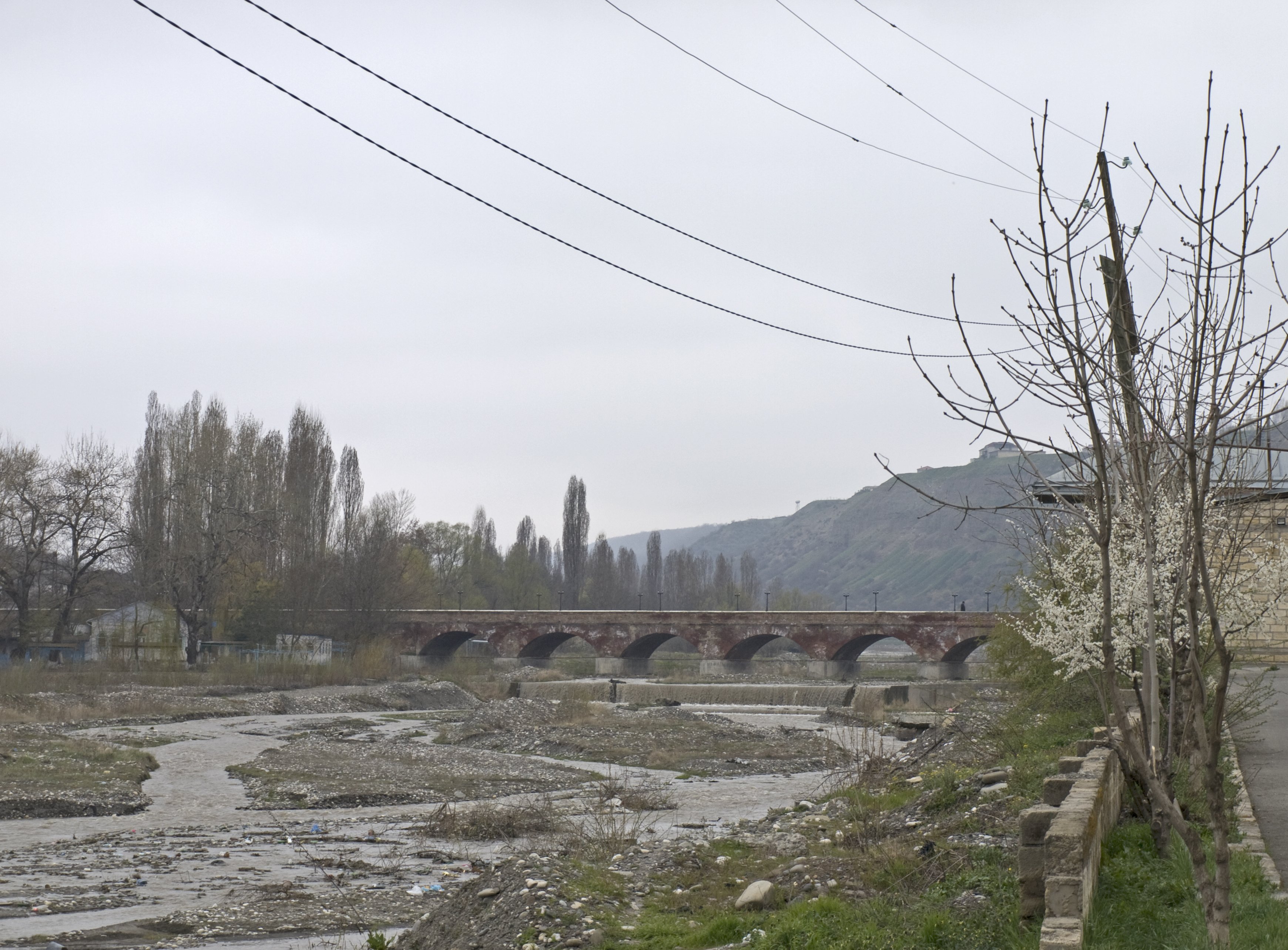
Quba is a pleasant town of around 22,000 people on the north-eastern slopes of the Shahdag range in the Greater Caucasus, sitting at 600m on the right bank of the Kudyal river. It is best known for its apple orchards — hundreds of them, filling the surrounding valley, fragrant with blossom in spring — and for its carpet weaving, which Azerbaijanis claim is the finest in the region. Tour a carpet plant or browse the carpet bazaar near the bus station.
The town rose to prominence in the early 18th century when it became the capital of a small but ambitious khanate. One of its rulers, Fatali Khan, attempted to unify the Azeri khanates into a single state in the 1780s. The Russian army occupied Quba in 1806 and the khanate was formally ceded to Russia in 1813. Russian influence left its mark on the architecture: the town has a well-preserved historic centre with notable 19th-century buildings including the octagonal Juma Mosque, the Mosque of Sakine-Khanum, the Ardabil Mosque (formerly a church), and the twin-domed bathhouse. The Historical Museum, in the former residence of the writer Bakikhanov near the Juma Mosque, has good views over the river.
Across a bridge near Nizami Park lies Krasnaya Sloboda, a separate Jewish town on the far bank — one of the last surviving mountain Jewish communities in the world.
The surrounding area offers impressive natural scenery: the Tengi canyon, the Afurja waterfall, and the village of Khanalygh in the mountains, home to a small Tat-speaking community and an ancient Zoroastrian temple. Quba makes a good day trip from Baku.